
How can furniture retailers cooperate locally without competing on the same products?
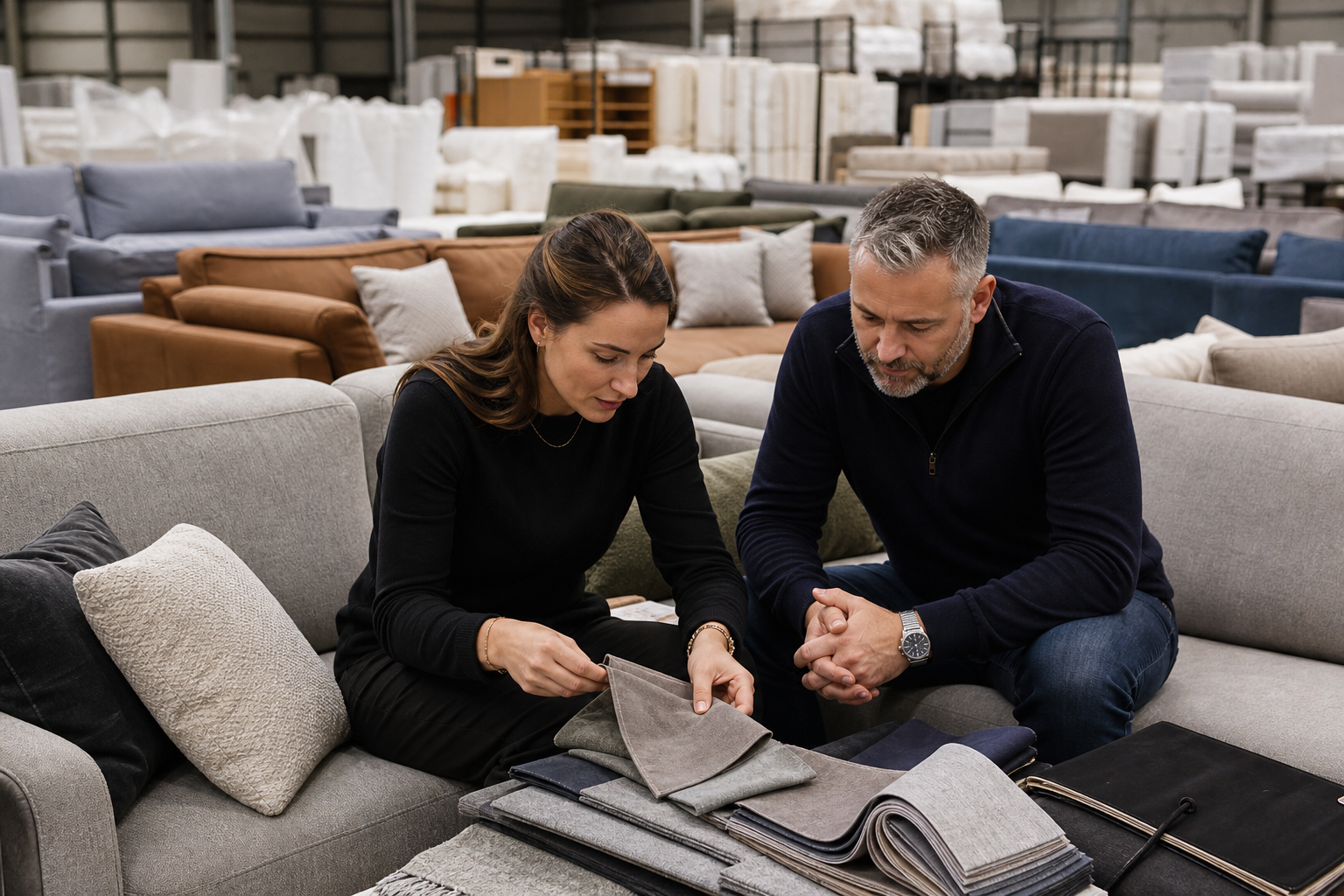
Many European independent furniture retailers first ask this in a practical way: How do I know what my local furniture customers actually want?
That question is not abstract. Recent European retailer questions point to the same pattern: retailers are dealing with sales pressure, slower demand, online comparison, larger-chain competition, cost pressure, inventory risk, and uncertainty around product choice, supply, quality, and customer response.
So this article starts from the visible operating question. But the issue is not only about that one symptom. It participation history to a wider StarbornHub operating logic.
The Surface Question
The retailer may be asking: How do I know what my local furniture customers actually want?
In practice, that question usually means one of three things:
- the retailer is unsure what signal to trust before making the next decision;
- the retailer has already paid for a decision through cash, showroom space, staff time, or customer trust;
- the retailer wants a more repeatable way to avoid making the same kind of mistake again.
The European retailer question research validates a repeated operating concern: retailers want to know which products deserve cash and showroom space before they carry too much inventory risk.
Why This Matters
A serious system may be complex behind the scenes, but the retailer should experience simple actions, clearer feedback, and more controlled tests.
This matters because an independent retailer does not need another vague suggestion. The retailer needs a clearer way to connect daily operating pressure with product choice, local customer response, supplier cooperation, and long-term store strength.
What Changes In Practice
- A store visit should not disappear as a one-time event; it can become part of a longer customer relationship asset.
- The final proof is customer behaviour: whether real customers are willing to notice, compare, trust, buy, recommend, and pay for the product.
- The product range should be managed as a decision system, because each SKU, MOQ, fabric, and stock choice carries cash and showroom risk.
- Quality trust requires a clear path for inspection, communication, repair, claim handling, and responsibility after the order.
- Local market signals matter because one store's customer group may differ from national trends or another city's demand.
- Supplier value is not only production. It also depends on flexible supply, delivery reliability, quality responsibility, and after-sales support.
The important point is not that every retailer faces the same problem in the same way. The important point is that the old furniture retail process often makes the retailer carry risk before the right signals have appeared.

The Business Reasoning Behind It
First, a store visit should not disappear as a one-time event; it can become part of a longer customer relationship asset.
Second, the final proof is customer behaviour: whether real customers are willing to notice, compare, trust, buy, recommend, and pay for the product.
Third, the product range should be managed as a decision system, because each SKU, MOQ, fabric, and stock choice carries cash and showroom risk.
Fourth, quality trust requires a clear path for inspection, communication, repair, claim handling, and responsibility after the order.
For a retailer, this reasoning is not theoretical decoration. It changes what the retailer should pay attention to before the next product, supplier, content, or showroom decision.
If the store only looks at final sales, the signal arrives late. If the store also reads customer questions, hesitation, style comparison, fabric interest, price reaction, delivery concerns, and repeat visits, the same business situation becomes easier to interpret.
That is why this point matters inside the wider StarbornHub logic. It is not trying to replace the retailer's experience. It is trying to make experience more observable, more correctable, and easier to connect with supplier-side decisions.
Why This Matters To A Retailer
For a retailer, this changes the question from:
What product should I buy next?
to:
What evidence should I have before the next product decision becomes expensive?
That evidence may come from store visitors, website behaviour, customer questions, fabric preference, price hesitation, delivery concerns, product saves, email clicks, or repeat conversations. The exact source can differ, but the operating principle is the same: customer response should become part of the buying decision earlier.
Operating Implications
- The people who enter or engage with a local store are often representative of that store's real customer base.
- Their choices are not random opinions; they can reveal preference direction for that local market.
- A national bestseller or social trend should be checked against local customer behaviour.
Practical Questions For The Retailer
A retailer can use this thinking by asking a few practical questions before the next commitment:
- What local customer signal do we already have from our own store, city, website, showroom conversations, or repeat customers?
- Which product, supplier, stock, fabric, price, or display decision would become expensive if this signal is wrong?
- What customer choice, question, objection, save, visit, or comparison would make us more confident?
- What should we test, adjust, replace, or stop before we commit more cash, floor space, or staff attention?
This is why the article should be read as part of a wider retailer operating logic. Each section explains one part of the logic that StarbornHub is trying to build.
In a weaker or more cautious market, this kind of distinction matters more. When demand is strong, a less precise product decision may still be absorbed by general traffic. When traffic is slower, costs are higher, and customers compare more carefully, the quality of each decision becomes more visible.
This is also why independent retailers should not copy the operating logic of large chains blindly. Large chains may absorb mistakes through scale, advertising, logistics, and broader price architecture. A smaller independent store has less room for repeated blind stock decisions, so it needs a sharper way to learn from its own local customer base.
How StarbornHub Responds
StarbornHub is not trying to replace the retailer's judgement. It is trying to give that judgement a better information environment.
At a public level, the mechanism is simple:
- help the retailer expose product ideas to more relevant local customer response;
- record customer choices, questions, objections, and interest instead of letting them disappear;
- turn those responses into clearer reports for the next range decision;
- connect product validation with flexible factory-side supply where possible;
- keep quality, delivery, claim handling, and after-sales responsibility visible in the cooperation process.
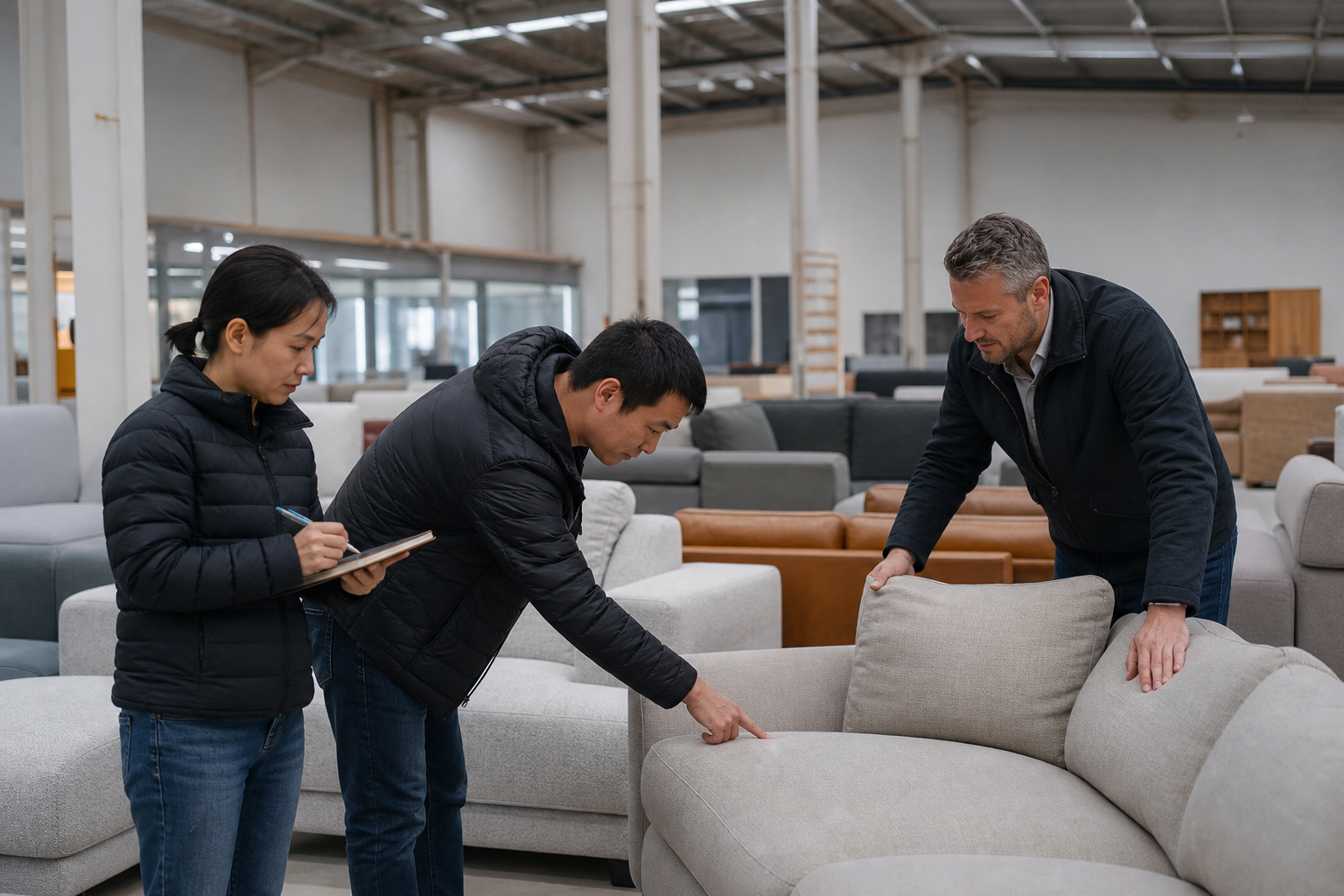
This is why StarbornHub should be understood as a cooperation mechanism, not only as a sofa catalogue. The supplier side still matters, but the larger value is helping the retailer connect local customer understanding with product selection and supply decisions.
The practical version is straightforward. A retailer should be able to look at a product direction and ask: who responded, what did they choose, what did they hesitate about, what would need to change, and whether the next step deserves more commitment. StarbornHub is being built to help that question become easier to answer.
What This Does Not Promise
This does not promise that every sofa will sell.
It does not promise that a retailer can avoid judgement, display work, staff explanation, customer follow-up, or market pressure.
It does not promise that a report can replace experience.
The more honest promise is this: the retailer should not have to make every product decision with too little local evidence and then carry the full cost of learning alone.
What An Independent Retailer Should Take Away
The visible question was: How do I know what my local furniture customers actually want?
The deeper point is: StarbornHub keeps the deeper mechanism in the background and gives retailers practical ways to use local feedback before bigger sofa commitments.

If this logic feels close to the problems in your store, the next useful step is not to judge StarbornHub as another supplier. The better question is whether your store needs a platform that connects product choice, local customer response, and flexible supply before deeper stock decisions.
Conclusion
The best way to reduce slow-moving inventory is not only to clear it faster. It is to build a better product selection and validation mechanism before large stock commitments are made. For an independent furniture retailer, the point is not to accept a new supplier claim blindly. The point is to make the next product decision clearer before cash, showroom space, and customer trust are already committed.
More articles in this content module
Module: Local Market Signal
This is the full reading map for the current content block, so you can follow the logic inside this topic before jumping to another issue.
- How can an independent furniture store stand out without competing only on price?
- Faster Product Iteration and Local Customer Signals
- How has online comparison changed what furniture customers expect?
- How can a furniture retailer read its local market better?
- Why does local protection matter for independent furniture retailers?
- How can furniture retailers cooperate locally without competing on the same products?
- Why is local market intelligence more useful than national furniture trends?
- Using AI to Read Local Market Signals: Practical Steps for Independent Furniture Retailers
- What are the limits of market intelligence for furniture retailers?
- Why AI Makes Local Product–Market Fit More Important
- How does product-market fit become a growth flywheel for furniture retailers?
Other content modules you may want to explore
If your concern is not only this one issue, these modules open nearby paths in the StarbornHub theory system.
Another problem retailers often connect to this: A nearby visible problem you may also be dealing with
Does the margin calculation include freight, delivery, damage, markdowns, financing, returns, and slow stock?
First reading in this module: How much margin room does an independent furniture retailer need?
What this could improve if handled better: A possible business gain behind this issue
Supplier Trust And Quality Responsibility
What incentive does the supplier have to protect quality after the first order?
First reading in this module: Quality Consistency Needs A Visible Process?
What it may take, cost, or risk: The practical concern before trying a new path
Is the sales drop caused by fewer visitors, lower conversion, weaker product fit, local market pressure, or broader economic pressure?
First reading in this module: What changed in the furniture retail market?