
Monthly New Product Development Should Work?

If you’re an independent furniture retailer, you know the feeling: a promising design looks right on paper, but after you buy a container it sits on the floor for months.
Slow-moving inventory ties up cash, steals floor space, and divides your team's selling attention. The question you hear most from shop owners is: do I take the risk of buying bulk before I test demand, or do I wait until I build content and hope the market shows up?
Short answer: don’t treat a single vote or a single photo as a buy signal. Treat customer interest as the start of a testing rhythm. StarbornHub’s monthly new-product mechanism is designed to turn expressions of interest into actual, low-risk product experiments you can rely on when making buying choices.
Turn votes into predictable product experiments
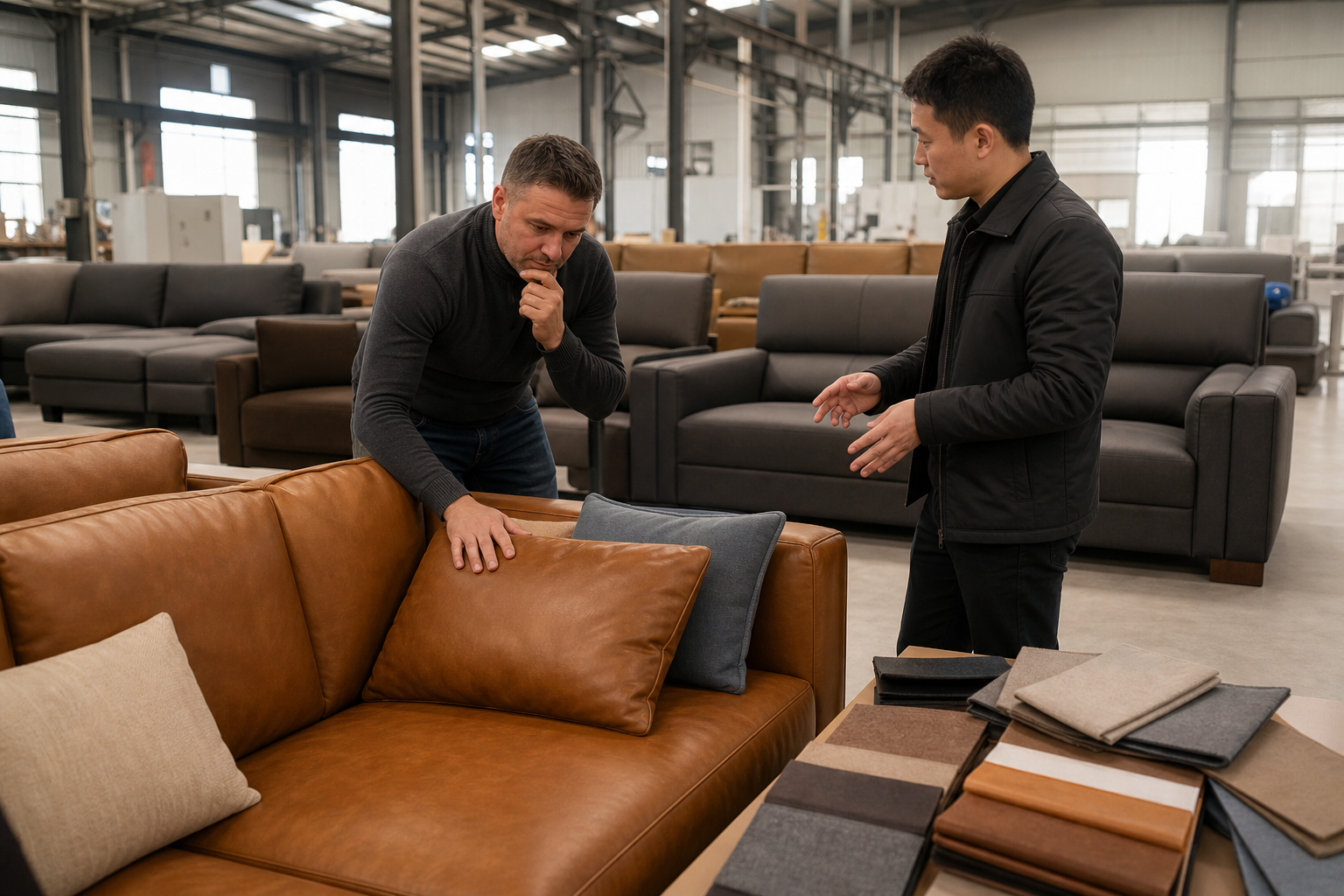
The common failure in DIY validation is timing and execution. A like, comment, or even a pre-order campaign without a physical sample often leaves you guessing. The practical alternative is a cadence: a regular, predictable schedule where the platform converts user preference signals into real sample and development tasks.
StarbornHub operates with that cadence in mind. Instead of rare sprint-style launches or infrequent catalog drops, the mechanism allocates a small, fixed set of candidate slots each cycle. Those candidates are produced as samples and moved into a visible product sequence so both retailers and real customers can interact with them. The predictability matters because it gives retailers a causal loop: vote → sample → in-store feedback → clearer procurement choice.
That loop is what turns passive signals into actionable evidence for your next purchase.
Why factories paying for early samples matters

It’s not just accounting—having the factory take on early sampling and proto-development costs is the platform’s way of backing the market signal. When a factory commits to produce samples from votes, it signals that those votes have commercial meaning beyond social noise. For you, this has three direct business effects:
- Reduced upfront trial cost: you don’t have to buy a large lot to see whether local customers react to a design.
- Better quality signals: customers vote and comment on a real piece they can sit on, touch, and judge—feedback that’s far more reliable than a photo.
- Stronger buy-in across the chain: factories, retailers, and customers each have skin in the game, which makes the whole experiment more actionable.
In practice, that means your store can display a sample and treat your walk-in audience as a testing cohort, without having taken the inventory risk of a large order.
Treat new arrivals as candidates, not guarantees
A crucial mindset shift: a newly listed product is a candidate in a curated pipeline, not a guaranteed bestseller. Early cycles have limited sample exposure and uneven geographic coverage; the goal is to improve the overall mix over time, not to hit the jackpot with every item.
That matters for how you measure success. If a newly sampled sofa gets modest interest in one city, that’s not failure—it’s data. Over repeated cycles the platform refines which styles consistently perform across different customer segments and geographies. Your job as a retailer is to interpret those early signals sensibly: capture local feedback, watch engagement against comparable samples, and decide on measured replenishment rather than a full-scale buy.
This candidate approach is how you gradually reduce the chance of stuffing your floor with wrong designs.
Scale increases matching probability—be patient with the process
The mechanism becomes more powerful as participation grows. More users voting, more participating stores, and broader city coverage reduce noise and reveal true preference patterns. Two effects happen as sample sizes increase:
- Signal quality improves: a larger and more diverse pool smooths out one-off tastes and highlights consistently preferred features.
- Geographic patterns emerge: you can see how a design plays in coastal towns versus inland markets, or among younger vs. older buyer segments.
Because the system learns from expanding participation, early-stage results should be interpreted with a tolerance for learning. Expect a few misses; expect many candidates to be average; but expect the average performance of your assortment to improve as the mechanism runs.
What the feedback loop asks of you, practically
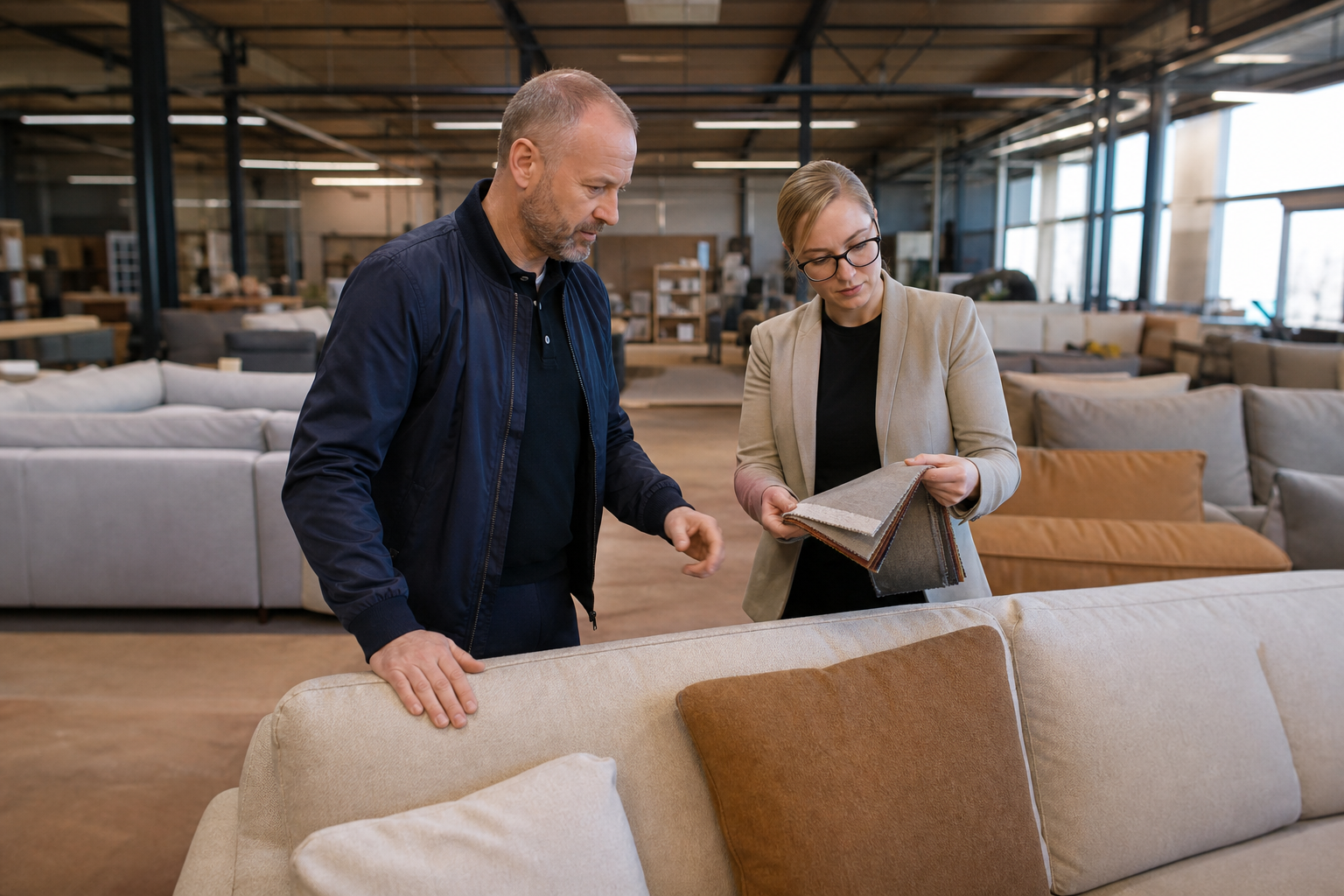
For the mechanism to work, StarbornHub needs two things from retailers and one thing from customers:
- From retailers: treat store traffic as testing capital. Display samples, enroll walk-ins when appropriate, collect structured feedback, and report what you see. Use your in-store display not just for selling but for calibrated listening.
- From customers: quality feedback rises when people can interact with a real sample. Encourage them to vote or give feedback after touching the product—those signals are far more predictive than likes.
- From the platform (StarbornHub): keep the development cadence consistent, ensure factories execute sample builds, and feed results back into the reporting and selection process so the loop feels real and actionable.
Operationally, that means reserving a small portion of your floor for rotation samples, training staff to invite feedback, and treating the program as part of regular merchandising rather than a one-off promotion.
How this changes your buying decisions
You still buy inventory; the difference is how and when. With a cadence-backed sample pipeline you can:
- Make smaller, staged buys based on in-store performance rather than one big commitment.
- Use local pre-orders and measured replenishment to scale winners, rather than relying on a single initial intuition.
- Reclaim cashflow and floor space by avoiding premature full-volume purchases of unvalidated SKUs.
Think of the mechanism as a risk-filter: rather than removing all risk, it reallocates and reduces the part of risk that comes from guessing demand without samples. That helps you convert more of your purchasing decisions into predictable investments.
Practical checklist for retailers who want to use this rhythm
- Reserve a sample corner: allocate consistent space so customers know where to find new candidates.
- Train staff: short scripts to invite trial, record impressions, and encourage customers to register feedback where the platform asks.
- Track local signals: measure foot traffic interaction, conversion intent, and qualitative comments—store them as decision inputs for staged buys.
- Use phased orders: prefer smaller initial purchase quantities after sample validation, with clear trigger participation history for replenishment.
- Stay patient: allow the cycle to run across multiple periods to see whether a candidate gains consistent traction.
These steps don’t require you to change your entire operation, but they do shift how you turn customer interest into purchase commitments.
StarbornHub’s role—transparent but not prescriptive
We’re clear that the platform is a platform cooperation mechanism backed by real factory capability. StarbornHub provides the cadence, the sample investment signaling, and the product pipeline so retailers can make better decisions. We don’t lock you into a single formula or promise every candidate will be a hit. Instead, the value comes from predictable experiments, shared development risk, and a feedback loop that lets retailers buy with more confidence.
We won’t hide the mechanism: the program intentionally turns voting into executed samples and development tasks on a steady rhythm. But this is not a magic button—real improvements come from continued participation, honest in-store feedback, and allowing the mechanism to learn across time and geography.
Conclusion
Buying large volumes before you’ve seen a real sample is a common cause of slow-moving inventory. The better alternative is a predictable, factory-side validation rhythm that turns customer votes into physical samples and local feedback. Treat new entries as candidates to be tested, use staged purchases informed by in-store responses, and remember that the mechanism improves as more users and stores participate. For independent retailers, the practical payoff is less cash tied up in misfires and more buying decisions rooted in observable customer behavior—exactly the kind of predictable purchasing that protects margins and frees your floor to sell what customers truly want.
More articles in this content module
Module: Validation And Small-Batch Testing
This is the full reading map for the current content block, so you can follow the logic inside this topic before jumping to another issue.
- Why does market pressure lead to the StarbornHub model?
- Why Independent Furniture Retailers Are the Best Validation Leverage
- Should furniture retailers test demand before buying deeper stock?
- What problem is StarbornHub really trying to solve for retailers?
- Why does StarbornHub challenge the traditional furniture supply chain?
- Why should furniture retailers validate demand before a bigger order?
- Local Customer Feedback and Safer Sofa Purchases: Turning Reports into Buying Decisions
- How much confidence should a retailer have before buying stock?
- Small-Batch Supply Reduces Retailer Stock Risk?
- Continuous Product Renewal Matters?
- The Operating Conditions Work Together?
- A Retailer Cannot Build This Mechanism Alone?
- Software Alone Cannot Solve Sofa Buying Risk
- What kind of system helps furniture retailers make safer buying decisions?
- Qualified Customer Registration Supports Buying Decisions?
- Monthly New Product Development Should Work?
- The StarbornHub Mechanisms Form A Loop?
- Inventory and Validation: Where to Draw the Line Before You Buy
- StarbornHub Uses AI Without Letting AI Decide Everything?
- AI Cannot Decide For Furniture Retailers?
- The StarbornHub Growth Flywheel Means?
- Platform Growth Must Serve Retailer Growth?
- Must Be True For The Flywheel To Work?
- StarbornHub Did Not Start From Software
- Factory Growth Depends On Retailer Customer Growth?
- StarbornHub Is Actually Trying To Validate?
- Retailers, Customers, And Factories Must Participate Together?
- StarbornHub Is Trying To Build?
- Kind Of Retailer StarbornHub Is Inviting?
Other content modules you may want to explore
If your concern is not only this one issue, these modules open nearby paths in the StarbornHub theory system.
Another problem retailers often connect to this: A nearby visible problem you may also be dealing with
Does the margin calculation include freight, delivery, damage, markdowns, financing, returns, and slow stock?
First reading in this module: How much margin room does an independent furniture retailer need?
What this could improve if handled better: A possible business gain behind this issue
Supplier Trust And Quality Responsibility
What incentive does the supplier have to protect quality after the first order?
First reading in this module: Quality Consistency Needs A Visible Process?
What it may take, cost, or risk: The practical concern before trying a new path
Is the sales drop caused by fewer visitors, lower conversion, weaker product fit, local market pressure, or broader economic pressure?
First reading in this module: What changed in the furniture retail market?