
Qualified Customer Registration Supports Buying Decisions?

If you’re an independent furniture retailer wondering whether to place a big stock order before you’ve tested the local market — you’re asking the right question. The usual result of racing to buy is slow-moving inventory that ties up cash, occupies valuable floor space, and distracts your sales team from higher-probability opportunities.
StarbornHub’s approach reframes the decision: don’t treat procurement as a one-off transaction. Treat it as the outcome of a built-in validation process that begins with the customers who actually come through your door.
Why local, in-store registration matters
Not every platform user is equally useful for a retailer’s buying decisions. What matters is users who reflect your store’s actual market: people who have walked into your location, absorbed your layout, understood your price band, and interacted with your staff. That’s what StarbornHub protects with a simple premise — registrations should originate in the store environment.
There’s a business reason behind it. When registration happens inside the store, the user sample already carries a first-round screening for geography, taste, and budget. That makes subsequent signals — votes, interest markers, sample requests, or return visits — far more actionable for deciding which SKUs to actually stock.
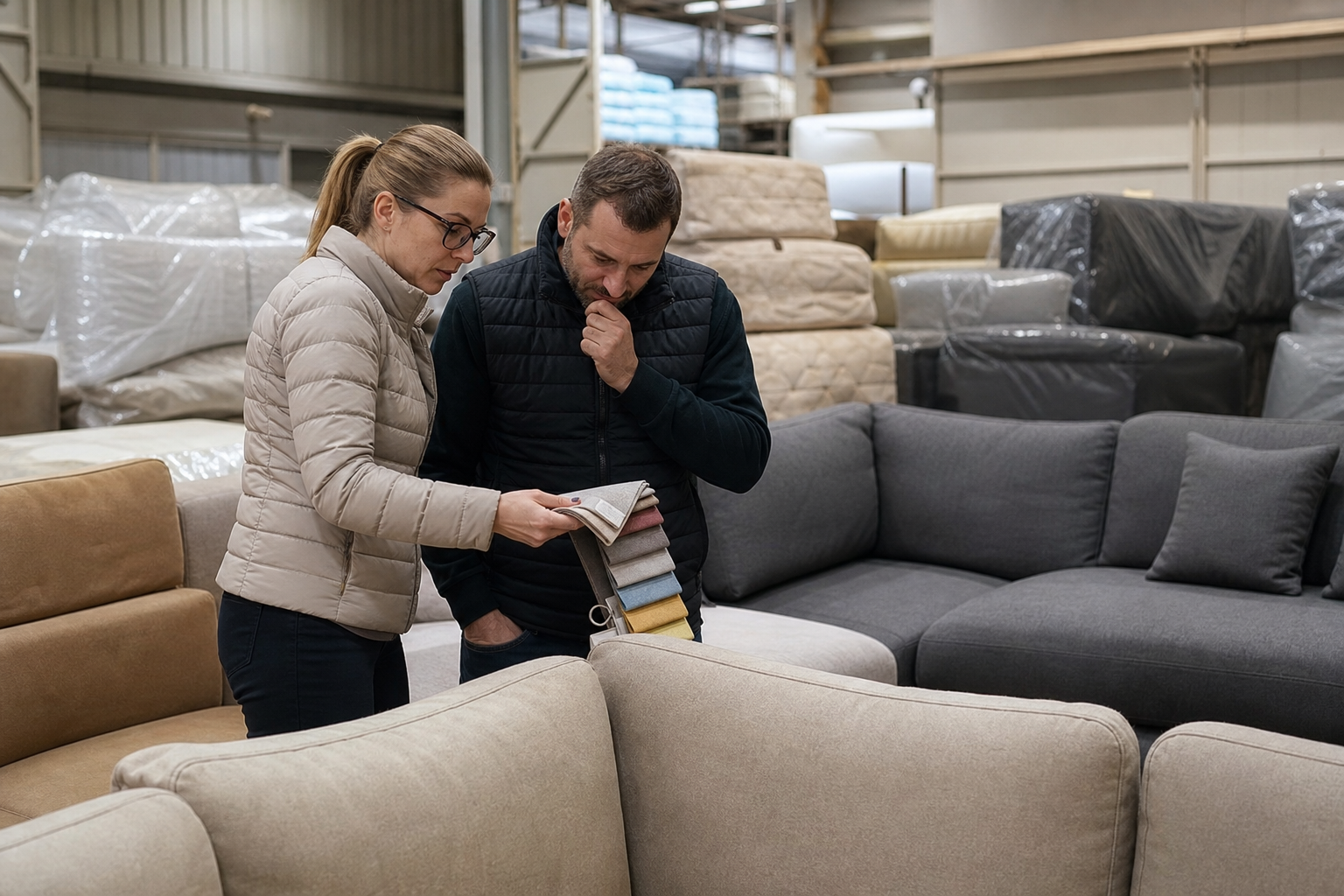
Natural foot traffic as a quality filter
People who walk in naturally are your most reliable probe of local demand. Because they’ve chosen to enter your space, their responses say more about what will sell in your area than broad online metrics. By tying account creation to that foot traffic, StarbornHub converts casual visits into a measurable asset: a pool of local, qualified prospects whose behavioral data you can use.
Two practical effects follow:
- Early filtering. Your store’s location, design, price tiers, and sales approach already filter out mismatched shoppers.
- Ongoing refinement. The platform then uses real behavior — voting, interaction with sample content, and return visits — to refine which accounts are truly representative and which are outliers.
Think of registration as seeding a local test panel. Over time, that panel tells you which designs, materials, or price points deserve a larger inventory commitment.
What you as the retailer must do (and what StarbornHub provides)
This mechanism isn’t automatic. Retailers play a hands-on role converting natural traffic into validated customer assets. Here’s how the responsibilities break down:
- Retailer responsibilities
- Educate and invite: Train front-line staff to explain the value of registering (early-bird previews, local test input, faster access to samples) and make signing up a natural part of the customer journey.
- Create in-store moments: Place the registration touchpoint where it fits the flow — at the welcome desk, next to display samples, or during final checkouts.
- Use the local feedback: Treat voting and feedback from registered customers as decision inputs for what to keep on the floor, what to sample next, and what to avoid.
- StarbornHub support
- Tools and templates: The platform supplies standardized registration material, entry-generation utilities, and suggested in-store scripts to lower your operational cost.
- System-level protections: StarbornHub enforces environment-based registration so the account pool stays representative and usable.

This division is intentional. If the store does the talking and the platform provides the infrastructure, the accounts you gather will map to your local consumer behavior — and that makes subsequent procurement choices less risky.
Procurement eligibility: a guardrail, not a gate
StarbornHub ties the ability to purchase through the platform to the presence of an accumulated pool of these qualified store users. That sounds like a restriction, but the logic is simple and practical: purchases made without local feedback are more likely to misalign with your market and become slow-moving inventory.
Put another way, procurement eligibility turns buying into a strategic step in your operating model. Rather than placing large orders based on supplier catalogs or trends alone, you prioritize purchases that local customers have signaled interest in. That decreases blind inventory bets and aligns your assortment with proven local signals.
From a retailer’s perspective this changes how you plan:
- Shift some purchasing budget to sample-and-test cycles backed by local feedback.
- Use qualified-user signals to choose which items move from “sample” to “floor stock.”
- Accept that a small lead time for building local signals is an investment in reducing slow-moving SKUs later.
Defending sample quality and preventing abuse
Any system that relies on in-store registration can be gamed. StarbornHub’s design accounts for that by emphasizing principle-based boundaries rather than publishing technical detection details.
Key principles you should expect and enforce:
- Registrations should originate in real store scenes so the sample pool mirrors your actual customer base.
- Long-term behavioral activity — not a one-off sign-up — determines which accounts become high-quality assets.
- Platform safeguards and operational monitoring protect the pool’s representativeness; specific detection and handling rules are part of operational practice, not public policy.
For you, the practical outcome is that the registration process must be an honest part of the store experience, not a checkbox to unlock purchases. That’s in your interest: honest samples equal actionable signals, which equal fewer wrong-stock purchases.

How this reduces slow-moving inventory in practice
The core benefit of this mechanism is straightforward: you reduce the chance of buying the wrong thing, and you do it before committing capital to large orders. Here’s how this plays out operationally:
1. Collect: Front-line staff convert walk-ins into registered accounts using on-site entry participation history and the platform’s templates.
2. Observe: Registered customers vote, request samples, and return for follow-up. These behaviors create a local signal set.
3. Validate: Use those signals to prioritize which samples to move to the floor and which to order from the flexible factory-side supply capability on StarbornHub.
4. Scale purchase: When a product receives consistent positive local signals, you increase commitment in measured steps.
This process preserves cash flow and floor mix flexibility. Instead of filling space with uncertain SKUs, you use the local panel to guide a lean, tested assortment.
Practical checklist for retailers who want to adopt this approach
- Place clear, visible registration participation history where shoppers naturally engage.
- Train staff to present registering as a value exchange: early previews, influence over what the store stocks, and occasional follow-up offers.
- Use the platform’s materials so the message is consistent and professional.
- Treat early signals as countersignals: small sample orders give you real-world proof before larger investments.
- Monitor behavior over time — repeat interactions, voting patterns, and sample requests are the highest-quality signals.
These steps create a learning loop: the more representative your registered base becomes, the more confident your procurement choices will be.
When to still place larger orders
There are scenarios where you may still place bigger orders without a long local signal history: planned seasonal staples, proven best-sellers with known margins, or vendor-driven programs that include local marketing support. The registration-and-qualification mechanism is not a prohibition; it’s a risk-management layer. Use it when you want to prioritize local fit over volume-driven vendor deals.
Why this builds long-term value
By turning natural foot traffic into a local customer asset, you create a persistent advantage: your buying decisions increasingly reflect what your community actually wants. That’s a defensible position against both big-box competitors and algorithm-driven marketplaces that don’t understand your store’s neighborhood.
It also aligns incentives: retailers bring real-life customer access, StarbornHub provides efficient flexible factory-side supply capability and institutional tools, and customers get a stake in shaping local assortment. That alignment reduces waste, improves conversion, and makes your merchandising spend more effective.
Conclusion
Slow-moving inventory is ultimately a signal that your assortment wasn’t validated against your market. StarbornHub’s in-store qualified-registration mechanism centralizes validation: it converts natural foot traffic into a local test panel, supports retailers with registration tools, and ties procurement to representative customer feedback. For independent furniture retailers, that means fewer blind bulk buys and more deliberate, demand-backed stocking decisions. Start by making registration a natural part of your in-store flow, train your team to explain the value, and use the local signals to move from sample to stock with confidence.
More articles in this content module
Module: Validation And Small-Batch Testing
This is the full reading map for the current content block, so you can follow the logic inside this topic before jumping to another issue.
- Why does market pressure lead to the StarbornHub model?
- Why Independent Furniture Retailers Are the Best Validation Leverage
- Should furniture retailers test demand before buying deeper stock?
- What problem is StarbornHub really trying to solve for retailers?
- Why does StarbornHub challenge the traditional furniture supply chain?
- Why should furniture retailers validate demand before a bigger order?
- Local Customer Feedback and Safer Sofa Purchases: Turning Reports into Buying Decisions
- How much confidence should a retailer have before buying stock?
- Small-Batch Supply Reduces Retailer Stock Risk?
- Continuous Product Renewal Matters?
- The Operating Conditions Work Together?
- A Retailer Cannot Build This Mechanism Alone?
- Software Alone Cannot Solve Sofa Buying Risk
- What kind of system helps furniture retailers make safer buying decisions?
- Qualified Customer Registration Supports Buying Decisions?
- Monthly New Product Development Should Work?
- The StarbornHub Mechanisms Form A Loop?
- Inventory and Validation: Where to Draw the Line Before You Buy
- StarbornHub Uses AI Without Letting AI Decide Everything?
- AI Cannot Decide For Furniture Retailers?
- The StarbornHub Growth Flywheel Means?
- Platform Growth Must Serve Retailer Growth?
- Must Be True For The Flywheel To Work?
- StarbornHub Did Not Start From Software
- Factory Growth Depends On Retailer Customer Growth?
- StarbornHub Is Actually Trying To Validate?
- Retailers, Customers, And Factories Must Participate Together?
- StarbornHub Is Trying To Build?
- Kind Of Retailer StarbornHub Is Inviting?
Other content modules you may want to explore
If your concern is not only this one issue, these modules open nearby paths in the StarbornHub theory system.
Another problem retailers often connect to this: A nearby visible problem you may also be dealing with
Does the margin calculation include freight, delivery, damage, markdowns, financing, returns, and slow stock?
First reading in this module: How much margin room does an independent furniture retailer need?
What this could improve if handled better: A possible business gain behind this issue
Supplier Trust And Quality Responsibility
What incentive does the supplier have to protect quality after the first order?
First reading in this module: Quality Consistency Needs A Visible Process?
What it may take, cost, or risk: The practical concern before trying a new path
Is the sales drop caused by fewer visitors, lower conversion, weaker product fit, local market pressure, or broader economic pressure?
First reading in this module: What changed in the furniture retail market?