
Continuous Product Renewal Matters?
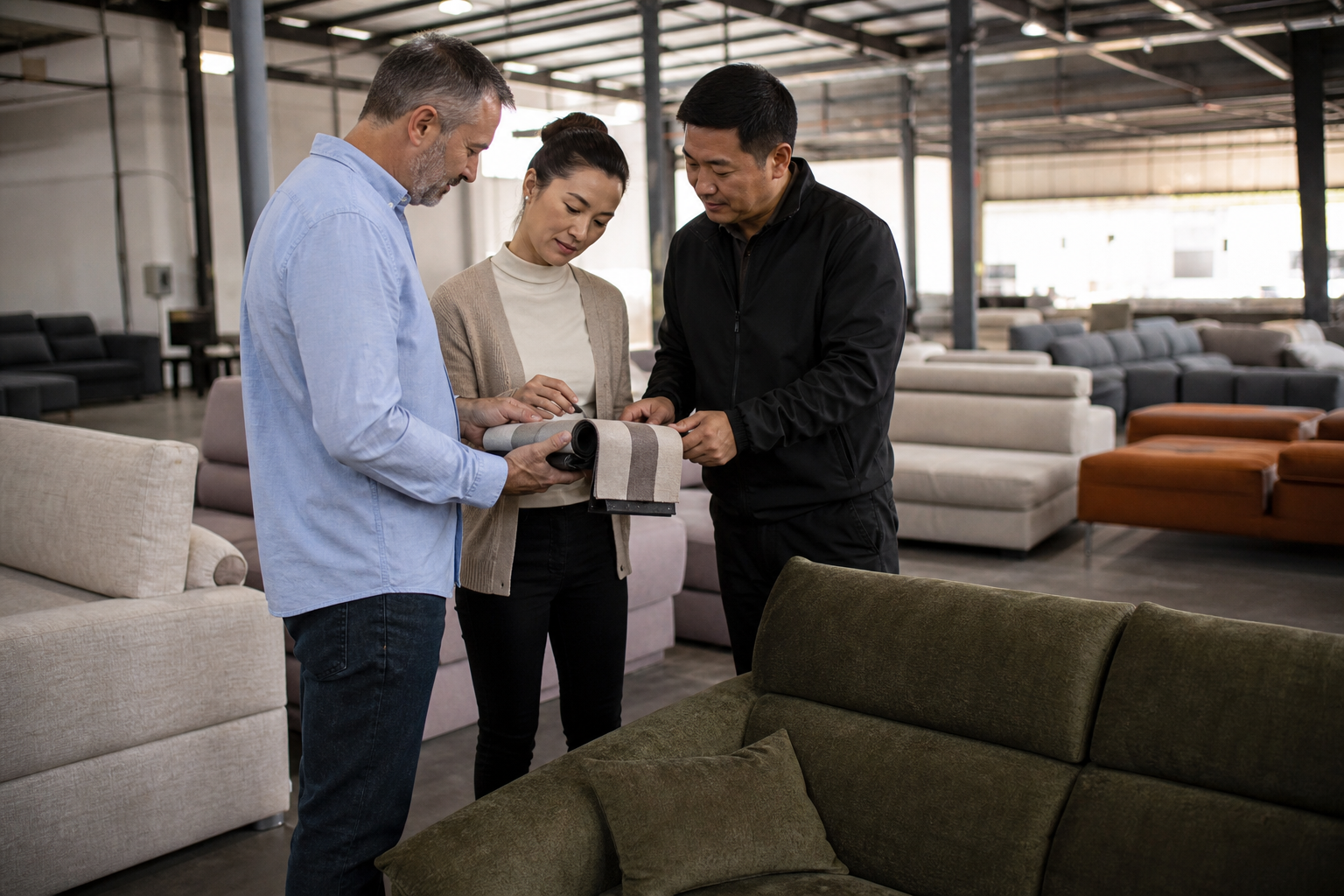
If slow-moving sofas and display chairs are tying up your cash, floor space and sales attention, the root problem is often not just clearance speed — it's how you picked and committed to that inventory in the first place.
Should you take the risk of buying in bulk before testing demand, or wait until your content and local signals are in place? The practical answer is: move risk from a pre-purchase bet to a post-validation decision.
Below I walk through the business reality for independent furniture retailers and explain the StarbornHub-backed approach to continuous product renewal: why it matters, how to restructure the cadence of newness, and what mechanisms reduce inventory risk while preserving local differentiation.
Industry reality: where originality meets imitation
Sofas, tables and upholstery are inherently replicable. Materials, joins and silhouettes are easy to reproduce at scale, and absolute, un-copyable originality is rare in industrialized furniture. That's not an excuse to give up on design — it's a reality to design around.
The practical implication: competing on an unreachable standard of absolute originality is costly and fragile. The better route is to accept that product forms will be copied, and leverage what you can control: speed, local curation, presentation, and the frequency of meaningful updates. Frequent, intentional updates make it harder for competitors (and copycats) to match your store’s relevance to nearby customers.
Rethinking rhythm: beyond twice-a-year drops
Traditional retail rhythms — a biannual or annual cycle tied to tradeshow calendars and factory lead times — were built around old supply chains. Today, consumer tastes and digital buzz move much faster. Holding to slow, large-batch cycles creates moments where your store feels stale and disconnected.
Continuous renewal doesn't mean pushing out more SKUs for the sake of it. It means changing the unit of work: shorter validate–feedback–restock loops instead of one-off seasonal gambles. When your rhythm is driven by evidence from local customers, your store stays topical and your marketing stays credible.
Low-risk renewal: validate first, expand later
The core operational switch is simple to describe and hard to execute without the right partners: introduce potential designs at low commitment, measure response, then scale the winning items quickly.
This approach keeps inventory decisions data-driven and local. Instead of making a large purchase on a hunch, you: introduce a small run or a sample display, track interactions and conversions, and only push larger orders after positive signals appear. That turns inventory risk into an operational question — can you move from sample to replenishment fast enough?
Two practical moves that matter:
- Treat samples as experiments. Plan the display, the call-to-action, and the measurement upfront so you get clear feedback.
- Make replenishment operationally feasible. Without a supply chain that can follow up quickly, a validated item still risks being lost to copycats or timing mismatches.
Note: the complete operational rules for how platforms and factories arrange sampling costs and turnaround are part of platform operations and not public mechanics. What matters to you as a retailer is whether your partner network can shoulder sample development costs and offer flexible restock options. If they can, you can reduce your front-loaded exposure.
Platform-enabled path: co-creation to flexible fulfillment
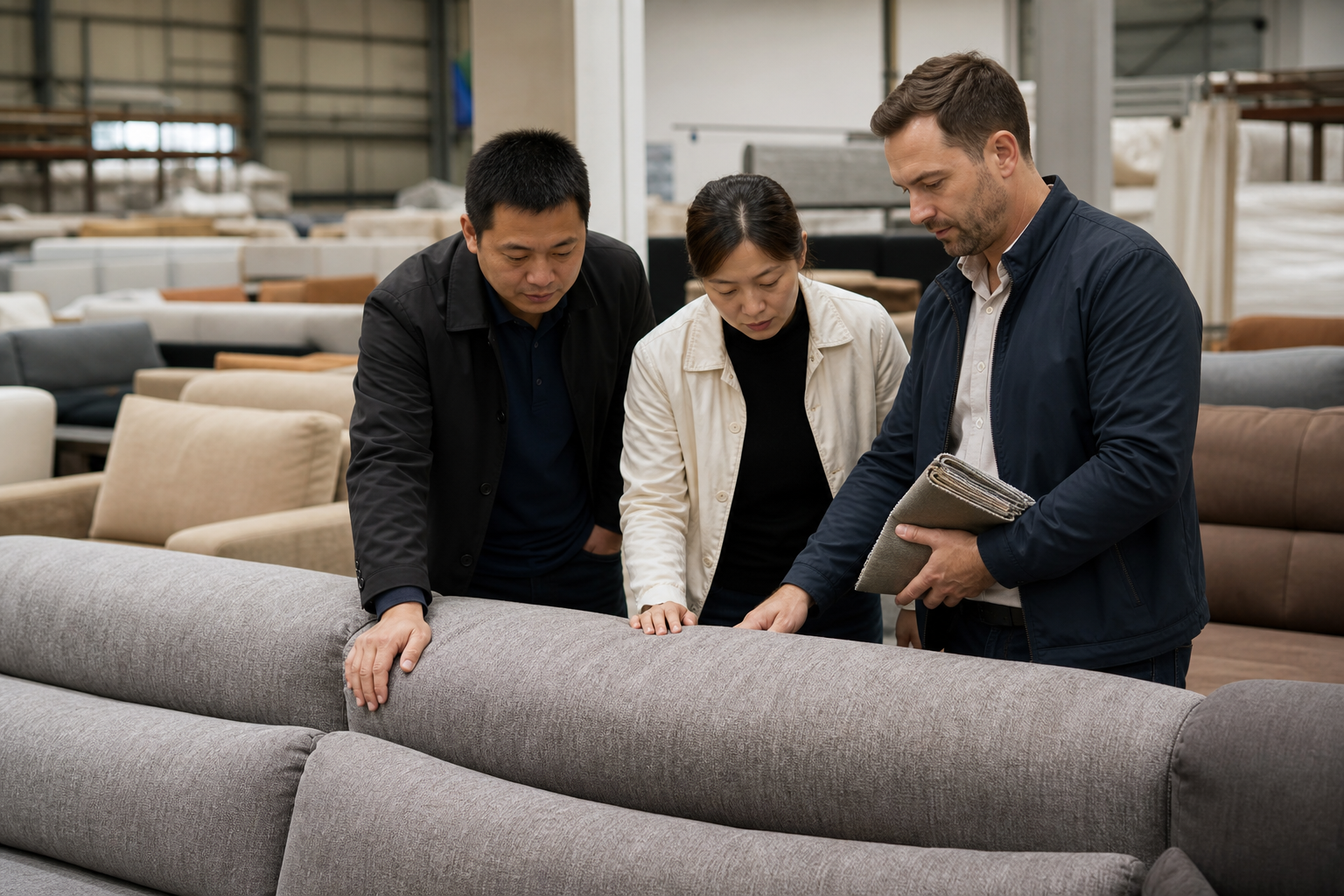
In a cooperative framework like StarbornHub, continuous renewal is a shared process rather than a factory-driven push. The platform connects several actors: designers who submit ideas, retailers who showcase samples and gather feedback, users who express preferences, and factories that provide flexible manufacturing.
From a retailer’s viewpoint, that matters because it shifts where cost and timing risk fall. When the platform converts shopper interest into explicit development tasks, and when factories are willing to absorb sample development and support low-MOQ options from a fabric pool, retailers can focus on merchandising and local selection instead of underwriting entire production runs.
We don’t publish the exact operational terms here, but the practical outcomes you should expect from a platform cooperation mechanism backed by real factory capability are:
- Reduced up-front burden for testing new designs.
- A clear path from sample display to replenishment without long waits.
- Options to participate in value-sharing structures that reward successful local launches, rather than simple one-way buying risk.
Local differentiation and closing the feedback loop
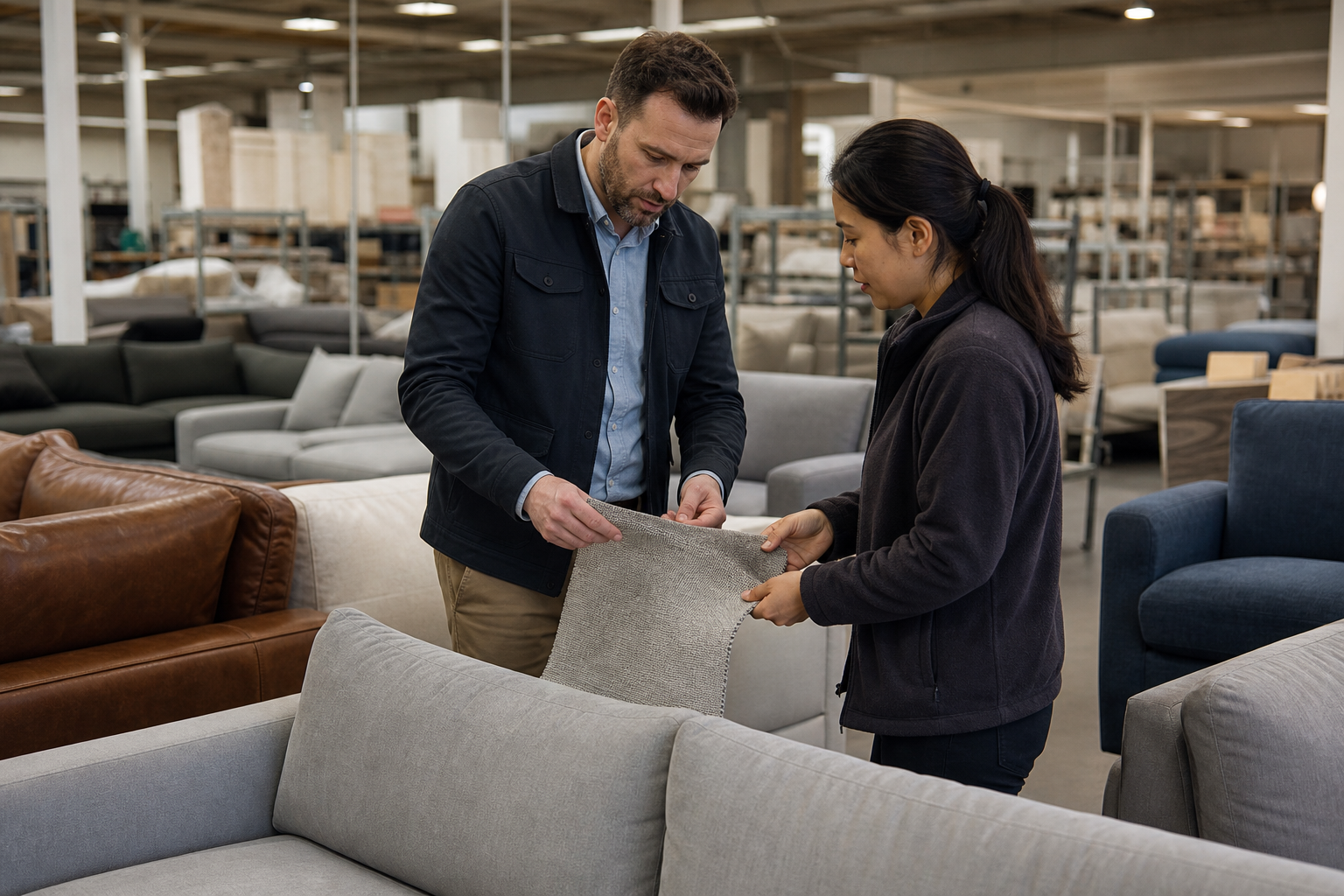
The strategic goal of continuous updates is not novelty for novelty’s sake — it’s to make your store resonate with local customers. That resonance happens when you systematically convert store traffic into a local feedback asset.
Practically that looks like:
- Using in-store displays and digital touchpoints to invite customer preference signals (votes, short surveys, or engagement with content). These should be low-friction and directly tied to potential product runs.
- Treating local votes and interactions as inputs into which samples you show next and what you restock. Over time, these inputs become a local purchase roadmap rather than guesses.
- Designing merchandising to emphasize local fits: fabric choices, scale, and accessory pairings that match neighborhood tastes rather than a one-size-fits-all catalog.
When updates are driven by local signals, each replenishment becomes both an immediate sales opportunity and further data accumulation. That data reduces future risk — you’re not only selling products, you’re building a local profile of what works.

Practical checklist for retailers who want to reduce stocking risk
- Start with experiments: Put a small number of new pieces into a dedicated test area and measure real interactions, not just likes.
- Capture customer intent: Simple prompts that ask whether a customer would buy or pre-order give stronger signals than passive metrics.
- Sequence your assortment: Keep a rolling set of samples that rotate on a predictable, short cycle — not just once or twice a year.
- Make replenishment commitments conditional on validated signals, not on hope.
- Choose partners who provide flexible support: look for platform-led cooperation backed by real factory capability that can shoulder sampling and offer low-MOQ follow-ups. When partners can support rapid reorders, your risk exposure drops dramatically.
- Use updates for storytelling: New arrivals should have a narrative tied to local needs (small-space solutions, fabric for pets, compact sectional options). Stories sell conversions and help you interpret signals.
What to avoid
- Don’t treat continuous updates as random churn — every sample needs a hypothesis and a way to measure it.
- Avoid long, single-bet inventories that assume you’ll create demand rather than respond to it.
- Don’t rely solely on national trends; local preferences often diverge and are the better predictor of in-store success.
How this changes buying conversations
When your buying conversation switches from “how many units can we move?” to “what do our customers want to validate next?”, purchasing becomes an operational capability instead of a financial gamble. That shift affects everything: how you price, how you display, and how you build relationships with factories and platform partners. With the right cooperation model in place, you can turn frequent, small experiments into a long-term advantage.
Conclusion
Continuous product renewal is the practical counter to slow-moving inventory. The trick is not to increase volume, but to reengineer when and how you commit to volume: test locally with low commitment, measure real customer response, and lean on flexible fulfillment when a design proves itself. A platform-enabled, platform cooperation mechanism backed by real factory capability helps make that cycle practical by absorbing sampling burden and enabling quick restock. For independent retailers, the payoff is twofold: fewer dead SKUs and a stronger, data-backed local assortment that drives return visits and better long-term purchasing decisions.
If slow-moving stock is a recurring problem, start by changing the decision unit: one small test, one clear signal, one fast follow-up. Over time that sequence compounds into local differentiation and sustained sales momentum.
More articles in this content module
Module: Validation And Small-Batch Testing
This is the full reading map for the current content block, so you can follow the logic inside this topic before jumping to another issue.
- Why does market pressure lead to the StarbornHub model?
- Why Independent Furniture Retailers Are the Best Validation Leverage
- Should furniture retailers test demand before buying deeper stock?
- What problem is StarbornHub really trying to solve for retailers?
- Why does StarbornHub challenge the traditional furniture supply chain?
- Why should furniture retailers validate demand before a bigger order?
- Local Customer Feedback and Safer Sofa Purchases: Turning Reports into Buying Decisions
- How much confidence should a retailer have before buying stock?
- Small-Batch Supply Reduces Retailer Stock Risk?
- Continuous Product Renewal Matters?
- The Operating Conditions Work Together?
- A Retailer Cannot Build This Mechanism Alone?
- Software Alone Cannot Solve Sofa Buying Risk
- What kind of system helps furniture retailers make safer buying decisions?
- Qualified Customer Registration Supports Buying Decisions?
- Monthly New Product Development Should Work?
- The StarbornHub Mechanisms Form A Loop?
- Inventory and Validation: Where to Draw the Line Before You Buy
- StarbornHub Uses AI Without Letting AI Decide Everything?
- AI Cannot Decide For Furniture Retailers?
- The StarbornHub Growth Flywheel Means?
- Platform Growth Must Serve Retailer Growth?
- Must Be True For The Flywheel To Work?
- StarbornHub Did Not Start From Software
- Factory Growth Depends On Retailer Customer Growth?
- StarbornHub Is Actually Trying To Validate?
- Retailers, Customers, And Factories Must Participate Together?
- StarbornHub Is Trying To Build?
- Kind Of Retailer StarbornHub Is Inviting?
Other content modules you may want to explore
If your concern is not only this one issue, these modules open nearby paths in the StarbornHub theory system.
Another problem retailers often connect to this: A nearby visible problem you may also be dealing with
Customer Asset And Relationship Capture
Are website visits, blog clicks, customer questions, and reviews being captured as usable signals?
First reading in this module: How account-linked benefits bring furniture customers back to the showroom
What this could improve if handled better: A possible business gain behind this issue
Is the sales drop caused by fewer visitors, lower conversion, weaker product fit, local market pressure, or broader economic pressure?
First reading in this module: What changed in the furniture retail market?
What it may take, cost, or risk: The practical concern before trying a new path
Traffic And Conversion Diagnosis
Is the store missing traffic, or is the existing traffic not converting?
First reading in this module: What is the operating formula behind an independent furniture store?