
How can a furniture retailer choose products with better direction?
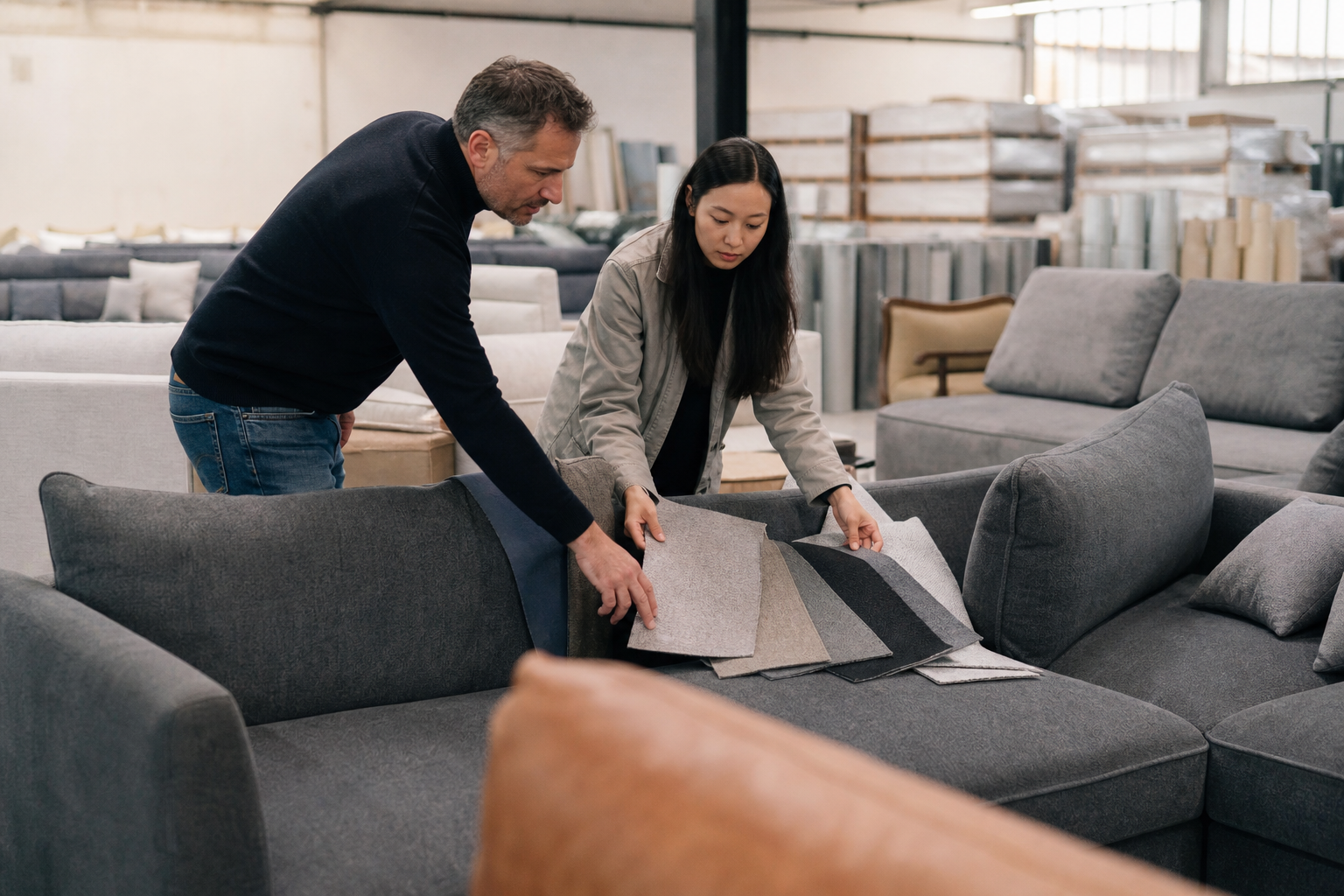
Ask any independent retailer what ties up cash and attention, and they’ll point to slow-moving sofas: big SKUs that eat floor space, depreciate in value, and demand markdowns to shift.
The hard part isn’t only clearing slow stock — it’s preventing the wrong stock from arriving in the first place. In practical terms, a more accurate "procurement direction" means buying with a higher probability that a style will find a buyer in your local market before you commit large inventory or valuable display space.
I’m Roger from StarbornHub, and I want to pull apart what that actually looks like on the ground: where the useful signals come from, how to convert them into buying actions, how to protect cash and space, and what role StarbornHub plays in the mix.

Why procurement direction matters
When you rely only on your supplier’s taste or your own gut, you’re effectively paying the cost of market validation yourself — in cash tied up in stock, floor space that could host better-performing SKUs, and the management time spent pushing slow sellers. Procurement direction isn’t just about picking a pretty fabric or a trending silhouette; it’s a judgment about whether a given sofa style will produce steady transactions with your local target customers.
Getting direction right reduces the marginal cost of trial and error. Instead of placing large orders to test market fit, you shift those experiments earlier in the decision chain and in smaller, cheaper ways. That’s how you protect margin and free up operational bandwidth for what actually sells.
City-level and store-level signals: different jobs, both needed
Useful market evidence comes at different spatial scales, and treating those scales as interchangeable is a mistake.
- City-level signals answer: does this style have broad acceptance among target customers across the city? This is directional: it helps you decide whether to add a style to your overall product lineup in that city at all.
- Store-level signals answer: among the customers who walk into your shop or who live in your neighborhood, which design, seat feel, and fabric choices get attention and trial? Store-level evidence tells you where to allocate limited display units and sample budgets.
Both levels are complementary. City reports give general permission to pursue a style; store reports tell you how to execute locally. Treat city data as a broad filter and store feedback as the operational cue for what to display, how to price, and where to invest marketing effort.
Turning signals into buying decisions: a practical path
Smarter procurement isn’t about flipping a switch and ordering or canceling — it’s about a simple, repeatable pre-order workflow that reduces downside.
1) Read the probability signal, don’t treat it as a decree.
- Think in terms of likelihoods. Votes and preference reports lower uncertainty; they do not guarantee outcomes. Use them to change the size and timing of your commitment, not to force a single outcome.
2) Validate with samples and small displays first.
- Prioritize limited sample buys and targeted display spots for styles that score well on city-level and store-level signals. A visible sample in a high-traffic corner will tell you more than a large carton in the back warehouse.
3) Align promotional effort with expected local acceptance.
- Scale marketing, sales training, and merchandising spend in proportion to the signal strength. A style with solid city-level votes but weak local interest should get a conservative local roll-out; the reverse might need local marketing to uncover latent demand.
4) Make ordering a stepwise commitment.
- Move from sample → micro-batch → steady replenishment as evidence accumulates. Each stage should be a lightweight bet that can be scaled up or down in response to real sales and customer feedback.
5) Use both quantitative and qualitative store feedback.
- Numbers matter, but frontline observations are equally valuable: which customers try the sofa, how long they sit, what questions they ask about construction or fabric. Those details steer fabric swaps, cushion firmness changes, and even style trimming for your customers.
By following this path you convert signals into smaller, smarter commitments — and that’s the real lever for reducing slow-moving inventory.
Mitigating inventory and space risk
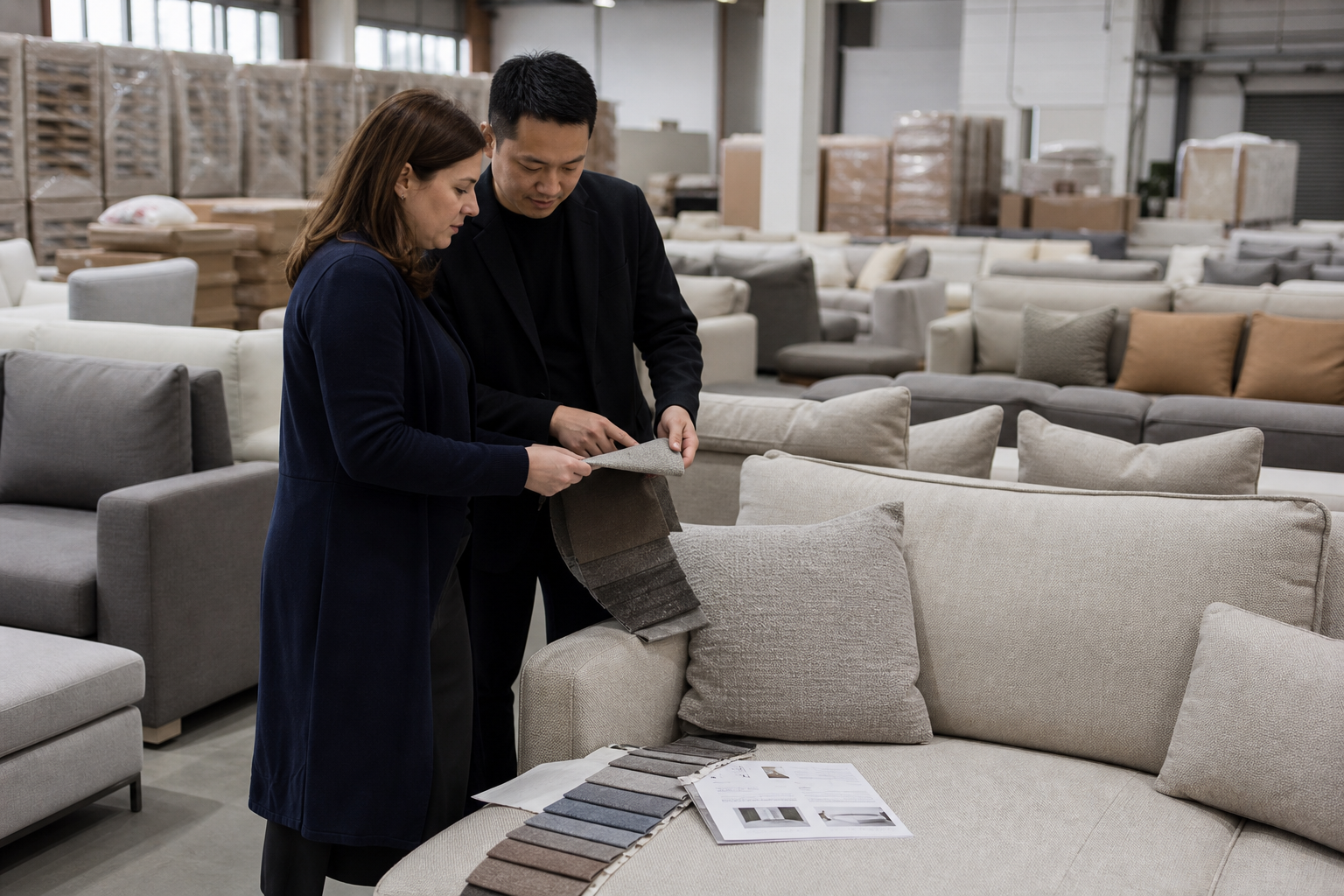
A more accurate procurement direction changes the math of inventory and display risk immediately.
- Smaller initial commitments lower sunk cost. When you test with limited samples and micro-batches, a single failed style no longer consumes a large share of your cash or display area.
- Rotate to surface winners quickly. Use short display cycles: test, measure, decide. Replace weak performers with higher-probability SKUs that better match your store’s profile.
- Use display strategy to maximize learnings. Dedicate a mix of stable best-sellers and experimental spots. That way, your floor always sells while you keep learning.
This approach increases unit-area profitability because every square meter is used with an eye on probability — you prioritize space for styles with the best on-the-ground evidence, not for the biggest cartons you happened to receive.
StarbornHub’s role — supportive, not directive
StarbornHub is designed to lower the friction of this smarter buying process. We provide structured market signals and flexible supply tools so you can run lighter experiments with less up-front cost:
- Structured preference reports and voting let you see city-level patterns and store-level feedback, giving you evidence to adjust order size and display choices.
- Fabric pools and flexible small-batch ordering reduce the practical barriers to getting samples and running micro-batches.
- Mechanisms like account binding and local protections make investing in customer development and sample displays more sustainable, by aligning platform incentives with local retailer effort.
Important boundary conditions: the platform supplies signals and flexible supply options, but the retailer remains in control of final decisions and local execution. That means merchandising, sample placement, in-store marketing, and sales follow-up are still your responsibility.the platform provides usable evidence and capabilities while keeping detailed commercial rules inside partner onboarding.
Putting it into practice: a quick scenario
You see a new sofa silhouette getting favorable votes in the city report. At your store, traffic spikes with younger buyers but fabric preferences lean toward durable neutral textiles.
- Step 1: Treat the city report as permission to test, not a profit guarantee.
- Step 2: Order a display sample in a fabric that aligns with your store’s taste from the fabric pool or a small flexible batch.
- Step 3: Give it a prominent, time-limited display and track interactions and trials for a few weeks. Train staff to log specific objections or praise.
- Step 4: If the micro-test shows positive store-level signals, scale to a small restock. If not, move the display and substitute another style that better matches local signals.
This pattern turns procurement into a measured series of bets with growing confidence rather than one big leap that risks inventory and space.
Practical checklist for your next buy
- Check both city and store signals before committing.
- Frame platform output as probabilistic guidance, not an absolute.
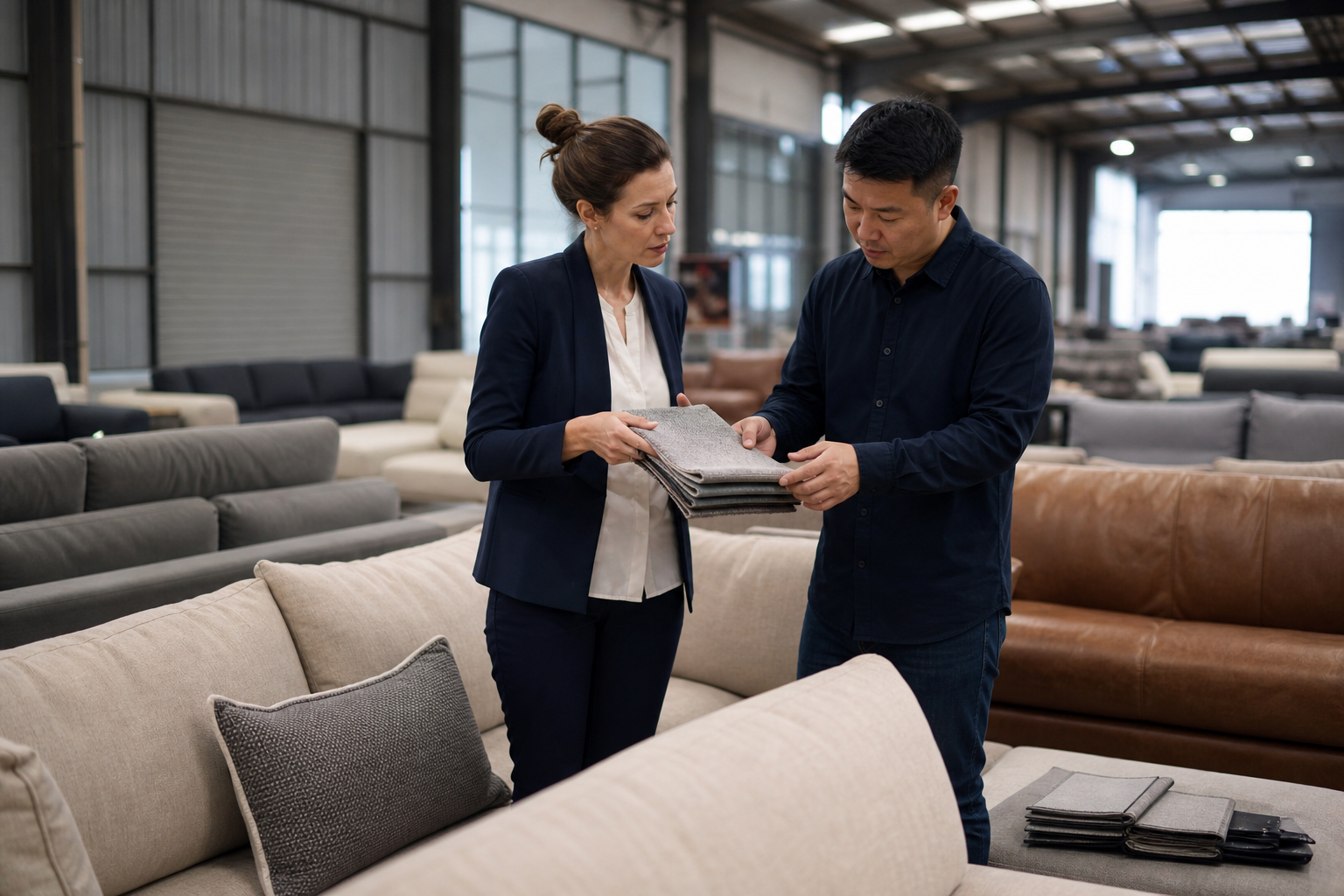
- Use samples and small-batch displays to validate locally.
- Align promotional effort to the strength of the local signal.
- Keep display space split between proven sellers and experiments.
- Track both quantitative sales and qualitative customer comments.
- Leverage flexible ordering tools to scale up only after validation.
Following those steps keeps your cash and floor area working for you, not against you.
Conclusion
The best defense against slow-moving inventory isn’t faster clearance — it’s buying better in the first place. By combining city-level and store-level signals, running small, measurable experiments, and aligning display and marketing effort to local evidence, independent retailers can turn procurement into a predictable, low-cost learning process. StarbornHub supports that shift with structured signals, fabric pools, and flexible supply options, but the final value comes from how you interpret evidence and execute locally. Start treating every new style as a staged experiment: smaller bets, clearer signals, and fewer costly surprises.
More articles in this content module
Module: Product Selection Risk
This is the full reading map for the current content block, so you can follow the logic inside this topic before jumping to another issue.
- Who really decides whether a sofa style will sell?
- Why is retail experience alone less reliable than before?
- How can a retailer make better buying decisions with limited space and cash?
- How should a furniture store build a stronger product range?
- What makes a furniture buying decision actually good?
- How can a furniture retailer choose products with better direction?
- Style And Fabric Choice Should Enter The Mechanism?
- Data Assets That Help You Choose Sofas That Sell
- AI Lowers The Barrier To Design Expression?
- AI Cannot Replace Design Judgement?
- More AI Design Makes Selection More Important?
- AI Makes Design Filtering More Important?
- The Design Selection Flywheel: How Retailers Reveal Which Sofas Will Sell
Other content modules you may want to explore
If your concern is not only this one issue, these modules open nearby paths in the StarbornHub theory system.
Another problem retailers often connect to this: A nearby visible problem you may also be dealing with
Customer Asset And Relationship Capture
Are website visits, blog clicks, customer questions, and reviews being captured as usable signals?
First reading in this module: How account-linked benefits bring furniture customers back to the showroom
What this could improve if handled better: A possible business gain behind this issue
Validation And Small-Batch Testing
What should be validated before a larger stock commitment?
First reading in this module: Why does market pressure lead to the StarbornHub model?
What it may take, cost, or risk: The practical concern before trying a new path
Is the sales drop caused by fewer visitors, lower conversion, weaker product fit, local market pressure, or broader economic pressure?
First reading in this module: What changed in the furniture retail market?