
StarbornHub Is Trying To Build?

If you run a furniture store, your recurring dilemma is painfully familiar: which sofa styles deserve the cash, the showroom square footage, and the manager’s attention?
Buy too much and you carry dead stock; buy too little and you miss sales and goodwill. The structure we’re building at StarbornHub is meant to move independent retailers out of that guessing game and toward clearer, locally grounded signals that inform buying — without pretending to eliminate all risk.
Below I’ll walk through the business logic and the mechanism we’re assembling: redefined roles for everyone in the chain, ways to convert one-time visitors into retailer-bound assets, layered reports that give you purchase-ready evidence, and a factory feedback loop that supports low-risk sampling. The goal is practical: give you better reasons to commit floor space and capital when the data participation history converge.
Where this article starts: The previous article in this logic chain ended with this point: Buying inventory before you have high‑quality proof of local demand is risky when you act alone. But acting alone is avoidable. When retailers, customers, designers, and factories participate under a clear rule set and organized signal flow, testing becomes an accountable business process rather than a speculative bet. StarbornHub's approach is to make th... This article starts from that point and looks at the next practical question: Should furniture retailers buy stock before testing customer demand?.
Previous logic point: Should furniture retailers buy stock before testing customer demand?.
Rethinking who does what
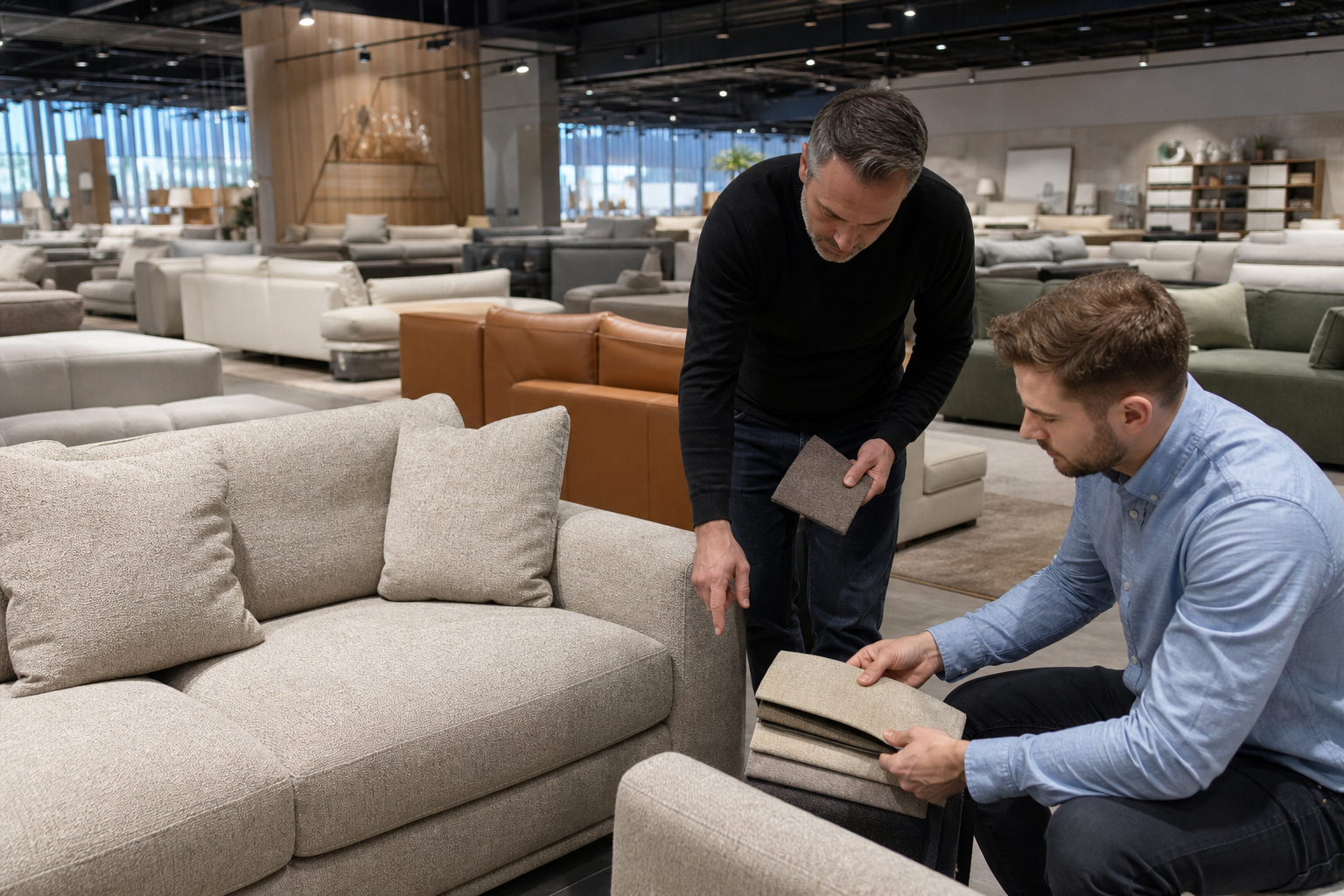
One of the clearest takeaways from trying this in practice is that the old three-box division — retail shows, designers design, factories make — leaves important work unowned. We deliberately reassign responsibilities so everyone becomes a participant in validation.
- Consumers: they’re not just the endpoint. We invite them to express preferences early — voting on silhouettes, choosing fabrics, even contributing ideas when the conditions are right. Those signals are valuable early indicators of whether a style will land.
- Retailers: you become the steward of user relationships and the primary source of local context. The store environment converts natural foot traffic into a lasting asset when customers are on a retained account and their interactions are recorded as part of your store’s profile.
- Designers: they keep creative control but gain ongoing market signals that inform which details to refine for real customers rather than hypothetical ones.
- Factories: they shift from passive order-takers to responsive supply partners that can produce samples or small runs quickly when a test signal justifies it.
This rearrangement matters because it makes validation a shared responsibility. It’s not about outsourcing risk to one party; it’s about aligning incentives so early signals can be turned into testable samples and short production runs with a clear line back to the retailer who cultivated the demand.
Turn store visits into retailer-bound assets
Central to lowering buying risk is stopping thinking of each in-store visit as a one-off. We do that by encouraging account binding in the retail space: customers register or log in during their visit and their activity becomes part of a longitudinal profile that remains tied to your store.
Practically, that means when a customer votes on a fabric or expresses interest in a silhouette, that preference is captured and attributed to your shop. Over time these interactions build value that isn’t measured solely in immediate purchases but in a future revenue share and recommendation value that flows back to the retailer who nurtured the relationship. The point is not to create a complicated ledger for you to manage, but to make customer signals traceable and recoverable in later ordering cycles.
This is why we emphasize accountized participation: it lets you measure real customer intent (not just casual likes), aggregate repeat signals, and claim a part of the downstream benefit of those customers when they convert.
Data that informs buying, not just dashboards
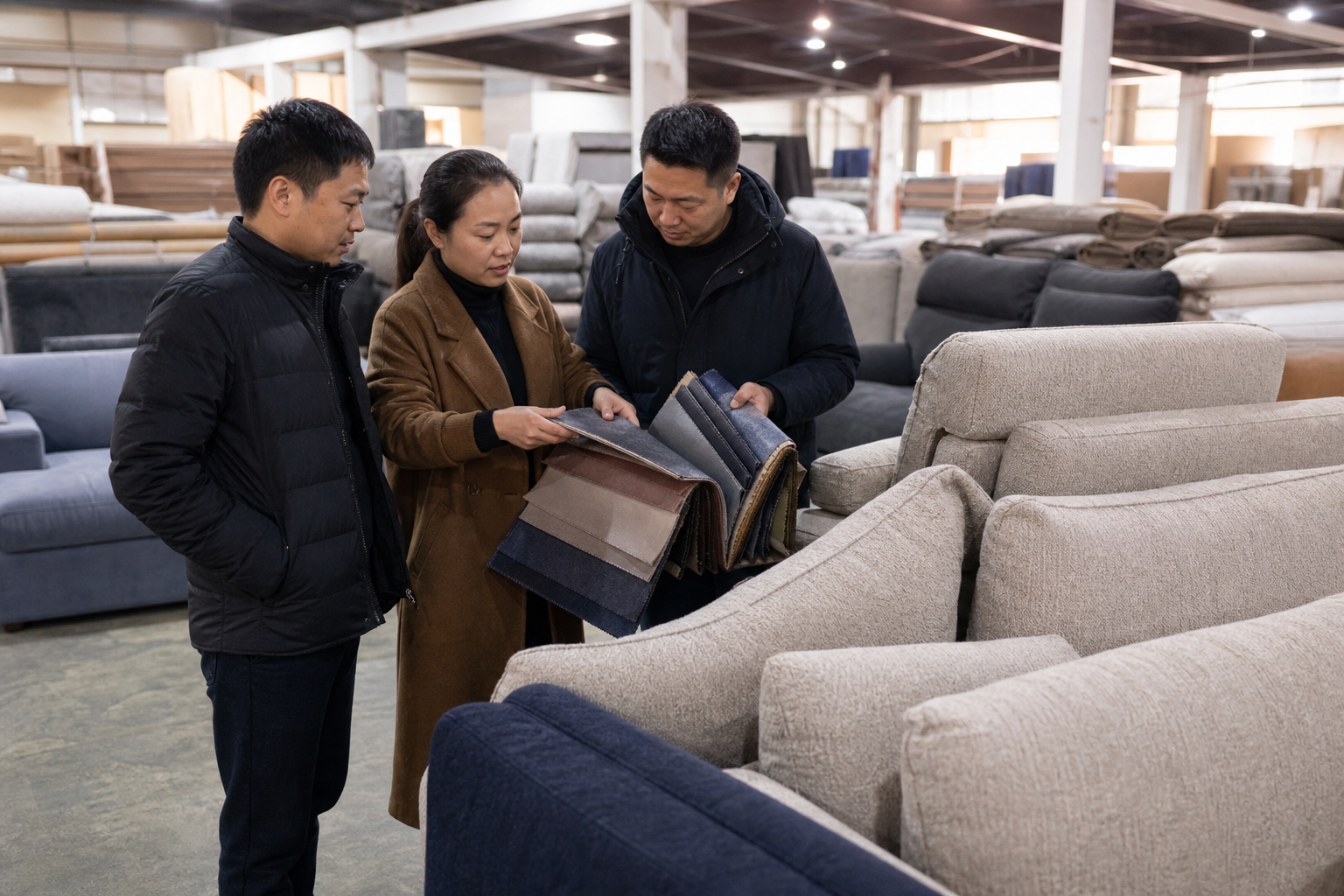
Raw likes and clicks won’t tell you whether to buy a container. So the platform organizes signals along dimensions that make commercial sense — for example, separating silhouette preference from fabric interest — and bundles results into multi-tier reports:
- Platform-wide trends that show broad directional shifts.
- City and local-area trends that highlight what kinds of pieces are gaining traction near you.
- Your store’s own preference profile, built from your registered customers.
These layers give you defensible reasons to change the balance of your inventory. They’re designed to reduce the chance of large misses by turning noisy signals into corroborated evidence: multiple customers in your store, a local uptick in the city report, and a matching item showing early online interest. When those lines converge, it’s a higher-probability bet to allocate showroom space and place a more meaningful order.
Importantly, this process is about probability, not certainty. The system increases the odds that you pick winners and speeds iteration when something is off. It won’t make every buy a hit, but it does make your decisions more evidence-driven.
A flexible factory loop that supports trials
A persistent barrier to low-risk testing is production economics: factories need scale to stay viable. We address that by embedding flexible supply capacity and sample development into the system.
Factories participating in the network take on earlier-stage sample work and maintain pools of commonly used materials so small, localized displays are feasible at a modest marginal cost. For non-standard requests there’s still a production threshold, but the platform’s role is to convert validated signals into prioritized small-batch development so you can put a real sample in front of customers quickly.
That arrangement means you can refresh showroom assortments without committing to full production runs up front. When a sample performs well and local signals are strong, the path to a larger, more traditional order is clearer and less risky — because the order is now informed by recorded customer behavior and platform-internal reporting.
At the same time, the factory isn’t asked to shoulder unlimited risk. The loop balances speed and flexibility with the economic realities of manufacturing: quick samples and small runs where feasible, larger batches when there’s confirmed demand.
Practical steps for retailers who want to avoid blanket pre-buying
Whether or not you join a cooperative platform, there are actionable moves you can take right away to reduce stock risk and make buying decisions more defensible:
- Start capturing customer intent at the point of visit. Encourage registration or a lightweight interest capture so preferences are tied to accounts rather than anonymous impressions.
- Separate preference dimensions when you test. Ask about silhouette and fabric independently to get clearer signals about what to sample.
- Rotate samples and keep a core flexible pool. Treat showroom space as an experiment rotation plan rather than a long-term commitment for every style.
- Use staged orders. Move from sample → small local run → larger production only when multi-layer signals justify it.
- Partner with factories that will support sample development or small flex runs. You want suppliers who can translate local signals into physical samples quickly.
- Incentivize participation. Tie small customer perks to voting or reservations so signal quality improves without eroding margins.
These steps are intended to reduce your exposure to large, premature inventory commitments while giving you stronger grounds for the purchases you do make.

What this does — and doesn’t — guarantee
The structure we’re building increases the probability that a buying decision is aligned with real demand. It makes customer intent measurable, ties value back to the retailer who generated it, and creates a supplier relationship that can support low-risk sampling and small runs. That combination means retailers can lean into evidence-based buying rather than gut-only decisions.
But it’s not a magic wand. Not every tested style will become a hit. Some local tastes are volatile, and external factors will always influence purchase behavior. The promise is not certainty; it’s higher-quality signals and a smoother path from signal to sample to sale.
How StarbornHub helps you make the call
For stores that participate in the StarbornHub cooperation mechanism, the platform acts as the connective tissue: it preserves account bindings, aggregates and returns layered reports, and works with factories to prioritize sample development when local signals justify it. In short, it reduces the information asymmetry that forces premature bulk buying, and aligns incentives so the retailer who builds the demand can capture ongoing benefits.
If you’re weighing whether to buy bulk stock before testing content or customer response, the answer increasingly looks like this: don’t buy blindly. Instead, seek ways to capture and attribute customer intent, run targeted in-store tests with samples, and use corroborating local and city-level evidence before committing significant capital. When those signals align — and when a supplier can support a low-cost sample pathway — that’s when larger buys make the most commercial sense.
Conclusion
Independent retailers don’t have to choose between conservatism and missed opportunity. By rethinking roles across the chain, binding customers to retailer accounts, using layered reports to turn signals into evidence, and working with factories prepared to support small, rapid samples, you can make better, lower-risk buying decisions. StarbornHub’s model is about creating that practical bridge from customer intent to purchasable product — increasing the odds of good buys while keeping factories and retailers protected from unnecessary exposure. If you want to reduce the guesswork, start by capturing local intent, rotating samples, and asking for corroborating signals before you commit large inventory dollars.
More articles in this content module
Module: Validation And Small-Batch Testing
This is the full reading map for the current content block, so you can follow the logic inside this topic before jumping to another issue.
- Why does market pressure lead to the StarbornHub model?
- Why Independent Furniture Retailers Are the Best Validation Leverage
- Should furniture retailers test demand before buying deeper stock?
- What problem is StarbornHub really trying to solve for retailers?
- Why does StarbornHub challenge the traditional furniture supply chain?
- Why should furniture retailers validate demand before a bigger order?
- Local Customer Feedback and Safer Sofa Purchases: Turning Reports into Buying Decisions
- How much confidence should a retailer have before buying stock?
- Small-Batch Supply Reduces Retailer Stock Risk?
- Continuous Product Renewal Matters?
- The Operating Conditions Work Together?
- A Retailer Cannot Build This Mechanism Alone?
- Software Alone Cannot Solve Sofa Buying Risk
- What kind of system helps furniture retailers make safer buying decisions?
- Qualified Customer Registration Supports Buying Decisions?
- Monthly New Product Development Should Work?
- The StarbornHub Mechanisms Form A Loop?
- Inventory and Validation: Where to Draw the Line Before You Buy
- StarbornHub Uses AI Without Letting AI Decide Everything?
- AI Cannot Decide For Furniture Retailers?
- The StarbornHub Growth Flywheel Means?
- Platform Growth Must Serve Retailer Growth?
- Must Be True For The Flywheel To Work?
- StarbornHub Did Not Start From Software
- Factory Growth Depends On Retailer Customer Growth?
- StarbornHub Is Actually Trying To Validate?
- Retailers, Customers, And Factories Must Participate Together?
- StarbornHub Is Trying To Build?
- Kind Of Retailer StarbornHub Is Inviting?
Other content modules you may want to explore
If your concern is not only this one issue, these modules open nearby paths in the StarbornHub theory system.
Another problem retailers often connect to this: A nearby visible problem you may also be dealing with
Is the sales drop caused by fewer visitors, lower conversion, weaker product fit, local market pressure, or broader economic pressure?
First reading in this module: What changed in the furniture retail market?
What this could improve if handled better: A possible business gain behind this issue
Does the margin calculation include freight, delivery, damage, markdowns, financing, returns, and slow stock?
First reading in this module: How much margin room does an independent furniture retailer need?
What it may take, cost, or risk: The practical concern before trying a new path
Supplier Trust And Quality Responsibility
What incentive does the supplier have to protect quality after the first order?
First reading in this module: Quality Consistency Needs A Visible Process?