
StarbornHub Does Not Replace Independent Retailers?
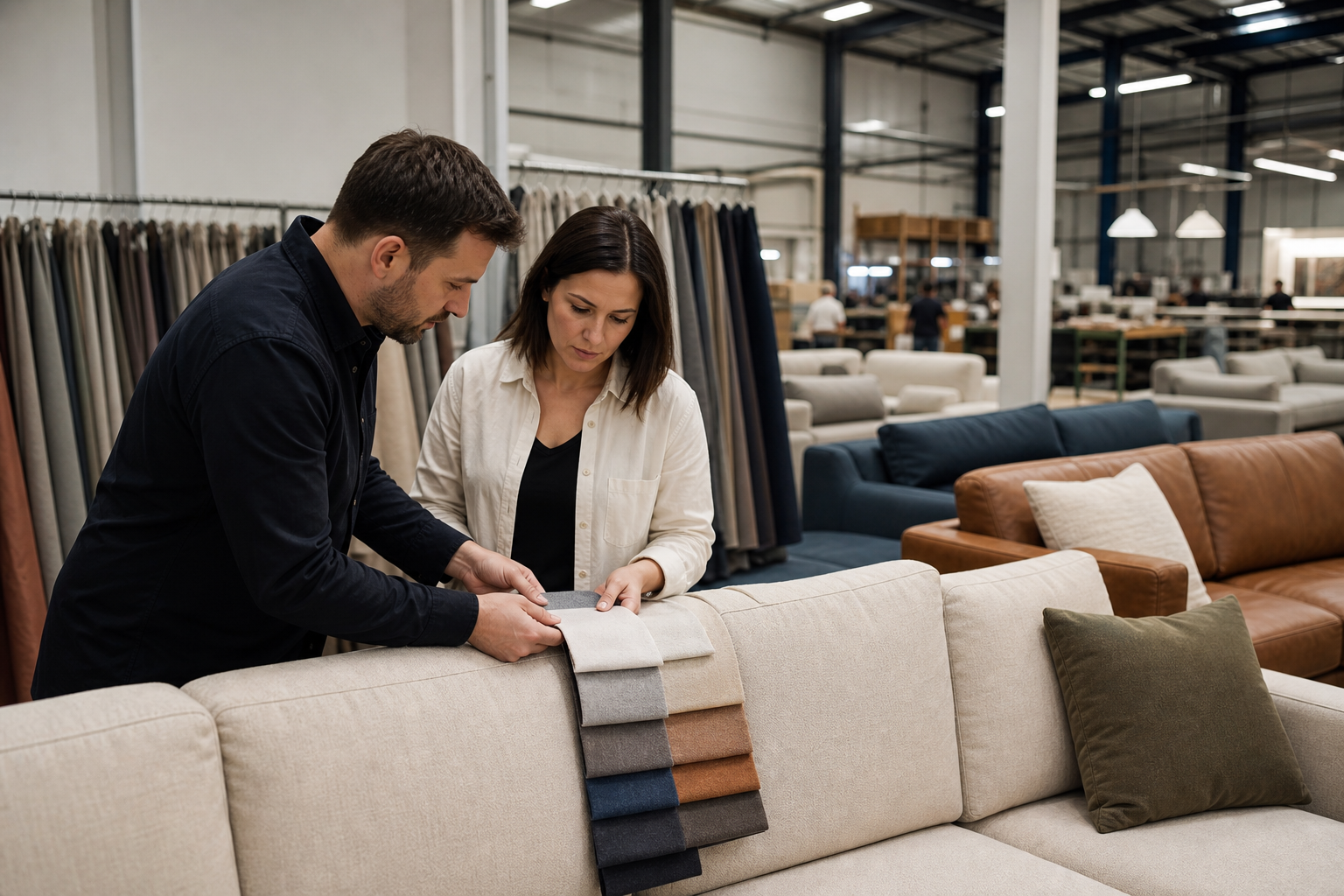
If you run an independent furniture store, the daily dilemma is familiar: which sofas deserve cash on the floor and which should stay on the catalog? StarbornHub's mission is simple — give you clearer, business-oriented signals so your buying choices are less guesswork, while leaving the ultimate decision and responsibility where it belongs: with you.
Below I outline how StarbornHub supports retailers without replacing them, and what to ask a new sofa supplier (or a partner platform) before committing valuable showroom space and inventory budget.
Where this article starts: The previous article in this logic chain ended with this point: The core point is straightforward: buying inventory before you have reliable local signals is a costly gamble. StarbornHub’s validation effort is about turning in-store behavior into a repeatable, business-grade signal that reduces that gamble. For retailers, that means running short, realistic tests that capture registration, interest, and conversion; fo... This article starts from that point and looks at the next practical question: What should a furniture retailer ask before trusting a new sofa supplier?.
Previous logic point: Should furniture retailers buy stock before testing customer demand?.
Start from decision ownership
One clear design principle behind StarbornHub is that local retailers know their customers best. That means purchasing, merchandising, and local marketing choices are yours. The platform supplies data, samples and operational processes as inputs — not substitutes — for your judgment.
Concretely, you remain responsible for:
- Interpreting foot traffic and converting it into display decisions.
- Deciding order quantities that match your cash flow and warehouse capacity.
- Choosing how to position a model in the showroom and which local channels to activate.
StarbornHub’s role is to reduce information asymmetry so those choices are better informed. But there’s no replacement of your role as buyer, merchandiser or retailer.
What the platform actually offers — a supportive middle layer
Think of StarbornHub as a supportive middle layer that organizes factory capability, designer input, in-market user feedback and your store feedback into usable resources. That support shows up in several business-facing ways:
- Aggregated vote and feedback reports reflecting both local store interactions and platform-level trends.
- Flexible ordering and sample logistics so you can test models without over-committing capital.
- Mechanisms that convert natural foot traffic into measurable local user assets, which in turn feed future product decisions.
- Local protection tools and account binding that reduce direct conflicts between nearby stores using the platform.
These are practical capabilities meant to reduce the risk from single-store experience or short-term promotions. The aim is to help you build repeatable inputs for buying, not to substitute your long-term merchandising plan.

How the mechanism amplifies retailer capability — not control it
StarbornHub is engineered as an amplifier. Over time, the platform helps you turn sporadic in-store learnings into durable assets: registered customers, verified preferences, and performance signals that guide what you keep in the showroom.
Key elements you should expect from such a mechanism:
- Long-term value sharing that rewards the store for developing local customers, rather than one-off incentives that push a short-term sale.
- User-quality filtering so feedback used to pick new models is representative of engaged buyers, not random online traffic.
- Account-level binding that ties customer assets and rewards to your store’s efforts so your investment in customer development isn’t lost.
- Flexible fulfillment and sample programs that let you trial models in real conditions before scaling inventory.
All of these are designed to give you a better evidence base for buying decisions. You still decide which styles get floor space, what price points to emphasize, and how to merchandise for your local clientele.

What to ask before you trust a new sofa supplier or platform
If you’re evaluating a new supplier or considering deeper cooperation with a platform, these are pragmatic, business-focused questions that reflect StarbornHub’s approach to protecting retailer sovereignty:
- How will you help me test a style in real store conditions before I commit inventory? Look for trial sample support and flexible replenishment options rather than rigid minimum orders.
- What real signals will I get from my store’s customers versus broad platform trends? Insist on reports that separate local feedback from aggregate data so you can see what matters to your market.
- How are my store’s customer assets preserved if I stop participating? Find out whether your customer registrations and earned benefits remain tied to your account and how they can be claimed or transferred.
- What local protections exist against immediate nearby competition using the same models in the same neighborhood? Clarify city or territory-level safeguards that prevent direct undercutting.
- How transparent are the reports and account statements? Ask for verifiable account flows and clear reporting so you can audit performance and returns from your trials.
- What responsibilities will I retain? Make sure roles are explicit: you should own on-floor merchandising, local promos, customer development and final ordering decisions.
These questions align with the platform’s purpose: improving your signal-to-noise ratio on product selection without taking over the levers of your business.
Clear boundaries and shared responsibilities
A healthy partnership requires boundary clarity. StarbornHub defines its responsibilities around platform rules, logistics, sample distribution, reporting and the basic account mechanics. You retain responsibility for store-driven activities: converting visitors, registering customers, setting up samples, deciding orders and local execution.
Why that matters for you:
- It keeps your operational freedom intact. You control merchandising and pricing within local realities.
- It protects your investment in customer development. Account-level bindings and long-term long-term value-sharing structures are there to make sure your effort produces ongoing value.
- It reduces conflict. When roles are clear, it's easier to resolve disputes and make collaborative improvements.
Even if a retailer pauses or exits the platform, the system is designed to preserve the record of customer activity and value generation — not to give the platform a license to step into the retailer’s commercial role.

Trust and institutional safeguards
For a partnership like this to work, you need predictable institutional guardrails. These are the business mechanisms that make the platform a dependable partner instead of a competitor:
- Transparent reports and verifiable account statements so you can trace how local customer activity creates value.
- Clearly documented local protections and boundaries so your showroom investments aren’t undercut by platform-driven local competition.
- Reversible or auditable exit paths that allow you to reclaim earned value if you change strategy.
These safeguards aren’t just paperwork; they’re the foundation for a real, long-term relationship. When you can see how value flows back to your store and under what rules, you can make bolder, informed bets on inventory and merchandising.
How to make StarbornHub work for you
If you decide to work with a platform built on these principles, treat the relationship like a capability investment:
- Use the trial and sample options liberally to validate styles in your store environment.
- Convert walk-ins into registered local customers so you can track what actually converts and earns long-term value.
- Feed your local insights back into the platform reports — high-quality local feedback improves the signal for everyone, including you.
- Keep control of merchandising and local promos; use platform signals to inform, not dictate, your choices.
When these parts work together, you reduce the risk of investing showroom space in styles that won’t sell and gain a clearer path from a promising prototype to a proven local bestseller.
Conclusion
StarbornHub was built around a clear trade-off: provide better information, sample flexibility and institutional protections so independent retailers can make smarter buying choices — while leaving procurement and in-store decisions firmly in retailer hands. If you’re vetting a new sofa supplier or platform, focus your questions on how they support testing, preserve your local customer assets, and keep responsibilities distinct. Done right, the platform amplifies your store’s ability to turn traffic into long-term value without taking away your control over what you sell and how you sell it.
More articles in this content module
Module: Supplier Trust And Quality Responsibility
This is the full reading map for the current content block, so you can follow the logic inside this topic before jumping to another issue.
- Quality Consistency Needs A Visible Process?
- Fabric Choice And Custom Options Need Control?
- Wholesalers Struggle To Build This Mechanism?
- Large Factories Usually Avoid Retailer-Led Validation
- Smaller Factories Can Support Flexible Retailer Cooperation?
- Why Chinese Small & Mid-Sized Sofa Factories Work Better for Flexible Retail Partners
- Where Reliable Sofa Quality Really Comes From
- China Supply Chain Should Not Be Overpromised?
- Sofa Repair and Claim Options?
- First-Order Trust Connects With Quality Control?
- Two Similar Furniture Stores Can Become Different Over Time?
- StarbornHub Starts From A Real Factory Base?
- Roger's Factory Background Matters?
- StarbornHub Does Not Replace Independent Retailers?
- What should a furniture retailer ask before trusting a new sofa supplier?
Other content modules you may want to explore
If your concern is not only this one issue, these modules open nearby paths in the StarbornHub theory system.
Another problem retailers often connect to this: A nearby visible problem you may also be dealing with
Is the sales drop caused by fewer visitors, lower conversion, weaker product fit, local market pressure, or broader economic pressure?
First reading in this module: What changed in the furniture retail market?
What this could improve if handled better: A possible business gain behind this issue
Does the margin calculation include freight, delivery, damage, markdowns, financing, returns, and slow stock?
First reading in this module: How much margin room does an independent furniture retailer need?
What it may take, cost, or risk: The practical concern before trying a new path
Customer Asset And Relationship Capture
Are website visits, blog clicks, customer questions, and reviews being captured as usable signals?
First reading in this module: How account-linked benefits bring furniture customers back to the showroom