
How does product-market fit become a growth flywheel for furniture retailers?
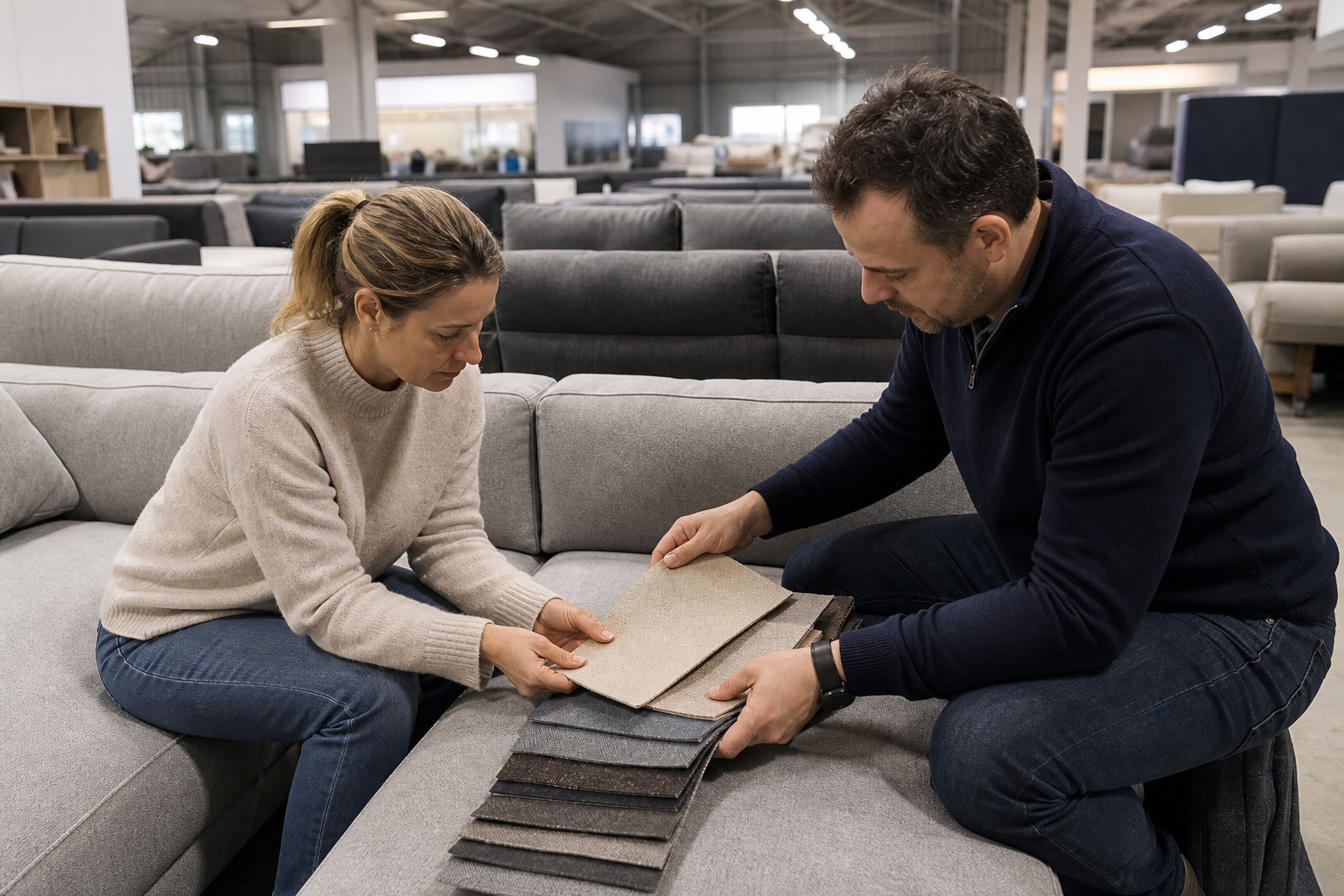
Slow-moving inventory is one of the most visible pains in a furniture store: it ties up cash, uses valuable floor space, and distracts staff from selling the right pieces.
The better answer isn't just running clearance more often—it's changing how you decide what to buy in the first place. When product selection becomes a predictable, data-informed process that’s verified locally before big stock commitments, retailers reduce trial-and-error costs and turn buying into a learning engine that feeds future success.
Below is a practical approach, based on the StarbornHub mechanism, that independent retailers can use to turn local market signals into a growth flywheel.
Gather layered market signals, not a single verdict
Local demand is not homogeneous. What moves in one city may stagnate in another. The intelligent approach is to capture signals at three complementary levels and use them together:
- Platform-wide trends give you directional context and cross-city comparisons—what’s emerging or fading overall.
- City-level samples reveal cultural, climatic, and style differences that matter for regional assortments.
- Your own store’s customer interactions are the most predictive of actual purchases.
When these layers are presented together, you shift buying from “intuition + history” to “data + local judgment.” StarbornHub surfaces those different layers so you see how a candidate design is performing at scale, in the region, and among people who look like your shoppers before you decide to commit to large quantities.
Use votes and earned-user weight as a quality filter
Not all feedback is equally useful. StarbornHub treats the platform’s voting and participation record system as more than gamified engagement; it’s a mechanism to identify reliable local judges. Two practical principles:
- Separate votes for style from votes for material. That helps you understand whether customers are reacting to the look, the build, or both.
- Weight input by accumulated, verifiable behavior. Over time, users who consistently make on-trend or regionally accurate choices gain influence; those whose preferences diverge from local patterns naturally contribute less to your signal.
For retailers that means you get prioritized recommendations that have already passed a quality filter tuned toward local acceptance. This isn’t an exclusionary list; it’s a dynamic prioritization that helps you focus limited sample resources on the items most likely to work for your customers.

Validate with focused in-store samples before large buys
The point of a sample program is simple: test conversion in the exact environment you sell in. Based on layered signals and filtered votes, choose a small, targeted selection of samples to display. Keep the objectives narrow:
- Prioritize a few SKUs that represent different risk profiles (low, medium, strategic).
- Test behavior metrics that matter: dwell time, enquiries, try-ons (e.g., test-sits), and conversion rate.
- Use the limited assortment to see whether the filtered signal translates to real purchases under your store conditions.
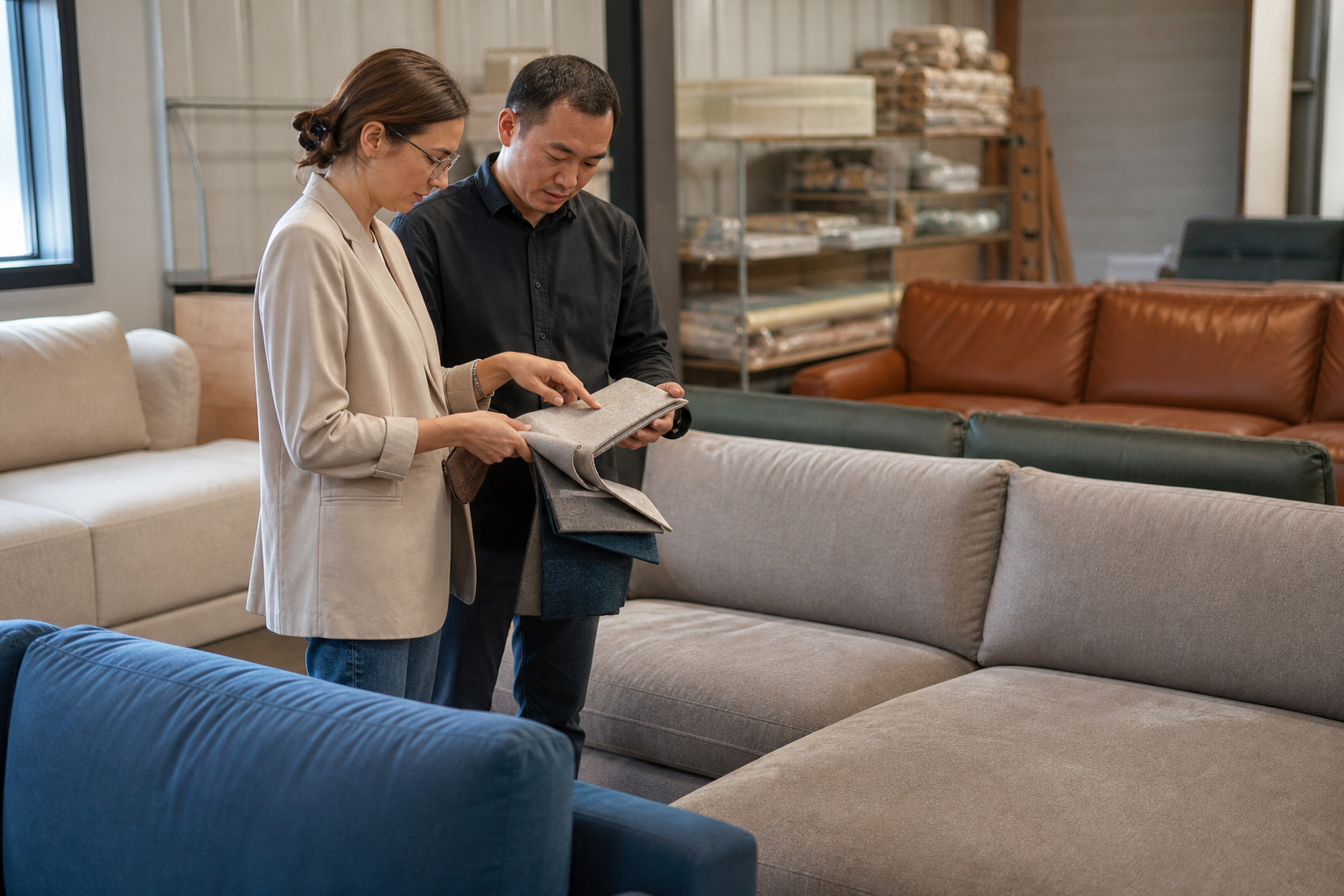
This local validation reduces blind bulk purchases while preserving your autonomy to tweak finishes, dimensions, or merchandising to local tastes. StarbornHub provides prioritized candidate lists and target customer segments so your sample spend focuses on real validation rather than conjecture.
Close the sales → replenishment → data loop to build trust
A single sale is evidence; a repeating, observable chain is proof. When a sample converts and you replenish quickly, the replenishment event itself generates new, valuable data:
- Which fabric or finish moved? How fast did it sell after replenishment?
- Did the same customer cohort respond to replenished stock?
- Did replenishment choices (material, quantity, timing) affect conversion downstream?
StarbornHub feeds these data participation history back to the platform so the initial signals are recalibrated. Over time you no longer see isolated successes or failures but an observable causality: vote → local display → sale → replenish → calibrated signal. Because the platform couples this loop with account binding, city-level protections and long-term value-sharing arrangements, retailers benefit from both immediate sales and the compounded value of developing local customer profiles. That conversion of trust into measurable business metrics—higher confidence in buys, better replenishment accuracy—is the core of the flywheel.
Turn lower trial cost into inventory efficiency
When you front-load market validation, the economics change:
- Fewer SKUs end up as dead stock because you’ve tested them in the relevant retail context first.
- Replenishment accuracy improves because the items that go into a second order already showed real traction locally.
- Your store uses floor space and staff time on proven performers rather than hopeful big buys.
StarbornHub’s flexible supply and local participation mechanisms mean retailers can keep exposure low while still accessing a wide catalog. And because the platform ties short-term transactions to longer-term value sharing (account-linked customer value, account linkage, and local protections), retailers have an incentive to invest in the front-end sample and customer-development work that makes the flywheel spin.

Practical checklist for your next buying cycle
- Map the three signal layers for your market: platform trends, city cues, and your store’s customer profile.
- Run a filtered vote campaign that separates style from material and prioritizes high-signal users.
- Commit a small sample budget to a focused in-store test—measure the behaviors that lead to purchase, not just clicks or likes.
- Treat replenishment speed and choices as an intentional part of the experiment; log outcomes and compare against the filtered signals.
- Repeat and calibrate: use replenishment outcomes to refine which users you rely on for votes and which SKU types get broader rollout.
These steps keep your inventory exposure controlled while you learn, and they turn one-off wins into repeatable patterns.
How this changes day-to-day retail work
This approach asks stores to do three things differently:
- Spend time on focused sample displays and measuring in-store behaviors rather than broad, speculative assortments.
- Use platform-provided prioritization reports as a starting point, not a command. Local merchandising judgment still matters.
- View replenishment as part of product validation: the next order is a data-collection event, not just restocking.
The result is a store that buys with better information, reduces the number of slow movers, and reallocates cash to higher-turning, locally proven pieces.
Conclusion
Reducing slow-moving inventory starts before you place big orders. By collecting layered market signals, using votes and earned user quality as a filter, validating with in-store samples, and closing the sales→replenish→data loop, retailers convert guesswork into measurable learning. StarbornHub’s cooperation model—combining flexible supply, account binding, local protections and long-term value-sharing—lets independent stores keep exposure low while scaling what works. The practical payoff is higher single-SKU conversion probabilities, better replenishment accuracy, and a sustainable shift from one-off purchases to a repeatable, trust-based growth flywheel. Consider starting small: pick three candidate SKUs, run a filtered vote, set up focused samples, and treat replenishment as the next learning step.
More articles in this content module
Module: Local Market Signal
This is the full reading map for the current content block, so you can follow the logic inside this topic before jumping to another issue.
- How can an independent furniture store stand out without competing only on price?
- Faster Product Iteration and Local Customer Signals
- How has online comparison changed what furniture customers expect?
- How can a furniture retailer read its local market better?
- Why does local protection matter for independent furniture retailers?
- How can furniture retailers cooperate locally without competing on the same products?
- Why is local market intelligence more useful than national furniture trends?
- Using AI to Read Local Market Signals: Practical Steps for Independent Furniture Retailers
- What are the limits of market intelligence for furniture retailers?
- Why AI Makes Local Product–Market Fit More Important
- How does product-market fit become a growth flywheel for furniture retailers?
Other content modules you may want to explore
If your concern is not only this one issue, these modules open nearby paths in the StarbornHub theory system.
Another problem retailers often connect to this: A nearby visible problem you may also be dealing with
Showroom Space And Opportunity Cost
What better product, display, or customer conversation is blocked by the current slow-selling item?
First reading in this module: How much showroom space should a slow-selling sofa keep?
What this could improve if handled better: A possible business gain behind this issue
When does useful customer feedback arrive relative to the buying decision?
First reading in this module: Why does useful furniture customer feedback arrive too late?
What it may take, cost, or risk: The practical concern before trying a new path
Does the margin calculation include freight, delivery, damage, markdowns, financing, returns, and slow stock?
First reading in this module: How much margin room does an independent furniture retailer need?