
The Customer Asset Flywheel: Turning Browsers into Long‑Term Showroom Visitors

Slow‑moving inventory is more than an accounting line: it ties up cash, clutters showroom floors and distracts attention from pieces that will actually connect with local customers.
The usual reflex — markdowns and clearance pushes — treats the symptom. The smarter, longer‑term move is to build a process that turns casual interest into meaningful local signals and showroom visits, so you make better buying choices in the first place.
StarbornHub’s customer asset flywheel is designed for exactly that: creating a local, account‑based feedback loop that reduces uncertainty before large stock commitments are made, and converts participation into repeat in‑store behavior.
Start where the signal is real: register in the store
The single most important boundary is where customers become trackable assets. When registration and initial signups happen inside your showroom, the platform captures users who actually match your price band, aesthetics and shopping cadence. That boundary isn’t about locking customers in with technology; it’s about assuring that the data and participation you collect reflect real, local interest.
Two practical benefits flow from this constraint:
- You turn random online noise into matched samples. A signup in your space is more likely to represent someone who will engage with your assortment and respond to in‑store merchandising.
- You create an account that can accumulate value across activities — votes, feedback, showroom visits and eventual purchases — so the user’s worth is not a single transaction but a continuing relationship.
This means the first conversion you optimize for is not an immediate sale. It’s a showroom registration that seeds a repeatable path to purchase.
Use incentives to lift signal quality, not just frequency
A participation record system should do more than reward visits. The design goal is to surface the customers whose judgments are actually predictive of local demand. When participation (voting on samples, sharing feedback, trying swatches in person) earns participation history and those participation history earn influence over what gets stocked, you begin to separate casual activity from high‑quality local taste.
Think of participation history as a quality filter.The public article should focus on the business principle, while detailed operating terms belong in partner onboarding. For you as a retailer, that means the crowd contributing to your product reports is increasingly representative of the buyers who matter.
This reduces your dependency on vanity metrics like raw traffic numbers. Volume is useful only when it improves the precision of your buying signals.

Tie participation to visits with account-linked customer value and account binding
A powerful lever is converting participation into a reason to come back. Instead of cash rebates, the platform returns part of the value created by participation as account-linked customer value redeemable in partner showrooms. Because these credits aren’t withdrawable cash and can be used in store, they bridge the online or app interaction and the physical purchase.
Crucially, the benefit is bound to a customer account that’s associated with specific retail locations. When those credits are used, the economic benefit is recognized across the retail network in a way that rewards the retailer who developed and retained the user. This turns your investment in guiding and educating a new account into an ongoing revenue stream rather than a one‑time cost.
From a shop perspective, that means small, predictable visits driven by participation incentives can become a steady source of warm demand — and the customer arrives already engaged with your assortment.

Scale improves buying precision — when you measure the right things
More users only help if they increase the variety and reliability of feedback. The flywheel creates two reinforcing channels:
- Information flow: aggregated signals become actionable reports and rankings that guide sample placement, fabric choices and order decisions. These reports are useful precisely because registration and quality filtering improve the signal‑to‑noise ratio.
- Incentive feedback: better‑matched product turns into stronger sales, which makes retailers more willing to cultivate users and test new items.
Combined, these channels shrink the uncertainty around new SKUs. Rather than ordering large quantities on a hunch, you run informed, local experiments: display a sample informed by platform signals, collect structured feedback, and let that feed a more confident purchase decision.
Factory partnerships and StarbornHub’s coordination make that loop practical. Factories can be more flexible with samples and follow‑ups when the demand signals are clear — reducing lead time risk and the temptation to overstock on uncertain lines.
Retailers are the flywheel’s engine — not passive recipients
This is where the idea stops being an abstract product and becomes a commercial play. Retailers drive the flywheel by:
- Encouraging in‑store signups and explaining the value of participation to customers;
- Using platform reports to test targeted sample assortments and fabric choices before larger orders;
- Treating virtual credits as an acquisition and retention tool, not a discounting mechanism;
- Protecting local assortments so that the best local sellers aren’t immediately cannibalized by aggressive platform promotions elsewhere.
The economic payoff is gradual. You won’t convert a showroom into a cash machine overnight. Instead, repeated cycles of user development → higher‑quality feedback → better buys → stronger sales compound into a distinguishable asset line on your balance sheet: an engaged, local customer base tied to your showroom.
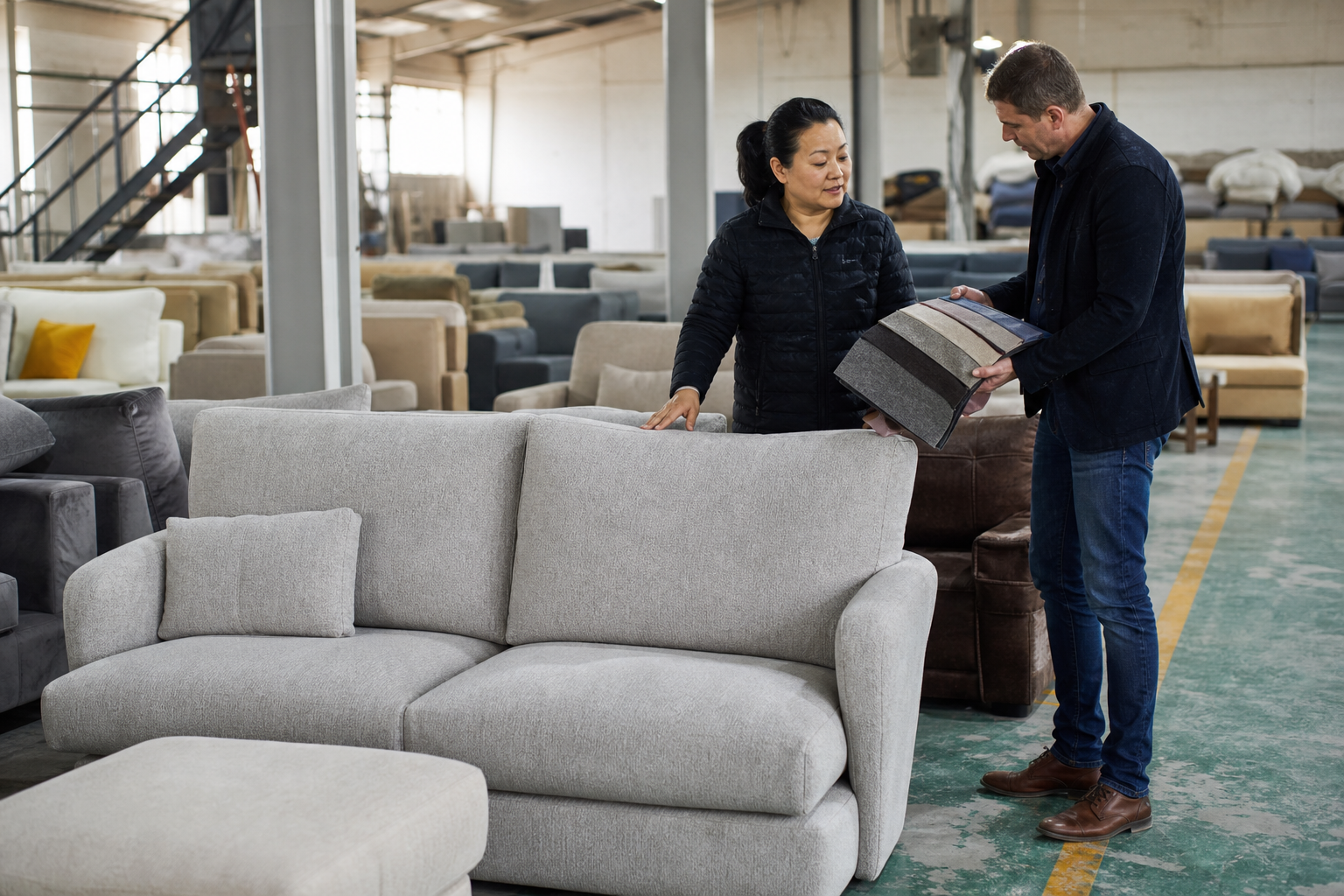
Practical steps independent retailers can take this quarter
- Require initial signups in store and make the onboarding clear and quick. The goal is to establish an account that can be reactivated with incentives.
- Prioritize participation behaviors that reveal taste: voting on samples, trying swatches, rating designs. Reward those behaviors more than simple visit counts.
- Promote virtual credits as a reason to come back — position them as store value rather than a discount to protect margin and perceived quality.
- Use the platform’s local reports to run small, targeted sample tests before committing to full buys. Treat each test as an experiment with explicit success metrics (sell‑through, referral likelihood, feedback precision).
- Track signal quality: look for converging feedback from different account segments rather than raw volume. A smaller group with consistent predictive power is better than a large, noisy crowd.
These are operational habits more than technical integrations. They lower the organizational cost of converting natural foot traffic into a predictable business asset.
This is why the customer relationship itself becomes an asset. A retailer that can reach local customers directly, invite them back, learn from their preferences, and connect those preferences to future products is less dependent on paid traffic or accidental online visibility. StarbornHub is built around that idea: use the showroom's real visitors as a representative local sample, turn their choices into usable signals, and help the retailer make product decisions with less blind risk.
Conclusion
The fastest way to move slow inventory isn’t just deeper discounts — it’s smarter buying. By turning showroom signups into durable accounts, using behavior‑based incentives to surface high‑quality local taste, and binding those rewards to in‑store visits, you create a flywheel that improves purchasing decisions over time. For independent retailers, that means fewer speculative orders and floor fills that actually reflect the people walking through your door.
StarbornHub’s role is to provide the institutional framework — account binding, account-linked customer value, local reporting and supplier coordination — so you can turn an otherwise noisy stream of customers into a sustainable asset. The business choice left to you is simple: invest a little in developing the local signal now, and reduce the much larger cost of holding and discounting unwanted inventory later.
More articles in this content module
Module: Customer Asset And Relationship Capture
This is the full reading map for the current content block, so you can follow the logic inside this topic before jumping to another issue.
- How account-linked benefits bring furniture customers back to the showroom
- Turning Online Browsers into Showroom Customers: Building User Assets that Reduce Slow Inventory
- Turning Browsers into Showroom Customers: Building Account-Based Long-Term Value
- How can a furniture store turn visitors into a customer asset?
- Customer Assets Create Future Store Traffic?
- Sales Content Supports Retailer Differentiation?
- Customer Participation Can Grow Over Time (and Turn Browsers Into Showroom Visitors)
- Customer Design Input Can Become Useful Signal?
- Product Knowledge Supports Retailer Selling (and Brings Browsers Into Your Showroom)
- What Data StarbornHub Accumulates — and How Retailers Turn Signals into Showroom Traffic
- Records Become Market Intelligence?
- Data Assets Help Independent Retailers Turn Browsers into Showroom Visitors
- Ordinary Customers May Start Expressing Design Preferences?
- From Browsers to Showroom Visits: Let Customer Scenes and AI Drive Better Sofa Choices
- Turn Real Customer Home Scenarios into a Retail Advantage
- The Customer Asset Flywheel: Turning Browsers into Long‑Term Showroom Visitors
- Data Becomes a Retailer Decision Flywheel
Other content modules you may want to explore
If your concern is not only this one issue, these modules open nearby paths in the StarbornHub theory system.
Another problem retailers often connect to this: A nearby visible problem you may also be dealing with
Showroom Space And Opportunity Cost
What better product, display, or customer conversation is blocked by the current slow-selling item?
First reading in this module: How much showroom space should a slow-selling sofa keep?
What this could improve if handled better: A possible business gain behind this issue
When does useful customer feedback arrive relative to the buying decision?
First reading in this module: Why does useful furniture customer feedback arrive too late?
What it may take, cost, or risk: The practical concern before trying a new path
Does the margin calculation include freight, delivery, damage, markdowns, financing, returns, and slow stock?
First reading in this module: How much margin room does an independent furniture retailer need?