
From Browsers to Showroom Visits: Let Customer Scenes and AI Drive Better Sofa Choices
By Roger, StarbornHub — For independent furniture retailers, the biggest inventory risk isn’t style alone; it’s not knowing which sofa configurations will actually sell in your town.
The classic problem is visible: browsers click a thousand pages online but never cross the showroom threshold. The solution lies in turning those diffuse signals into a local, verifiable asset: real customer scenes that AI can translate into assessable design options, and designers and platform rules that turn those options into lower-risk purchasing decisions.
This isn’t about handing design to random users or trusting raw AI output. It’s about three things working together: authentic scene inputs generated through the store, AI that turns those inputs into tangible proposals, and designer plus platform screening that makes those proposals production-ready and locally profitable.
Start from real scenes — the asset you already walk past
Most browsers are anonymous clicks; they’re not assets until they become tied to a scene. In our approach, the in-store interaction is the moment of conversion: invite customers to register their living room photo, floor plan, family usage notes, and pain participation history. Those uploads become structured "scene assets" — not just pictures, but labeled inputs that capture scale limits, access constraints, functional needs, and style cues.
Why this matters for you: when a showroom visitor gives you a real scene, that data becomes reusable. It’s a local sample you can aggregate and measure. Over time you build a library of what actually matters to buyers in your city: common layout challenges, frequent fabric objections, and recurring aesthetic threads. Rather than guessing which sofa styles deserve floor space, you buy against evidence.
Practical prompt: make the registration simple and contextual. A quick photo plus a few guided prompts — what the family needs, preferred fabrics, existing color palette, and must-have or must-avoid constraints — is enough for the next steps.

Use AI to translate “fuzzy” needs into something you can evaluate
Customers rarely speak in technical terms. They say “it feels cramped” or “I want something comfy but elegant.” AI’s practical role here is as a translator and formatter: it converts photos, rough text, and spatial notes into preliminary layouts, style moodboards, and configuration sketches.
That matters because it turns an ephemeral preference into a concrete candidate you can discuss, test, and present. AI-generated outputs are not orders to the factory; they’re evaluation material. They let you and your customer preview how a sofa might look in the actual space — and they dramatically increase the number of customer ideas that make it into the review pipeline.
How you can use it today:
- Offer AI-backed visualizations as an in-store service or an online-to-in-store appointment hook. Customers who see their own room with a suggested layout are more likely to commit to an in-person follow-up.
- Use the visualizations to seed short surveys or local polls: which variant feels right for this living room, fabric A or fabric B? Those votes become quantifiable local signals.
Crucially, keep traceability: every AI sketch should be linked back to the original scene and the account that uploaded it. That trace makes the signal local and actionable rather than an anonymous web impression.
Designers add muscle: they judge, refine, and make ideas manufacturable
AI multiplies ideas; designers decide which ones can be turned into saleable, manufacturable products. In our model, professional designers work as both quality filters and skill amplifiers. They look at AI-generated drafts and ask the commercial questions: can this frame be built? Is the price structure realistic for our market? What manufacturing adjustments are needed to keep production feasible?
Designers also play a customer-education role. When a designer refines a customer-led concept and publishes a short rationale — why a certain seat depth suits that family, or why a particular arm style solves the access constraint — the whole community learns. Over time, better customer choices are correlated with better voting behavior; the platform’s quality of input improves.
For independent retailers, this partnership is valuable: you don’t need to hire a full-time industrial designer, but you can participate in a workflow where vetted designers turn local customer impulses into vetted product candidates.

A platform loop that protects the retailer’s investment
Generating ideas is the beginning; turning them into stockable product is the risk. That’s why the process needs a platform-managed selection and verification loop before you commit showroom space or cash. The loop we use includes several practical checkpoints: registered customers and account-bound contributions act as a long-term quality filter; community voting and periodic selection rounds provide early market validation; factory prototyping and sample development translate promising concepts into tangible pieces you can show and sell.
From a retailer’s perspective, that loop matters for two reasons. First, it reduces the buyer’s uncertainty: when a concept has passed staged checks and local validation, it’s a more defensible purchase. Second, platform-level protections — such as local development commitments, account binding, and market protection rules — make it reasonable to invest in showpieces and localized campaigns knowing the potential upside is concentrated in your trading area.
StarbornHub keeps the commercial rules clear during onboarding, while public articles focus on the business principle: customer participation should create useful signals and long-term value for the retailer. What matters is the principle: the system rewards genuine, local contribution and protects the retailer’s ability to recoup display, marketing, and development investment where it counts.
How this turns browsers into showroom visitors (and buyers)
If you want to convert online browsers into showroom visits, think in terms of incentives and tangible returns:
- Create a low-friction path from browsing to registration. Offer a clear value proposition: free scene visualization, a personalized layout, or a simple vote that changes a design line-up.
- Use AI visuals as the hook. Offer an online preview that can be finalized in-store. Many browsers will book an appointment when they see a version of "their room" with options they like.
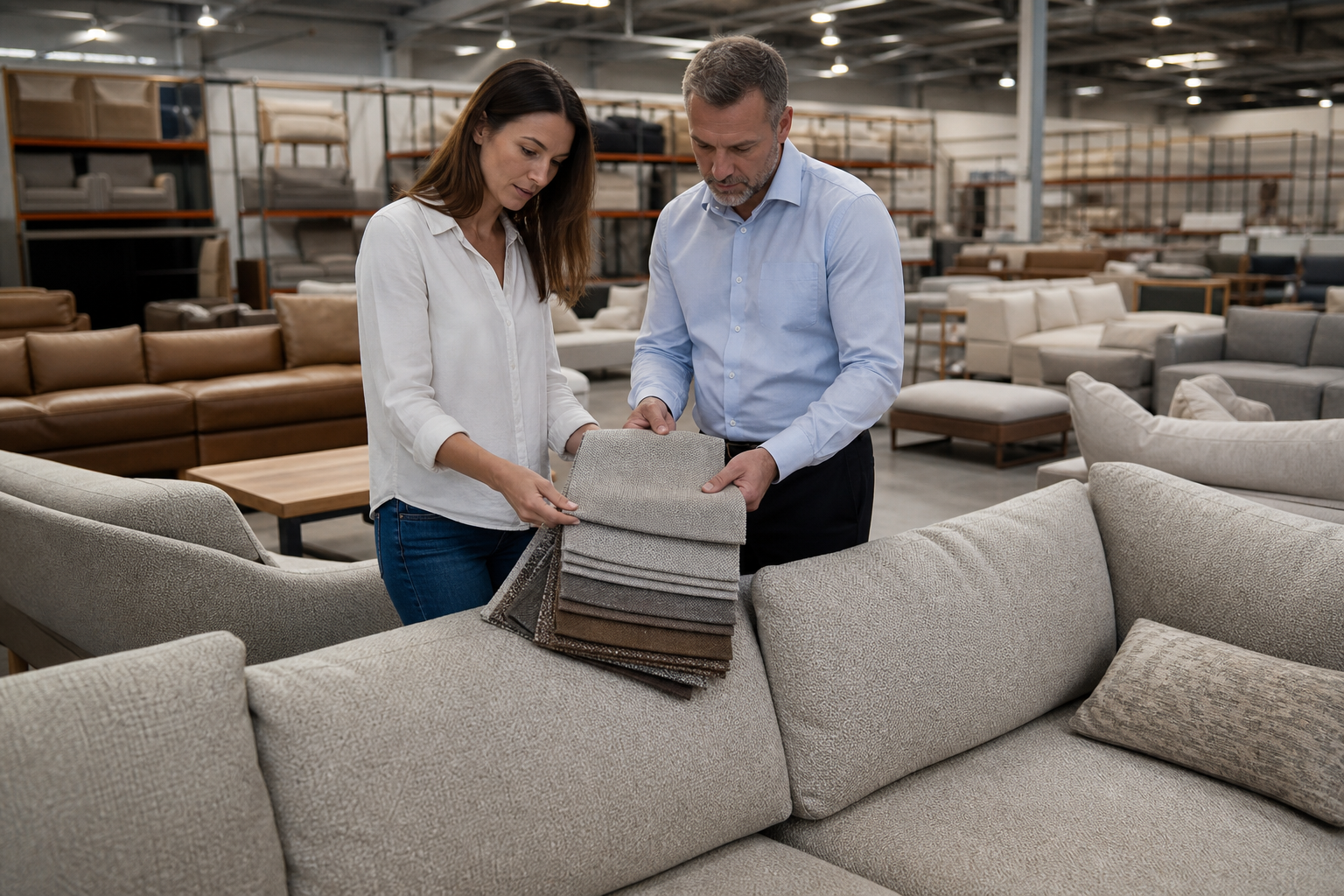
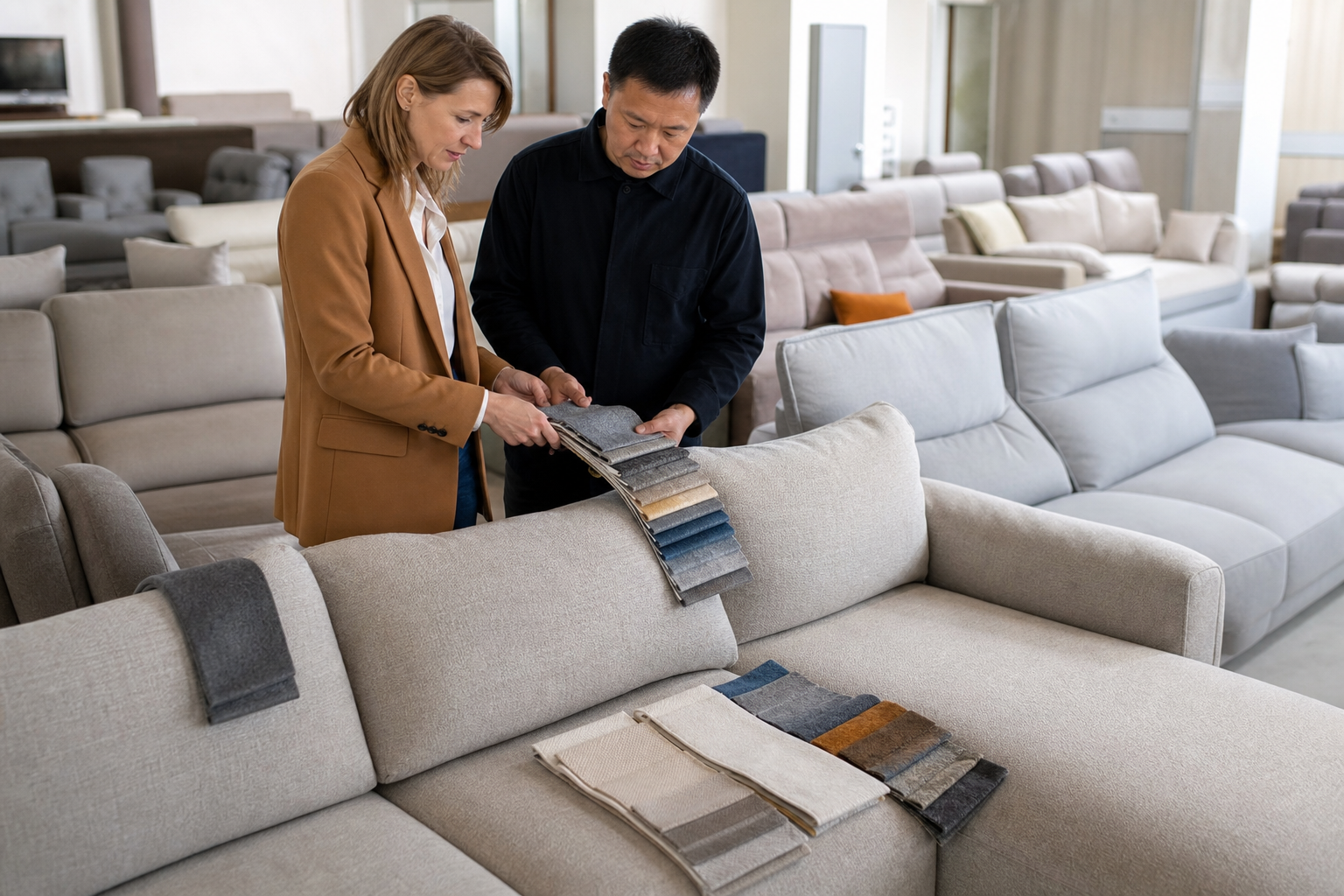
- Make the showroom visit productive. When visitors arrive, the staff use the registered scene asset and AI visuals to focus the conversation: fitting, fabric, and access, rather than abstract style talk. That saves time and raises conversion rates.
- Turn engagement into a measurable local signal. Use store-level voting or short samples that shoppers can test. Those signals feed the platform’s selection rounds and give you stronger justification for buying sample stock.
Example: a casual buyer who saw an AI moodboard online is invited to the store by email. In-store they take a quick photo, confirm preferences, and see a refined layout. That interaction moves them from a browser to a qualified showroom lead — and their input becomes part of the local dataset you use to prioritize which sofa variants to stock.
Practical next steps for independent retailers
1. Treat in-store registrations as a strategic marketing asset, not paperwork. Make the capture quick, useful, and rewarded.
2. Integrate an AI visualization step into the customer journey so ideas become assessable. Position it as a free planning tool that brings browsers in.
3. Partner with designers or platform-provided design review to ensure concepts are manufacturable before you buy samples.
4. Use the platform’s selection and local protection mechanisms to reduce risk when you place showroom or sample orders.
5. Measure what matters: how many registrations convert to showroom visits, how many validated concepts lead to local sales, and which scene types repeat across your customer base.
These steps change how you think about showroom traffic. It’s no longer anonymous volume — it’s a stream of qualified, scene-linked prospects that inform smarter buying.
Conclusion
Independent retailers don’t need more guessing; they need better signals. By anchoring design to real customer scenes captured at the store, using AI to translate those scenes into assessable proposals, and applying designer and platform screening to filter what’s manufacturable and locally relevant, you turn casual online interest into showroom-qualified leads and lower-risk inventory decisions. StarbornHub’s approach is about converting storefront traffic into a lasting local asset: a measured, verifiable flow of product signals that lets you buy closer to demand and keeps showroom investments defensible. Consider where your current process leaks those signals, and start by making registration and AI visualization a small, visible part of the customer journey.
More articles in this content module
Module: Customer Asset And Relationship Capture
This is the full reading map for the current content block, so you can follow the logic inside this topic before jumping to another issue.
- How account-linked benefits bring furniture customers back to the showroom
- Turning Online Browsers into Showroom Customers: Building User Assets that Reduce Slow Inventory
- Turning Browsers into Showroom Customers: Building Account-Based Long-Term Value
- How can a furniture store turn visitors into a customer asset?
- Customer Assets Create Future Store Traffic?
- Sales Content Supports Retailer Differentiation?
- Customer Participation Can Grow Over Time (and Turn Browsers Into Showroom Visitors)
- Customer Design Input Can Become Useful Signal?
- Product Knowledge Supports Retailer Selling (and Brings Browsers Into Your Showroom)
- What Data StarbornHub Accumulates — and How Retailers Turn Signals into Showroom Traffic
- Records Become Market Intelligence?
- Data Assets Help Independent Retailers Turn Browsers into Showroom Visitors
- Ordinary Customers May Start Expressing Design Preferences?
- From Browsers to Showroom Visits: Let Customer Scenes and AI Drive Better Sofa Choices
- Turn Real Customer Home Scenarios into a Retail Advantage
- The Customer Asset Flywheel: Turning Browsers into Long‑Term Showroom Visitors
- Data Becomes a Retailer Decision Flywheel
Other content modules you may want to explore
If your concern is not only this one issue, these modules open nearby paths in the StarbornHub theory system.
Another problem retailers often connect to this: A nearby visible problem you may also be dealing with
Does the margin calculation include freight, delivery, damage, markdowns, financing, returns, and slow stock?
First reading in this module: How much margin room does an independent furniture retailer need?
What this could improve if handled better: A possible business gain behind this issue
Supplier Trust And Quality Responsibility
What incentive does the supplier have to protect quality after the first order?
First reading in this module: Quality Consistency Needs A Visible Process?
What it may take, cost, or risk: The practical concern before trying a new path
Is the sales drop caused by fewer visitors, lower conversion, weaker product fit, local market pressure, or broader economic pressure?
First reading in this module: What changed in the furniture retail market?