
Inventory and Validation: Where to Draw the Line Before You Buy
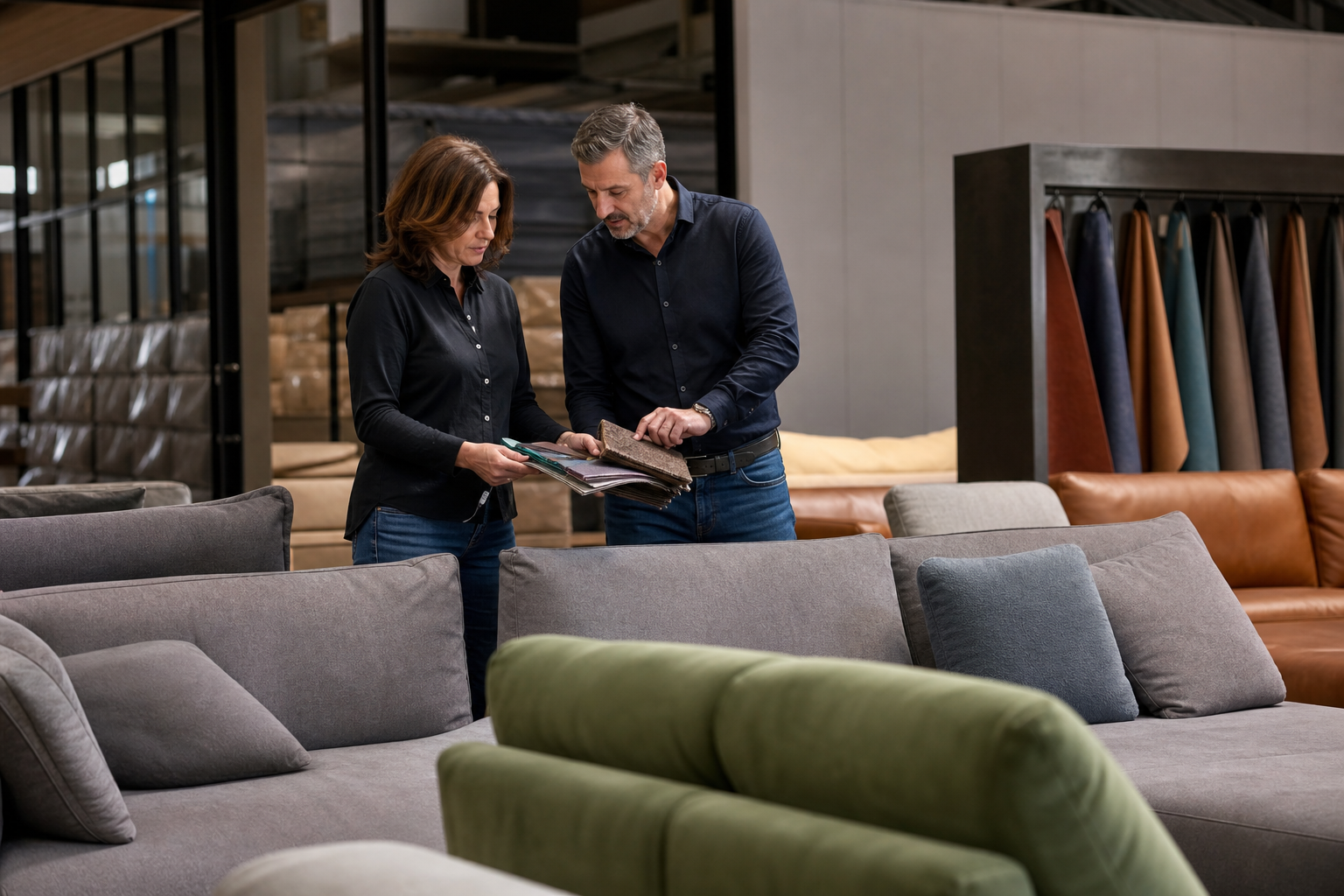
If your main pain is slow-moving inventory tying up cash, floor space, and selling attention, the impulse to solve it by clearing stock faster is understandable.
But StarbornHub's experience shows a different path: the most sustainable way to reduce slow-moving inventory is to avoid the mismatch between product and market in the first place. That means shifting the commitment point from bulk purchase to validated demand.
This isn’t academic. It is about turning foot traffic and real customer interactions into reliable product signals, then letting factory flexibility and local retailer incentives do the rest. Below I map out how that works in practice and what independent furniture retailers should do before buying big.
Why pre-buying feels necessary — and why it hurts
Retailers buy inventory early for familiar reasons: to hit launch timelines, to capture assumed trends, or to secure price breaks. But those advantages come with trade-offs. Unsold pieces cost space and capital and require marketing and markdown effort to move. Worse, they distract staff from selling what local customers actually want.
The central logic is simple. Buying in bulk before you have a validated selection turns inventory into a bet on taste and execution. When that bet misses, the costs compound: markdowns, returns, and customer distrust. Instead of treating stock as a one-off expense, think of it as an investment that should be underpinned by evidence from real buyers.
How a validation-first approach changes the buying decision
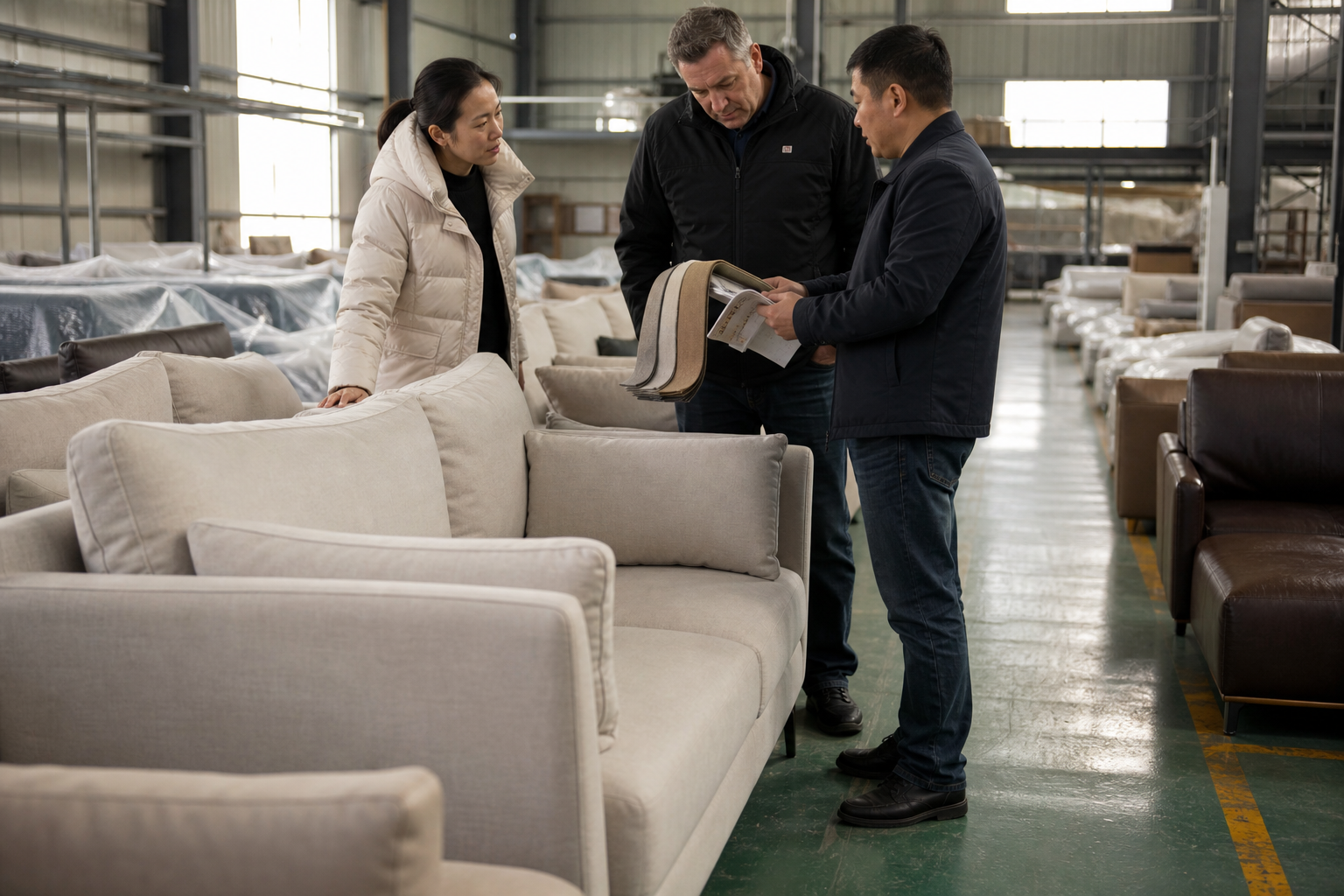
StarbornHub organizes the buying process into interlocking mechanisms that reduce the need for early bulk commitments. The mechanisms are built around five practical levers retailers can use today:
- Capture real in-store signals. Require or encourage customers to register or otherwise participate while in-store so that preferences are sampled from natural foot traffic rather than general online noise. This gives you a trustworthy early signal about what people actually like when they see and touch samples. The result is fewer false positives and clearer local tastes.
- Break down choices to simplify voting. Separate style choices from material choices when you solicit feedback. Customers find it easier to vote on silhouettes or finishes independently, which yields structured data you can combine into viable SKUs without guessing. That lowers the cognitive cost for customers and improves the quality of the signal you use to commit stock.
- Use samples as the commitment point, not full inventory. Treat physical samples on the floor as your primary test. A well-presented sample both gathers voting evidence and serves as a conversion asset. If a style attracts consistent, high-quality votes and local conversions, it graduates from sample to controlled production.
- Convert interaction into re-commerce potential. When customers earn virtual credits or rewards for participating, and those credits are redeemable in-store, you turn one-time voters into returning customers. Account-bound rewards make votes and visits a measurable, long-lived asset, so your validation process builds future demand rather than a one-off opinion.
- Lean on flexible factory capacity. Work with factories that support staged commitments, allow sample-based development, and keep a flexible material pool. This transforms a long-tail of niche preferences into manageable production options and avoids locking retailers into large MOQ-driven positions before the market signal matures.
Practical steps for retailers before committing to inventory
1. Start with a sample-first program
Place a handful of representative samples on the floor and use a simple in-store registration or feedback flow. Aim for quality of interaction over raw volume. The goal is to identify which styles consistently draw engagement and conversion in your location.
2. Split style and material validation
Ask customers to weigh in separately on silhouettes and on materials or finishes. This creates combinable inputs that reduce the chance of producing an unappealing mix. It also lets you create small initial pairings that can be adjusted once demand patterns are clearer.
3. Identify high-quality voters
Not all votes carry the same predictive value. Track repeat participants and those whose past choices correlated with purchases. These high-quality voters become an early target for micro-launches and loyalty activation, and they improve the signal you use to place production orders.
4. Negotiate staged supply commitments
Rather than taking a factory price break at the cost of a huge initial buy, structure orders so styling and materials that have passed the sample test move to a small production run first. If that run meets your location’s expectations, scale incrementally. This keeps working capital flexible and reduces exposure to misjudgments.
5. Use local protection and collaboration where available
When platforms or partners offer city-level protections, they make local sample investment less risky. Retailers can invest in displays and local promotion knowing the same style won’t be saturated by nearby competitors. Where collaboration makes sense, work with other retailers in the region to share sample risk and logistics.
6. Close the feedback loop to factories
When quality issues or customer preferences emerge, capture the details and feed them back to manufacturing. Structured problem reporting and training help factories adapt quickly and reduce the chance that initial small runs will repeat avoidable mistakes at scale.
Designing incentives so retailers will validate before buying
Retailers naturally worry about cannibalization and wasted promotional effort. The mechanisms that make early validation work are also the ones that protect retailers and align incentives:
- Account-bound rewards and account-linked customer value tie customer participation to long-term value rather than a single vote, making validation work build future sales.
- Local exclusivity protections and city collaboration give assurance that an investment in samples and local promotion will not be undermined by immediate local competitors.
- Manufacturer willingness to do initial sampling and staged production turns factory capacity into a partner rather than an inflexible supplier. When factories operate with a flexible material pool and a capacity to take feedback, they help translate signals into reliable product runs.
These levers reduce the downside of sample investment and create a predictable pathway from in-store signal to stocked product.
The role of data and governance in avoiding inventory mistakes
Voting and registration are only the start. You need structured reports at store, city, and platform levels so you can see which signals generalize and which are hyperlocal. Governance mechanisms that periodically adjust how votes are weighted, how materials are pooled, and how city protections are applied keep the whole system from drifting.
Put simply: you want to make product decisions on the combination of local signal and platform-level trends. Local signal tells you what to stock in one store or city; platform trends tell you which wins are likely to scale. Over time, the data you collect becomes an asset that reduces the guesswork behind replenishment.
A simple checklist to follow before buying bulk
- Do you have consistent in-store engagement on a sample? If not, hold off.
- Have style and material preferences been validated separately and then combined? If not, validate more.
- Are there repeat voters or accountable accounts that increase the predictive value of the signal? Prioritize their behaviors.
- Can your factory mobilize a small initial run and incorporate rapid feedback? If not, renegotiate terms or find a different partner.
- Does your location benefit from any local protection or cooperative arrangement that lowers risk? Use it.
If you can answer yes to most of these, a staged inventory commitment is reasonable. If not, buying bulk is still an avoidable risk.
How this affects your staff and floor strategy
The sample-first model changes sales tasks. Staff need to guide customers to interact with the validation flow, collect high-quality feedback, and treat sample displays as ongoing testing assets rather than temporary merchandise. Training and consistent product knowledge make the difference between a sample that produces a valuable signal and one that collects noise.
StarbornHub helps by translating factory knowledge into practical sales coaching so that samples convert at a higher rate and the votes you collect are more predictive of purchase behavior.
Conclusion
Buying bulk before you have clear, local evidence is a bet most independent retailers cannot afford. The better bet is a validation-first workflow: capture in-store signals through registration, split style and material input, use sample displays as both tests and conversion participation history, and rely on flexible factory cooperation for staged production. Account-bound rewards and local protections make validation a long-term asset rather than a one-off opinion.
When retailers combine these mechanisms, they transform slow-moving inventory from an afterthought into a problem solved upstream. That means less cash tied to the floor, fewer markdowns, and a product assortment that reflects real customers visiting your store. If you want to act on this, start with a small, disciplined sample program and use the data it generates to make your first staged buy. Over time, those small steps compound into a much more efficient inventory model.
More articles in this content module
Module: Validation And Small-Batch Testing
This is the full reading map for the current content block, so you can follow the logic inside this topic before jumping to another issue.
- Why does market pressure lead to the StarbornHub model?
- Why Independent Furniture Retailers Are the Best Validation Leverage
- Should furniture retailers test demand before buying deeper stock?
- What problem is StarbornHub really trying to solve for retailers?
- Why does StarbornHub challenge the traditional furniture supply chain?
- Why should furniture retailers validate demand before a bigger order?
- Local Customer Feedback and Safer Sofa Purchases: Turning Reports into Buying Decisions
- How much confidence should a retailer have before buying stock?
- Small-Batch Supply Reduces Retailer Stock Risk?
- Continuous Product Renewal Matters?
- The Operating Conditions Work Together?
- A Retailer Cannot Build This Mechanism Alone?
- Software Alone Cannot Solve Sofa Buying Risk
- What kind of system helps furniture retailers make safer buying decisions?
- Qualified Customer Registration Supports Buying Decisions?
- Monthly New Product Development Should Work?
- The StarbornHub Mechanisms Form A Loop?
- Inventory and Validation: Where to Draw the Line Before You Buy
- StarbornHub Uses AI Without Letting AI Decide Everything?
- AI Cannot Decide For Furniture Retailers?
- The StarbornHub Growth Flywheel Means?
- Platform Growth Must Serve Retailer Growth?
- Must Be True For The Flywheel To Work?
- StarbornHub Did Not Start From Software
- Factory Growth Depends On Retailer Customer Growth?
- StarbornHub Is Actually Trying To Validate?
- Retailers, Customers, And Factories Must Participate Together?
- StarbornHub Is Trying To Build?
- Kind Of Retailer StarbornHub Is Inviting?
Other content modules you may want to explore
If your concern is not only this one issue, these modules open nearby paths in the StarbornHub theory system.
Another problem retailers often connect to this: A nearby visible problem you may also be dealing with
Does the margin calculation include freight, delivery, damage, markdowns, financing, returns, and slow stock?
First reading in this module: How much margin room does an independent furniture retailer need?
What this could improve if handled better: A possible business gain behind this issue
Supplier Trust And Quality Responsibility
What incentive does the supplier have to protect quality after the first order?
First reading in this module: Quality Consistency Needs A Visible Process?
What it may take, cost, or risk: The practical concern before trying a new path
Is the sales drop caused by fewer visitors, lower conversion, weaker product fit, local market pressure, or broader economic pressure?
First reading in this module: What changed in the furniture retail market?