
StarbornHub Did Not Start From Software
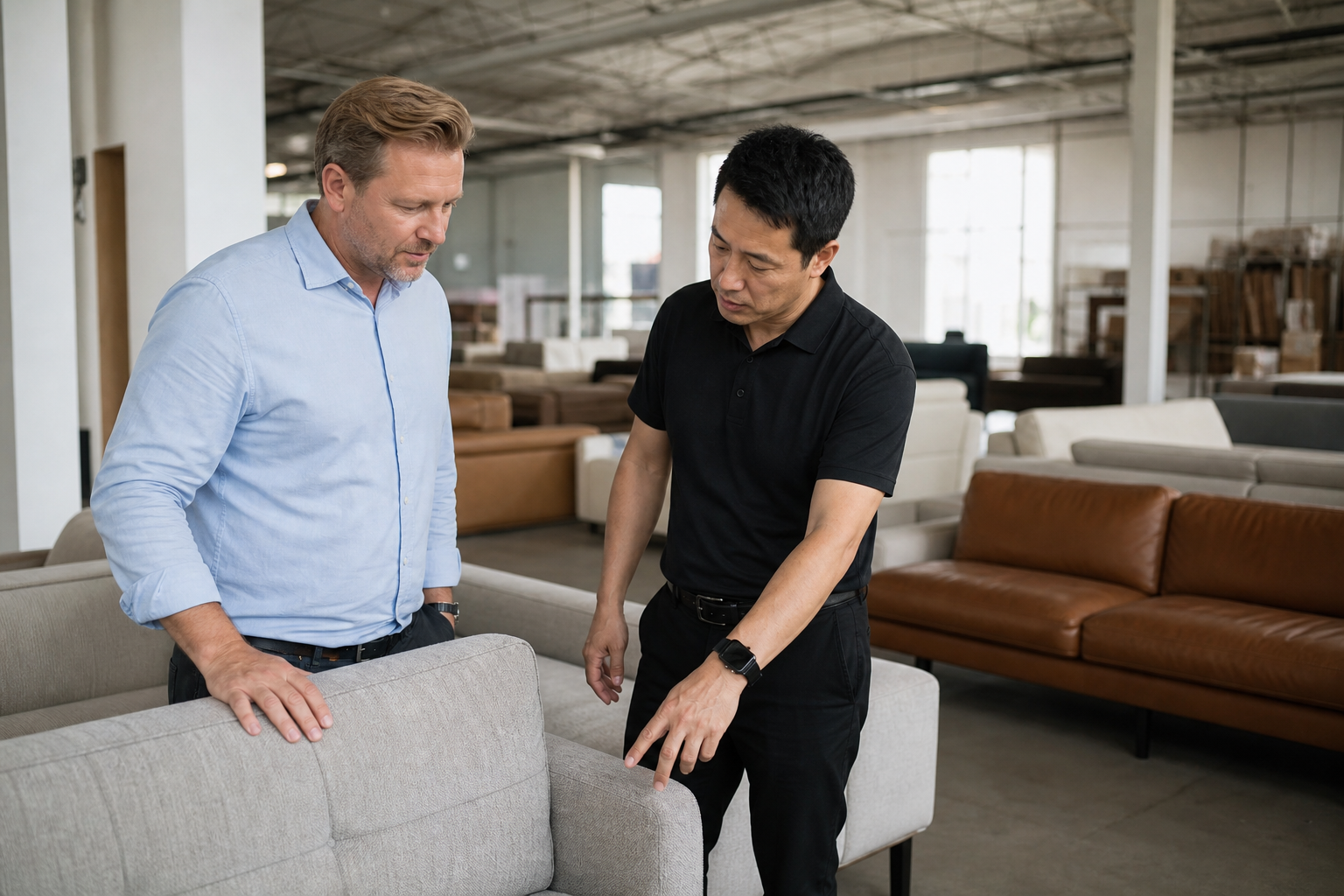
One of the first questions we hear from independent furniture retailers is a practical one: do I take the risk of buying bulk inventory now, or do I wait until my content, showroom displays, and marketing prove customer demand?
That question gets to the heart of why StarbornHub exists. We didn’t begin by sketching an app or a marketplace — we started by watching what breaks between factories, showrooms, and real customers.
Below I’ll share the business logic we built around that observation and the operational approach that helps retailers make buying decisions with clearer signals and lower risk.

Problems that forced us to build differently
In everyday production and retail cycles we kept seeing the same failures:
- Factories don’t hear honest, ongoing feedback from end customers. What sells in photos can fail in a living room.
- One-time bulk purchases and single-order relationships produce ephemeral value — they don’t create a continuing stream of insights or revenue for retailers.
- Natural showroom traffic rarely becomes an asset. Walk-in interest disappears after a sale; there’s no consistent way to reuse that attention to validate future buys.
These are operational problems, not technology problems. So technology became a tool to solve them, not the starting point.
Why buying big before testing is a poor shortcut
Buying bulk on the basis of intuition or a single promotional spike looks attractive because it promises scale and margin. In reality, it often locks retailers into three risks:
- Product risk: a style may not resonate beyond a small sample of early customers or a staged photo shoot.
- Opportunity cost: showrooms and cash tied to slow-moving styles reduce the ability to test new options.
- Hidden churn: a one-off sale doesn’t necessarily build customer accounts, repeat traffic, or local protection for future assortments.
If you treat each buying decision as a market gamble, you’ll either overstock to compensate for uncertainty or under-invest and miss clear opportunities. Neither is sustainable for an independent retailer competing on local relevance and service.
A different posture: hypothesis-driven validation
Our practice is to break bigger product questions into testable hypotheses you can validate in the store. That means:
- Defining the smallest action that proves customer interest (will people register interest in-store? Will they vote between two samples? Will they request a home trial?).
- Running that action with limited scope: local sample pieces, a small set of customers, or a short timeframe.
- Measuring outcomes that matter to purchasing: conversion intent, willingness to pay, and repeat engagement rather than vanity metrics.
When tests are structured this way, each experiment has clear business value. You either gain a reliable signal to buy more, or you learn at low cost and pivot faster.
How the operating model links factories and retail
Organizational ability — not software alone — is our differentiator. The value comes from a repeatable loop that connects factory production, in-store testing, and product decisions:
- Factories that can respond with small-batch samples and flexible material choices let retailers test multiple options without committing full inventory.
- Retailers become the front-line sensing point, capturing local feedback and turning walk-in behavior into discrete signals that factories can act on.
- The platform aggregates these signals and feeds them back to design and production, turning one-off observations into reproducible product decisions.
This is an ongoing loop, not a one-time handoff. The aim is to move from single orders toward durable value sharing: local customer assets, predictable replenishment, and better-fitting assortments.

What StarbornHub actually does for retailers (without hiding the mechanics)
We work embedded in the production-to-retail touchpoints rather than sitting outside as a consultant. That shows up in four practical ways you’ll notice on the ground:
- Turning foot traffic into usable customer assets. We help you capture interest with simple in-store actions (registrations, preference votes, or request forms) that go beyond a single transaction. Those signals can be used later to prioritize assortments or marketing.
- Supplying procurement signals grounded in local samples. Instead of basing purchases on a buyer’s intuition or a seasonal trend sheet, retailers get product-selection inputs backed by real store-level responses.
- Flexible supply and sample-first production. We coordinate with factories to make it possible to validate styles with low barrier samples and to scale after a proven signal — reducing upfront cash risk.
- Long-term alignment tools. We build frameworks for ongoing retailer participation in value, such as mechanisms to reward customer engagement or protect local markets, so investing in customer experience makes long-term sense.
We don’t give you a black box of numbers or a dashboard that says “buy X.” We provide a framework and operational links that make the inputs to your buying decision clearer and repeatable.
Practical steps for retailers who want clearer signals
If you want to move from guesswork to evidence-based buying, here’s a pragmatic sequence you can start with this month:
1. Define the decision you need to make. For example: which sofa silhouette deserves two showroom spots next quarter?
2. Design the smallest test that answers that question. It could be two sample sofas on the floor for a month with a simple in-store vote or a short home-trial offer to a defined set of customers.
3. Capture the right signal. Track registrations, votes, home-trial requests, and the repeat interest rate — not just the initial sale.
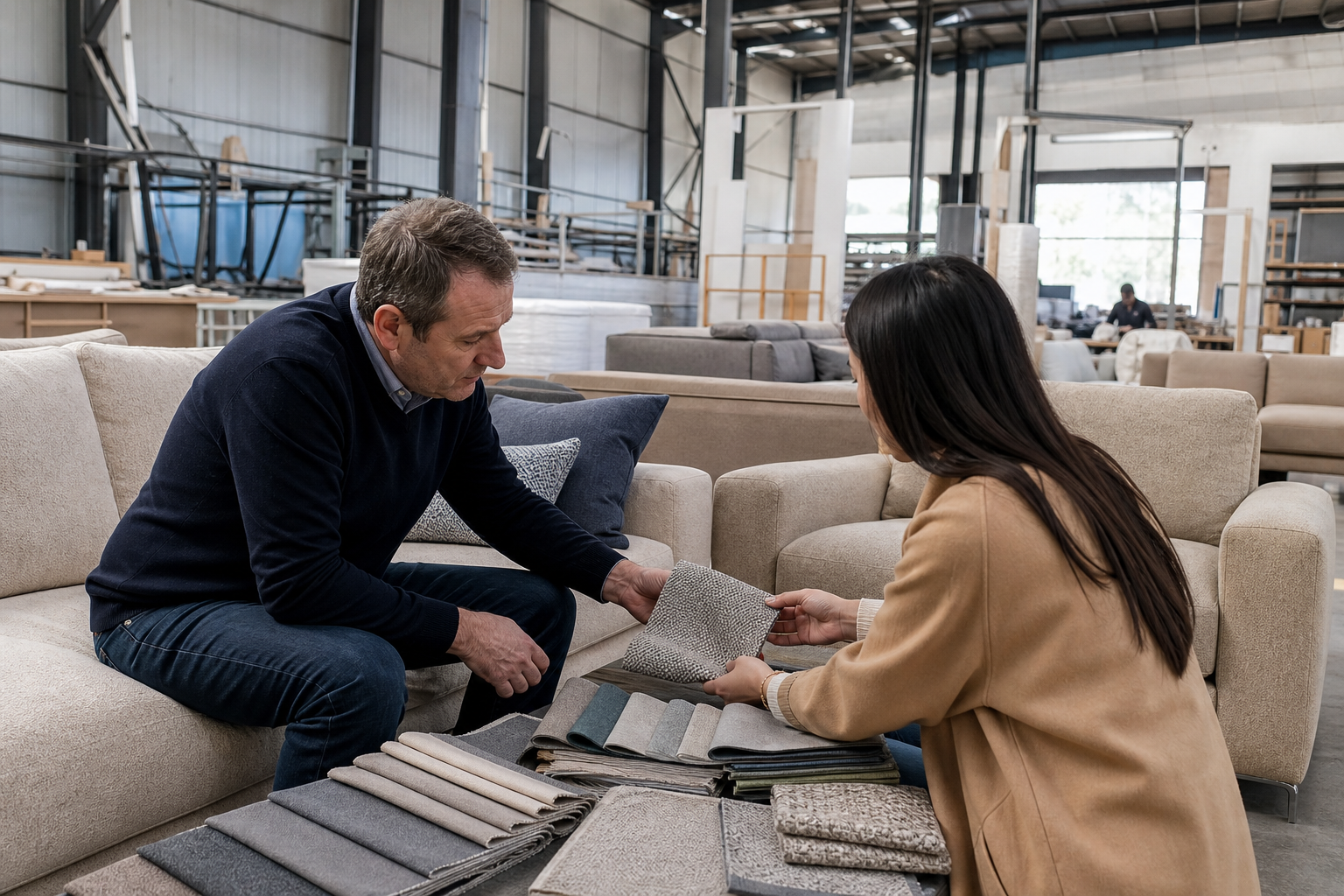
4. Use flexible sample supply. Work with manufacturers or partners who can produce small runs or adjust fabrics and finishes quickly so you can iterate.
5. Translate results into procurement rules. If a style achieves repeatable local interest, scale incrementally rather than all-at-once.
6. Protect and value the customer asset. The more you convert walk-ins into registered customers, the more leverage you have to negotiate better patterns of supply and local protection that justify further investment.
This approach reduces reliance on hunches and creates a defensible rationale for allocating showroom space and capital.
What to expect when you adopt this approach
It takes a little organizational work up front: training showroom staff to ask for registrations, setting clear testing windows, and coordinating with production on small-batch capabilities. But these are operational changes, not software integrations.
Over time you’ll see three shifts:
- Faster, cheaper learning about what your market actually prefers.
- Lower inventory risk because you scale supply after validation rather than before.
- Stronger customer relationships that move beyond one-off transactions into account-backed value.
All of these make your buying rationale defensible — to your team, to your cash flow, and to the factory partners you work with.
Conclusion
The choice between buying stock now and waiting for proven demand shouldn’t be a binary gamble. Start with small, measurable tests that convert showroom traffic into reusable customer signals. Use flexible sampling and an embedded relationship with production to scale only after you have evidence. StarbornHub was built to make this practical: not by offering abstract strategy or financial band-aids, but by creating an operational bridge between factories and retail so independent dealers can make repeatable, lower-risk buying decisions. The next step is simple — pick one product question you currently make by instinct and turn it into a defined hypothesis you can test in-store this month.
More articles in this content module
Module: Validation And Small-Batch Testing
This is the full reading map for the current content block, so you can follow the logic inside this topic before jumping to another issue.
- Why does market pressure lead to the StarbornHub model?
- Why Independent Furniture Retailers Are the Best Validation Leverage
- Should furniture retailers test demand before buying deeper stock?
- What problem is StarbornHub really trying to solve for retailers?
- Why does StarbornHub challenge the traditional furniture supply chain?
- Why should furniture retailers validate demand before a bigger order?
- Local Customer Feedback and Safer Sofa Purchases: Turning Reports into Buying Decisions
- How much confidence should a retailer have before buying stock?
- Small-Batch Supply Reduces Retailer Stock Risk?
- Continuous Product Renewal Matters?
- The Operating Conditions Work Together?
- A Retailer Cannot Build This Mechanism Alone?
- Software Alone Cannot Solve Sofa Buying Risk
- What kind of system helps furniture retailers make safer buying decisions?
- Qualified Customer Registration Supports Buying Decisions?
- Monthly New Product Development Should Work?
- The StarbornHub Mechanisms Form A Loop?
- Inventory and Validation: Where to Draw the Line Before You Buy
- StarbornHub Uses AI Without Letting AI Decide Everything?
- AI Cannot Decide For Furniture Retailers?
- The StarbornHub Growth Flywheel Means?
- Platform Growth Must Serve Retailer Growth?
- Must Be True For The Flywheel To Work?
- StarbornHub Did Not Start From Software
- Factory Growth Depends On Retailer Customer Growth?
- StarbornHub Is Actually Trying To Validate?
- Retailers, Customers, And Factories Must Participate Together?
- StarbornHub Is Trying To Build?
- Kind Of Retailer StarbornHub Is Inviting?
Other content modules you may want to explore
If your concern is not only this one issue, these modules open nearby paths in the StarbornHub theory system.
Another problem retailers often connect to this: A nearby visible problem you may also be dealing with
Is the sales drop caused by fewer visitors, lower conversion, weaker product fit, local market pressure, or broader economic pressure?
First reading in this module: What changed in the furniture retail market?
What this could improve if handled better: A possible business gain behind this issue
Does the margin calculation include freight, delivery, damage, markdowns, financing, returns, and slow stock?
First reading in this module: How much margin room does an independent furniture retailer need?
What it may take, cost, or risk: The practical concern before trying a new path
Supplier Trust And Quality Responsibility
What incentive does the supplier have to protect quality after the first order?
First reading in this module: Quality Consistency Needs A Visible Process?