
The Design Selection Flywheel: How Retailers Reveal Which Sofas Will Sell

If you run an independent furniture store, your constant headache is not the number of possible sofa designs — it’s knowing which of those designs will actually sell to your local customers.
When AI and new tools make generating concepts cheap and fast, the real scarcity is the ability to separate the few styles that will work in your market from the many that won’t. That separation is what StarbornHub calls the design selection flywheel: a repeatable system that converts customer reaction into practical buying decisions.
This is not a theory about outsourcing taste. It’s a practical playbook that blends real customers, AI, designers, and a open platform backed by real manufacturing capability to reduce inventory risk and raise the probability that a new sofa style will become a revenue-producing item in your store.
Why selection, not production, is the bottleneck
Today any individual or tool can generate visual variants of a sofa — different fabrics, dimensions, legs, or finishes. That abundance shifts the competitive advantage away from mere design production toward the ability to pick winners. For independent retailers, the implication is clear: you don’t need more concepts, you need a reliable way to test which concepts map to local tastes and purchasing behavior.
Rather than treating customer feedback as after-the-fact decoration, StarbornHub treats it as a fundamental buying signal. The flywheel converts aggregated local responses into development decisions, so each round of selection improves the next.
A layered screening architecture that allocates roles
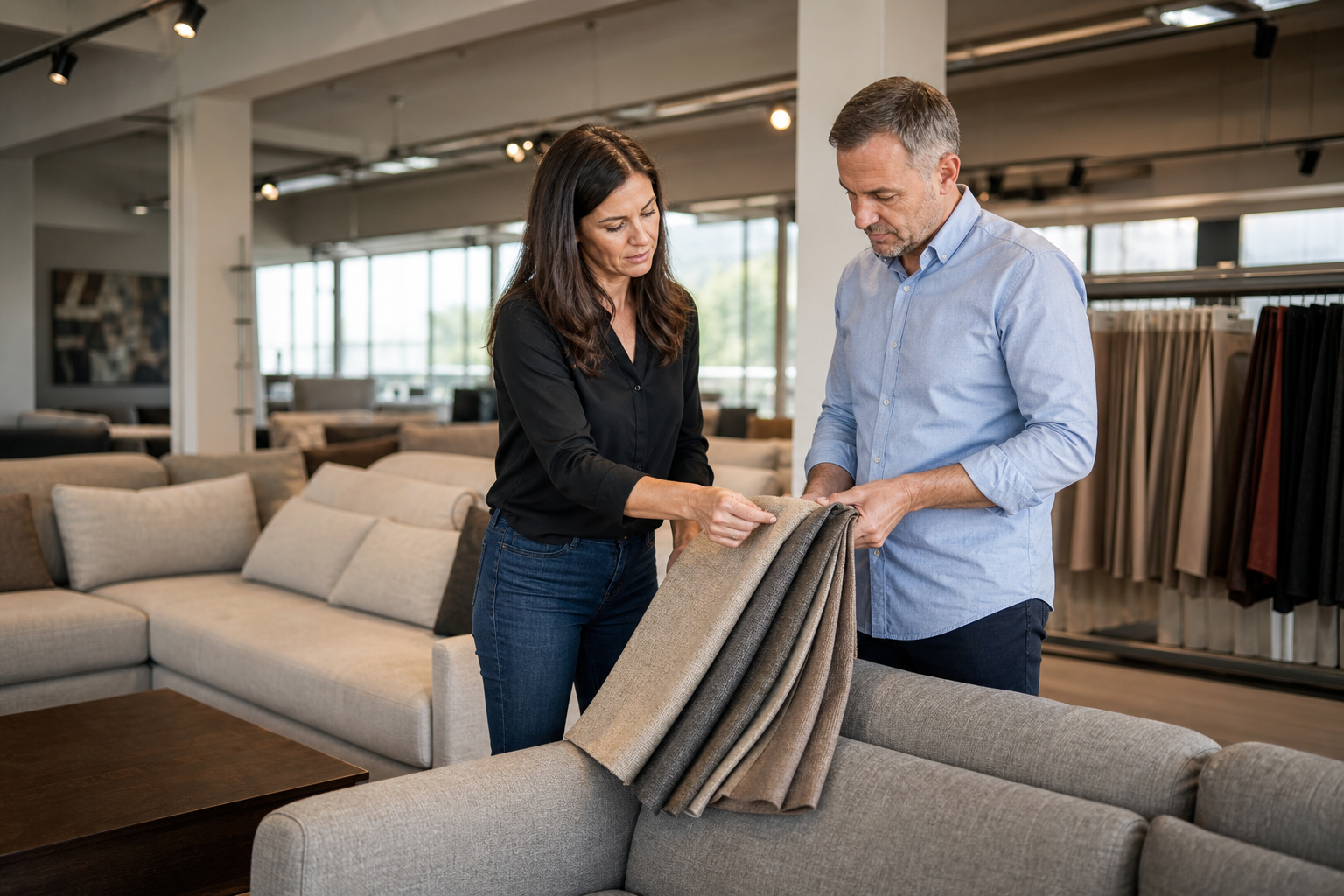
The flywheel works because tasks are divided across layers, each doing what it does best:
- Customers and store visitors supply real-life scenarios and instinctive preferences. Their reactions tell you what fits into local homes, not just what looks good on a screen.
- AI tools lower the barrier to expression, turning a customer idea or a store concept into a visual mockup quickly and consistently. AI accelerates exploration but doesn’t replace judgment.
- Professional designers take promising mockups and make them manufacturable and brand-consistent. This step preserves craftsmanship and technical feasibility.
- The platform orchestrates the process: gathering votes, combining signals across sources, and converting them into development or rejection decisions.
For a retailer, this means you can participate at participation history that matter: gathering in-store reactions, hosting small displays, and contributing localized insights — while letting the platform aggregate and interpret the broader signal.
From sample to shelf: small-batch testing and flexible supply

Online voting or likes are useful, but they don’t fully replace the physical experience of a sofa. The flywheel closes the gap by coupling online signals with real-world sample validation:
- High-potential candidates identified by multi-source signals are fast-tracked to prototype and sample production.
- Those samples are placed in stores for local display and short-run trials, where real buying behavior — inquiries, deposits, conversions — becomes part of the data.
- Factories participate in early-stage sampling and support small-batch runs, which keeps the retailer’s inventory risk low.
This sample-display-feedback loop is the operational heart of the flywheel. It moves decisions from hypothetical popularity to demonstrated convertibility: does interest actually become a sale? If it does consistently in your market, the candidate graduates to larger production. If it doesn’t, it’s filtered out without saddling you with dead stock.
Amplifying the right signals: user quality and filtering
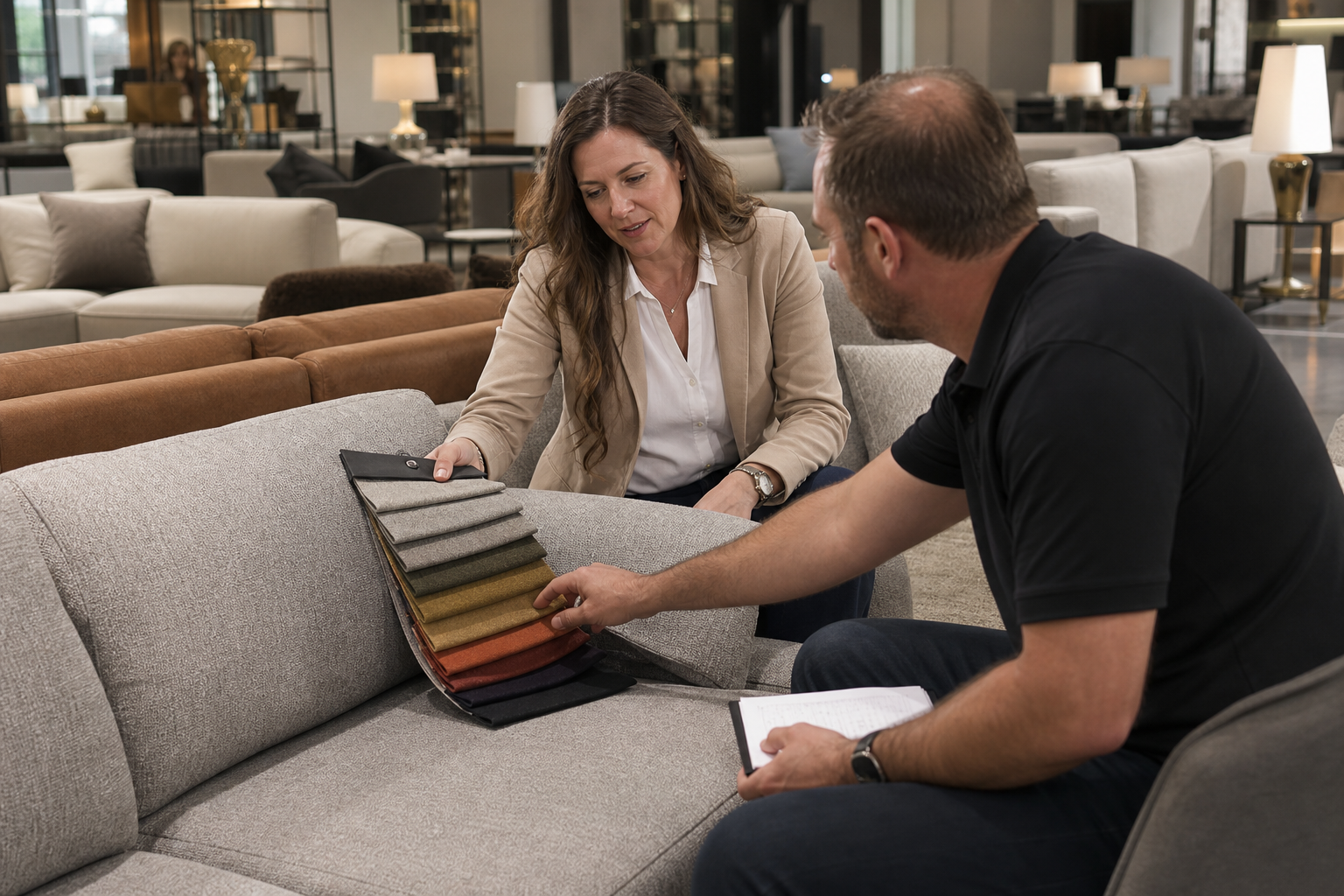
Not every vote or like is equally informative. The platform’s value grows when it learns which participants are representative of a local mainstream and which contributions are noise. That’s where user-quality filtering and account binding come in:
- Long-term behavioral signals — including purchase history, participation across stores or neighborhoods, and demonstrated taste alignment — increase the weight of a participant’s input.
- The system widens the impact of high-quality local signals and reduces the influence of one-off or unrepresentative opinions.
For retailers, this matters because it reduces false positives: designs that look popular online but fail in-store. When the platform amplifies trustworthy local voices, your sample choices become more precise, you waste less floor space on non-starters, and your customers see a better match to their expectations. That positive outcome, in turn, encourages more meaningful customer participation — which feeds the next cycle.
Governance and trust: preserving professional judgment and preventing noise
Abundant participation creates risk: diluted credibility, random trends, and premature decisions. The flywheel succeeds only if it keeps the right governance boundaries:
- Designers retain authority over technical feasibility and material choices, so decisions remain practical and buildable.
- The platform separates emotional preference from predictable market signals, and makes its processes traceable and accountable for retailers and designers.
- Institutional safeguards connect the screening workflow to manufacturing and retail execution — sample acceptance criteria, controlled city-level displays, and protections that prevent opportunistic copying or market confusion.
For independent retailers, governance delivers two things: predictability and leverage. Predictability comes from knowing how screening outcomes are generated and how samples will be supported. Leverage comes from being able to influence the local phase of the flywheel so your store’s voice has weight in decisions that affect your inventory.
Practical steps for retailers who want to use the flywheel
1. Treat local reaction as data, not opinion. Turn in-store interactions, inquiries, and small-order behavior into structured signals.
2. Host sample displays and timed trials. Use short, visible trials to see which pieces generate real interest and measurement beyond simple impressions.
3. Work with platforms and factory partners that support small-batch sampling and flexible supply, so you can try without being stuck with large inventory.
4. Prioritize participants who have buying history or local representativeness when interpreting votes or feedback. Encourage account binding and repeat participation among your best local customers.
5. Respect design expertise. Use customer signals to guide selection, but let professional designers translate promising concepts into manufacturable, attractive products.
6. Engage with governance features that protect local exclusivity and ensure sample quality. Clarity here preserves your store’s competitive edge.
These are not big-company-only tactics. The flywheel is designed to let independent retailers influence product formation while sharing the downside of sampling and early production with factory-side mechanisms.
Why this changes the retailer playbook
Instead of betting heavily on an untested style, you can run disciplined, low-risk experiments that reveal whether a sofa fits your market. The flywheel makes selection systematic: layered inputs reduce bias, small-batch validation reduces inventory risk, and signal amplification improves predictive accuracy. Over time, your store’s participation becomes an asset — you’re not just selling product, you’re contributing to a verified local voice that shapes which products get commercial investment.
StarbornHub’s role is to coordinate these pieces: the platform organizes signals, the platform-led cooperation backed by real factory capability provides flexible supply and early sampling, designers ensure buildability, and retailers provide the on-the-ground truth. None of these pieces is a black box; the value is that they form an ordered, repeatable process that prioritizes convertibility over virality.
Conclusion
When anyone can create a design, what matters is the ability to find which designs will actually sell in your neighborhood. The design selection flywheel shifts decision-making from guesswork to evidence-driven cycles: layered screening, real-world sample validation, user-quality filtering, and governance that preserves professional standards. For independent retailers this translates into fewer bad bets, more locally relevant assortments, and a clearer path to influence product development. If you want to turn local customer response into reliable buying signals, focus on participation, measured trials, and partnerships that provide flexible supply and credible governance — that is how the flywheel starts turning for your store.
More articles in this content module
Module: Product Selection Risk
This is the full reading map for the current content block, so you can follow the logic inside this topic before jumping to another issue.
- Who really decides whether a sofa style will sell?
- Why is retail experience alone less reliable than before?
- How can a retailer make better buying decisions with limited space and cash?
- How should a furniture store build a stronger product range?
- What makes a furniture buying decision actually good?
- How can a furniture retailer choose products with better direction?
- Style And Fabric Choice Should Enter The Mechanism?
- Data Assets That Help You Choose Sofas That Sell
- AI Lowers The Barrier To Design Expression?
- AI Cannot Replace Design Judgement?
- More AI Design Makes Selection More Important?
- AI Makes Design Filtering More Important?
- The Design Selection Flywheel: How Retailers Reveal Which Sofas Will Sell
Other content modules you may want to explore
If your concern is not only this one issue, these modules open nearby paths in the StarbornHub theory system.
Another problem retailers often connect to this: A nearby visible problem you may also be dealing with
Showroom Space And Opportunity Cost
What better product, display, or customer conversation is blocked by the current slow-selling item?
First reading in this module: How much showroom space should a slow-selling sofa keep?
What this could improve if handled better: A possible business gain behind this issue
When does useful customer feedback arrive relative to the buying decision?
First reading in this module: Why does useful furniture customer feedback arrive too late?
What it may take, cost, or risk: The practical concern before trying a new path
Does the margin calculation include freight, delivery, damage, markdowns, financing, returns, and slow stock?
First reading in this module: How much margin room does an independent furniture retailer need?