
The StarbornHub Growth Flywheel Means?

One of the hardest judgments an independent furniture retailer makes is which sofa styles deserve showroom space and cash.
Do you buy the bulk and hope the market follows, or do you wait until your content and advertising show traction? StarbornHub was designed around a simple premise: independent retailers need clearer, local product-selection signals before committing deeply to sofa stock. The flywheel we run is about producing those signals reliably and turning them into better buying decisions.

Why call it a flywheel? Because the value doesn’t come from one tool or feature. It comes from a chain of cause-and-effect steps where the output of each step feeds the next. Improve any link and the whole loop accelerates. For StarbornHub the main links look like this:
- Customers register and become trackable local assets for a store.
- Those customers vote and participate, producing preference signals.
- Preference signals guide which styles get sampled and lined up for production.
- Factories respond with flexible development and localized supply.
- Retailers display and sell the styles, generating measurable sales feedback.
- Positive sales and clearer signals make retailers more willing to deepen participation.
Each link carries information and incentives: user behavior creates data, data steers product choices, better-fitting product boosts sales, and sales encourage more user capture and retailer investment. The point is not to make the platform more feature-rich for its own sake; it’s to translate platform capabilities into measurable improvements at the store level.
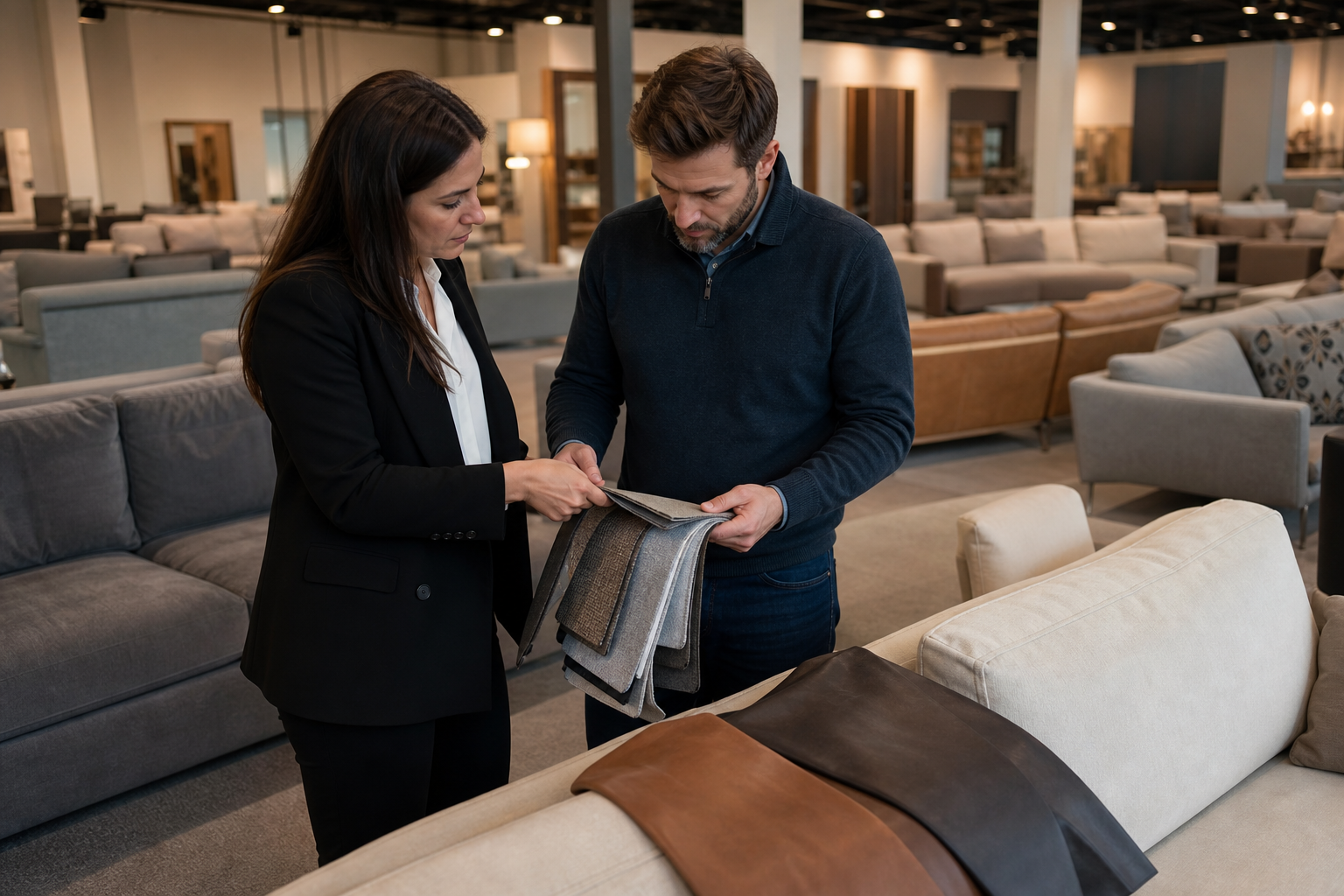
Centering the retailer: capability translated into operational improvement
A flywheel only matters if it helps your bottom line in practical ways. For retailers that means three tangible outcomes: better conversion, less selection and inventory risk, and the ability to turn casual visitors into reusable, monetizable customer assets.
StarbornHub focuses on outputs retailers can act on in-store: voting reports that point to local tastes, physical samples and flexible replenishment that let you react without oversized inventory commitments, and account-binding tools that increase revisit and purchase likelihood. These outputs are intentionally designed to be translated into common retail actions — more confident sample placement, more precise reorders, and better in-store talking participation history for sales staff.
If a feature only lives in the platform backend and doesn’t change how you arrange samples, order stock, or follow up with customers, it fails the practical test. The flywheel’s job is to make the connection between platform data and in-store behavior obvious and measurable.
User assets and data: why quality beats quantity
Registrations, participation history, and votes are not vanity metrics. They are a filtering mechanism that amplifies useful signals over time. StarbornHub favors mechanisms that build a locally relevant sample of engaged users—people who actually visit, vote, and return—rather than trying to buy generic traffic.
That distinction matters because the goal is not to collect as many registrations as possible; it’s to collect a reliable set of local preference signals that can be used for sampling and buying decisions. A smaller pool of high-quality, repeatable votes tells you more about what to stock in a particular store than a large pool of one-off clicks.
Practically this creates three retailer-facing benefits:
- Clear inputs for sampling and selection: localized voting reports highlight which styles are worth a prototype and showroom placement.
- Actionable buying guidance: store-specific signals let buyers prioritize small, targeted replenishments instead of one-size-fits-all bulk buys.
- Stronger customer engagement: account binding and incentive mechanisms encourage repeat visits and increase conversion when a style moves from sample to available stock.
Remember: the emphasis is on sample quality over raw size. That’s how you reduce inventory risk.
Platform capability growth and the importance of boundaries
StarbornHub scales its capability along two broad dimensions. First, better data and larger, higher-quality sample pools make voting and selection more robust. Second, a supply-side improvement—factories that can prototype, retool, and deliver at a local cadence—means selected styles can actually reach the floor without months of inventory exposure.
But growth comes with guardrails. The platform is not trying to replace your local judgment or the creative role of designers. Algorithms and AI are tools to help you find likely winners faster; they are not substitutes for your staff’s knowledge of customers and the store. Also, the platform avoids exposing operational formulae that would allow easy replication; instead it focuses on transparent, business-facing outcomes such as long-term value sharing, customer participation benefits, and local protection concepts.
How this answers the practical buying question
Do you buy bulk up front or wait until content and customer tests show results? The flywheel’s answer is nuanced and pragmatic:
- Don’t rely only on content or promotional traction as your first signal. Those are necessary but not sufficient, because broad marketing can mask local preferences.
- Convert foot traffic and interest into local user assets first. Use in-store registration and voting to generate store-specific preference data before making large stock commitments.
- Use samples and small-batch local production to validate demand. Place prototypes or sample sofas on the floor tied to the local voting mechanics and watch how engaged users respond.
- Only scale replenishment when multiple signals align—positive votes, repeat customer interest, and early sales behavior. At that point, moving from sample to stock is a lower-risk decision.
In practice, this means a staged buying cadence: attract and capture the local customer signal, validate with samples, and then use flexible supply options to expand inventory in response to confirmed demand. That approach reduces the chance of showroom space and cash being tied up in slow-moving SKUs.
A retailer’s checklist for applying the flywheel today
- Turn foot traffic into user assets: prioritize in-store registration and incentivized voting so you have local, repeatable data.
- Use voting reports as a front-line buying input: let them influence which styles get prototyped and displayed.
- Treat samples as your first inventory: prototype and display before committing to full production runs.
- Rely on flexible supply bridges: when signals are positive, leverage flexible development and small-batch supply to increase stock without large upfront exposure.
- Measure store-level outcomes: track conversion lift, sell-through time, and repeat visits to see whether the flywheel is improving your economics.
StarbornHub is a platform cooperation mechanism backed by real factory capability designed to support this exact pattern: clearer selection signals, faster sampling, and a supply side that responds at a local cadence so retailers can commit capital with more confidence.
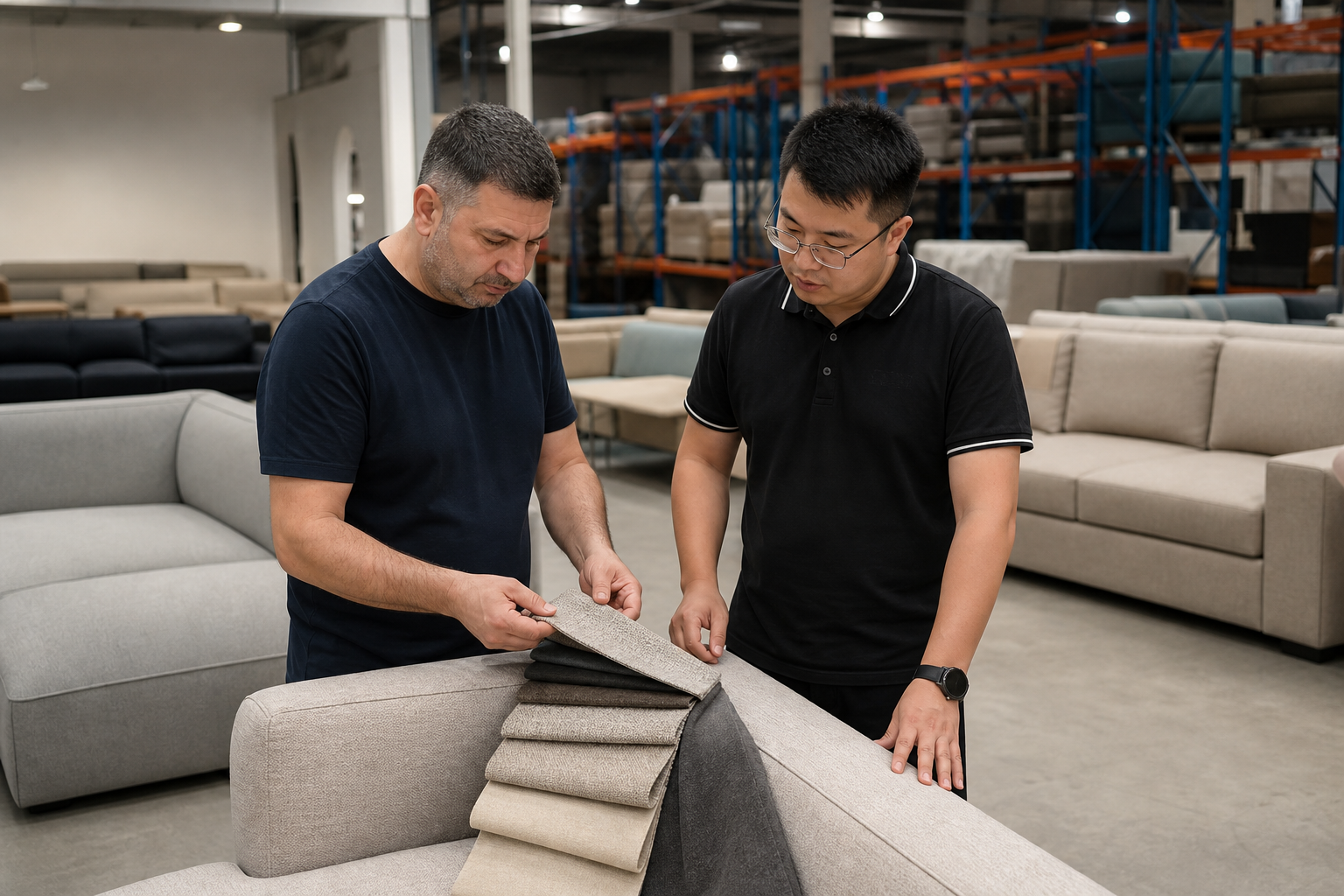
What success looks like
Success isn’t a dashboard full of features. It’s fewer markdowns, smarter showroom assortments, and higher conversion from visitors to buyers. When the flywheel is working, the store’s buying moves from guesswork to evidence-driven steps: prototypes informed by local votes, targeted small-batch replenishment, and improved reuse of customer relationships to seed future launches.
This is the practical promise: you don’t have to gamble your cash on every new sofa. Instead, you systematically gather better signals, test with samples, and let flexible production do the heavy lifting when the market validates a style.
Conclusion
The StarbornHub flywheel is about turning customer participation into clearer, local product-selection signals, and then using flexible supply to convert those signals into lower-risk inventory decisions. For independent furniture retailers that means capturing user assets in-store, validating with samples and votes, and scaling inventory only when multiple store-level signals align. The result is a repeatable buying cadence that reduces showroom and cash exposure while improving conversion—exactly the kind of buying confidence retailers need to grow without unnecessary risk.
More articles in this content module
Module: Validation And Small-Batch Testing
This is the full reading map for the current content block, so you can follow the logic inside this topic before jumping to another issue.
- Why does market pressure lead to the StarbornHub model?
- Why Independent Furniture Retailers Are the Best Validation Leverage
- Should furniture retailers test demand before buying deeper stock?
- What problem is StarbornHub really trying to solve for retailers?
- Why does StarbornHub challenge the traditional furniture supply chain?
- Why should furniture retailers validate demand before a bigger order?
- Local Customer Feedback and Safer Sofa Purchases: Turning Reports into Buying Decisions
- How much confidence should a retailer have before buying stock?
- Small-Batch Supply Reduces Retailer Stock Risk?
- Continuous Product Renewal Matters?
- The Operating Conditions Work Together?
- A Retailer Cannot Build This Mechanism Alone?
- Software Alone Cannot Solve Sofa Buying Risk
- What kind of system helps furniture retailers make safer buying decisions?
- Qualified Customer Registration Supports Buying Decisions?
- Monthly New Product Development Should Work?
- The StarbornHub Mechanisms Form A Loop?
- Inventory and Validation: Where to Draw the Line Before You Buy
- StarbornHub Uses AI Without Letting AI Decide Everything?
- AI Cannot Decide For Furniture Retailers?
- The StarbornHub Growth Flywheel Means?
- Platform Growth Must Serve Retailer Growth?
- Must Be True For The Flywheel To Work?
- StarbornHub Did Not Start From Software
- Factory Growth Depends On Retailer Customer Growth?
- StarbornHub Is Actually Trying To Validate?
- Retailers, Customers, And Factories Must Participate Together?
- StarbornHub Is Trying To Build?
- Kind Of Retailer StarbornHub Is Inviting?
Other content modules you may want to explore
If your concern is not only this one issue, these modules open nearby paths in the StarbornHub theory system.
Another problem retailers often connect to this: A nearby visible problem you may also be dealing with
Showroom Space And Opportunity Cost
What better product, display, or customer conversation is blocked by the current slow-selling item?
First reading in this module: How much showroom space should a slow-selling sofa keep?
What this could improve if handled better: A possible business gain behind this issue
When does useful customer feedback arrive relative to the buying decision?
First reading in this module: Why does useful furniture customer feedback arrive too late?
What it may take, cost, or risk: The practical concern before trying a new path
Does the margin calculation include freight, delivery, damage, markdowns, financing, returns, and slow stock?
First reading in this module: How much margin room does an independent furniture retailer need?