
StarbornHub Uses AI Without Letting AI Decide Everything?

If you’re a small furniture retailer wrestling with the question Do I buy bulk stock now, or wait until I’ve tested content and customer response?
, you’re not alone. The visible problem on the floor — not knowing which sofa styles deserve cash and showroom space — is exactly what StarbornHub was designed to help solve. The platform uses AI as a tool to increase the range of ideas you can show customers, but it intentionally keeps real market signals and retailer judgment as the deciding factors before deeper stock commitment.
Below I’ll explain the business logic: what AI does well, where it plugs into the platform, how validation and risk control work in practice, and the practical steps a retailer can take so you don’t gamble showroom space on guesses.
AI is an expression and exploration tool, not a decision engine
AI helps lower the cost of expressing design ideas and exploring variants. That’s the core role: producing more visual options, faster. For a retailer that means you can generate multiple style proposals, colorways, and fabric suggestions from a single concept without waiting days for a designer or photoshoot. It also helps turn scattered customer comments into structured insights you can act on.
But those outputs should be treated as prototypes of possibility, not validated products. An AI mockup is a cheaper way to surface what might work; it is not proof that customers will buy. The commercial judgment — which styles deserve showroom space, local marketing support, and inventory — still sits with you and the platform’s verification mechanisms.
AI plus market filtering: the signal must come from real customers
StarbornHub’s competitive advantage is not the AI itself; it’s the platform’s ability to turn actual store-level interactions into reliable signals. The platform converts in-store votes, sample interactions, and retailer feedback into a data asset that can be compared and acted upon. AI feeds the top of that pipeline by creating more candidate designs to be tested, but it does not replace the voting and sampling process that proves market fit.
Put simply: AI expands supply of options, the platform’s market-filtering turns those options into validated choices. For you, that means you don’t commit large sums to stock because a generated image looks good — you commit after seeing real local customer response, recorded in the platform’s voting and sample reports.
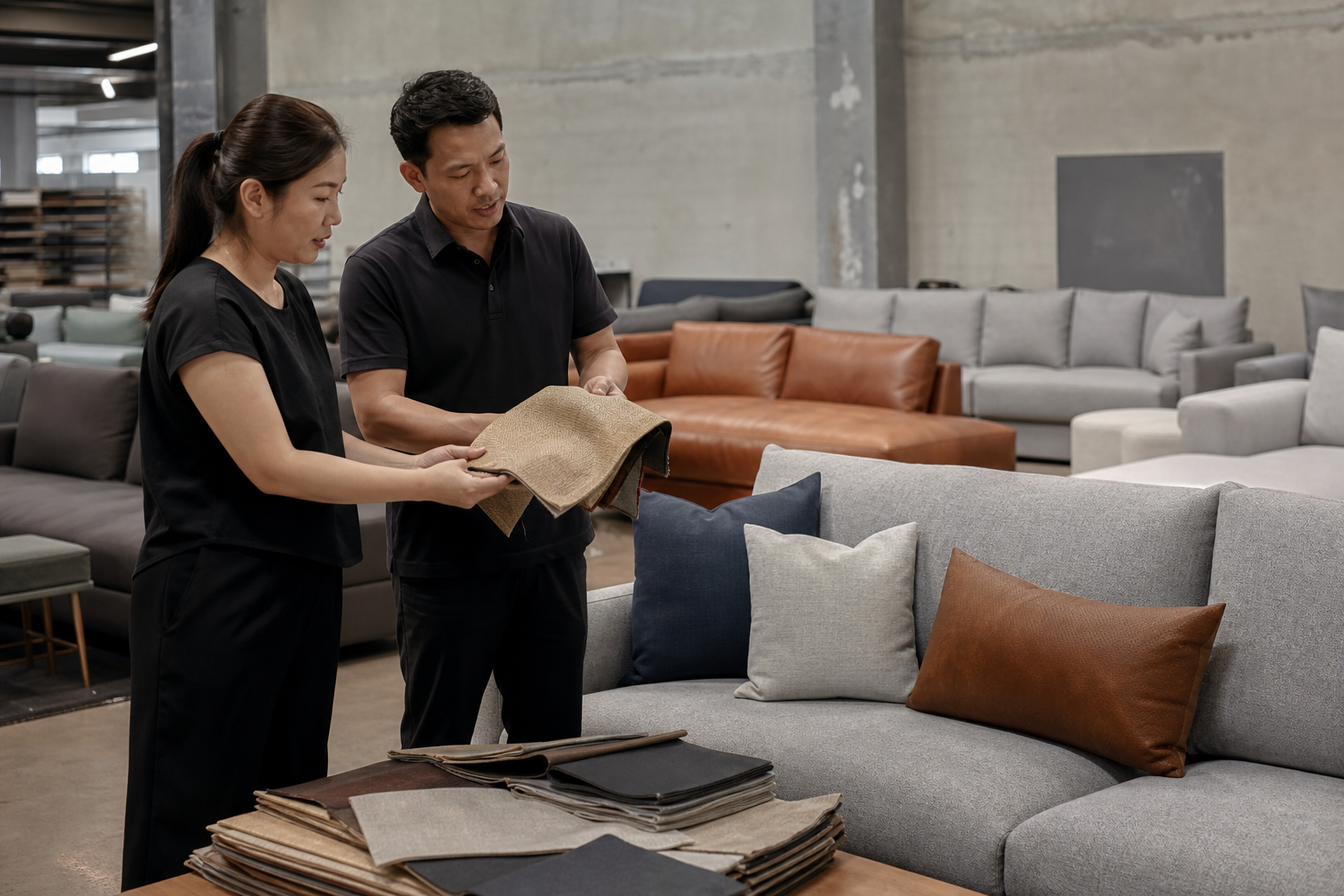
Where AI fits in the platform workflow: support for design, customers, and retailers
StarbornHub places AI in three practical roles:
- Design support: Designers (including non-professionals) can sketch more variants and explore combinations quickly. That widens the pool of concepts that make it into the platform’s review queue.
- Customer-facing tools: AI can convert freeform customer comments, social snippets, or salesperson notes into structured data — making it easier to present those options as clear voting cards or simple visuals in-store.
- Retailer tools: AI helps summarize local feedback, highlight patterns, and make the platform’s voting reports easier to read. It reduces the manual work of extracting actionable signals from daily conversations.
The important business rule is that AI outputs are inputs to the platform’s existing validation chain: in-store registration and voting, sample requests, showroom testing, and retailer judgment. That chain is the one that decides which designs enter the sample and inventory pipeline.

The boundary: what AI can’t replace
There are three things AI cannot substitute for
1. Real customer choice. A generated image or AI-translated comment is not the same as a registered in-store vote or a purchase.
2. Retailer local judgment. You know the rhythms of your city, display strengths, and which traffic turns into sales — AI can’t feel that.
3. Factory capability to develop and deliver. A picture is not a producible sofa. The factory’s ability to turn a concept into a sample and mass-produce reliably is a separate capability.
Because of these limits, StarbornHub enforces a separation of responsibilities: AI for expression; platform processes and physical samples for validation; retailers for the final buying decision. This avoids the dangerous shortcut of thinking a generated concept is market-proven on its own.
Practical validation and risk control: turn AI ideas into verifiable tests
If you want to avoid the risk of buying bulk before testing, use a stepwise path that the platform supports.
- Treat AI outputs as a tool to create a short, testable set of candidate styles. The goal is to reduce design friction so you can get options in front of real customers quickly.
- Use the platform’s voter and sample workflow. Convert the AI visuals into in-store voting cards or digital votes tied to registered visitors. The platform aggregates those votes into a report you can trust.
- Request physical samples only for the candidates receiving local support. Samples are the next level of proof — they let you check build, feel, and fit in your showroom and let customers interact physically.
- Measure signals that matter to your business: in-store votes per registered visitor, sample interaction intensity (people trying a sofa, asking about delivery), and follow-up purchase intent. Combine these with your local judgment about showroom conversion and margins.
- Use the platform’s safeguards: account binding, local protection, and the platform’s matching mechanisms to make sure validated designs are available for your area and that your local votes feed decision processes appropriately. These mechanisms are there so your tested winners don’t get claimed or replicated in a way that undermines your investment.

A practical example workflow — high level and without operational detail — looks like this: use AI to generate a handful of distinct variants; present them to registered in-store visitors in a simple voting format; when one or more variants collect meaningful local support, convert that to a sample request; evaluate how the sample performs in real interactions; then decide whether to commit to showroom stock and local marketing. The platform and its platform-led cooperation backed by real factory capability model make it practical to move from idea to sample without forcing you to buy inventory prematurely.
What retailers should do next
- Use AI-generated visuals to accelerate your ideation, not to replace your buying checklist.
- Make the platform’s vote-and-sample process the standard way you validate a new sofa before allocating showroom or inventory dollars.
- Treat in-store votes and sample interactions as the currency of decision-making — more decisive than likes or social impressions alone.
- Keep your local judgment central. Use platform reports and AI summaries as inputs, not final answers.
This approach minimizes the financial risk of over-committing to untested styles while letting you explore more design possibilities than you could manage alone.
Conclusion
StarbornHub’s position is straightforward: AI expands your ability to explore and express new sofa ideas cheaply and quickly, but it doesn’t—and shouldn’t—decide what you stock. The platform’s value lies in converting those AI-enabled explorations into verifiable market signals through in-store voting, sample interaction, and retailer judgment. For independent retailers facing the buy-now-or-wait dilemma, the safe path is to use AI to broaden choices, run controlled in-store validation, request samples for the winners, and then commit inventory based on real, local evidence rather than generated possibility alone. That combination protects showroom capital while giving you a wider, factory-side pipeline of designs to test.
More articles in this content module
Module: Validation And Small-Batch Testing
This is the full reading map for the current content block, so you can follow the logic inside this topic before jumping to another issue.
- Why does market pressure lead to the StarbornHub model?
- Why Independent Furniture Retailers Are the Best Validation Leverage
- Should furniture retailers test demand before buying deeper stock?
- What problem is StarbornHub really trying to solve for retailers?
- Why does StarbornHub challenge the traditional furniture supply chain?
- Why should furniture retailers validate demand before a bigger order?
- Local Customer Feedback and Safer Sofa Purchases: Turning Reports into Buying Decisions
- How much confidence should a retailer have before buying stock?
- Small-Batch Supply Reduces Retailer Stock Risk?
- Continuous Product Renewal Matters?
- The Operating Conditions Work Together?
- A Retailer Cannot Build This Mechanism Alone?
- Software Alone Cannot Solve Sofa Buying Risk
- What kind of system helps furniture retailers make safer buying decisions?
- Qualified Customer Registration Supports Buying Decisions?
- Monthly New Product Development Should Work?
- The StarbornHub Mechanisms Form A Loop?
- Inventory and Validation: Where to Draw the Line Before You Buy
- StarbornHub Uses AI Without Letting AI Decide Everything?
- AI Cannot Decide For Furniture Retailers?
- The StarbornHub Growth Flywheel Means?
- Platform Growth Must Serve Retailer Growth?
- Must Be True For The Flywheel To Work?
- StarbornHub Did Not Start From Software
- Factory Growth Depends On Retailer Customer Growth?
- StarbornHub Is Actually Trying To Validate?
- Retailers, Customers, And Factories Must Participate Together?
- StarbornHub Is Trying To Build?
- Kind Of Retailer StarbornHub Is Inviting?
Other content modules you may want to explore
If your concern is not only this one issue, these modules open nearby paths in the StarbornHub theory system.
Another problem retailers often connect to this: A nearby visible problem you may also be dealing with
Does the margin calculation include freight, delivery, damage, markdowns, financing, returns, and slow stock?
First reading in this module: How much margin room does an independent furniture retailer need?
What this could improve if handled better: A possible business gain behind this issue
Supplier Trust And Quality Responsibility
What incentive does the supplier have to protect quality after the first order?
First reading in this module: Quality Consistency Needs A Visible Process?
What it may take, cost, or risk: The practical concern before trying a new path
Is the sales drop caused by fewer visitors, lower conversion, weaker product fit, local market pressure, or broader economic pressure?
First reading in this module: What changed in the furniture retail market?