
AI Lowers The Barrier To Design Expression?
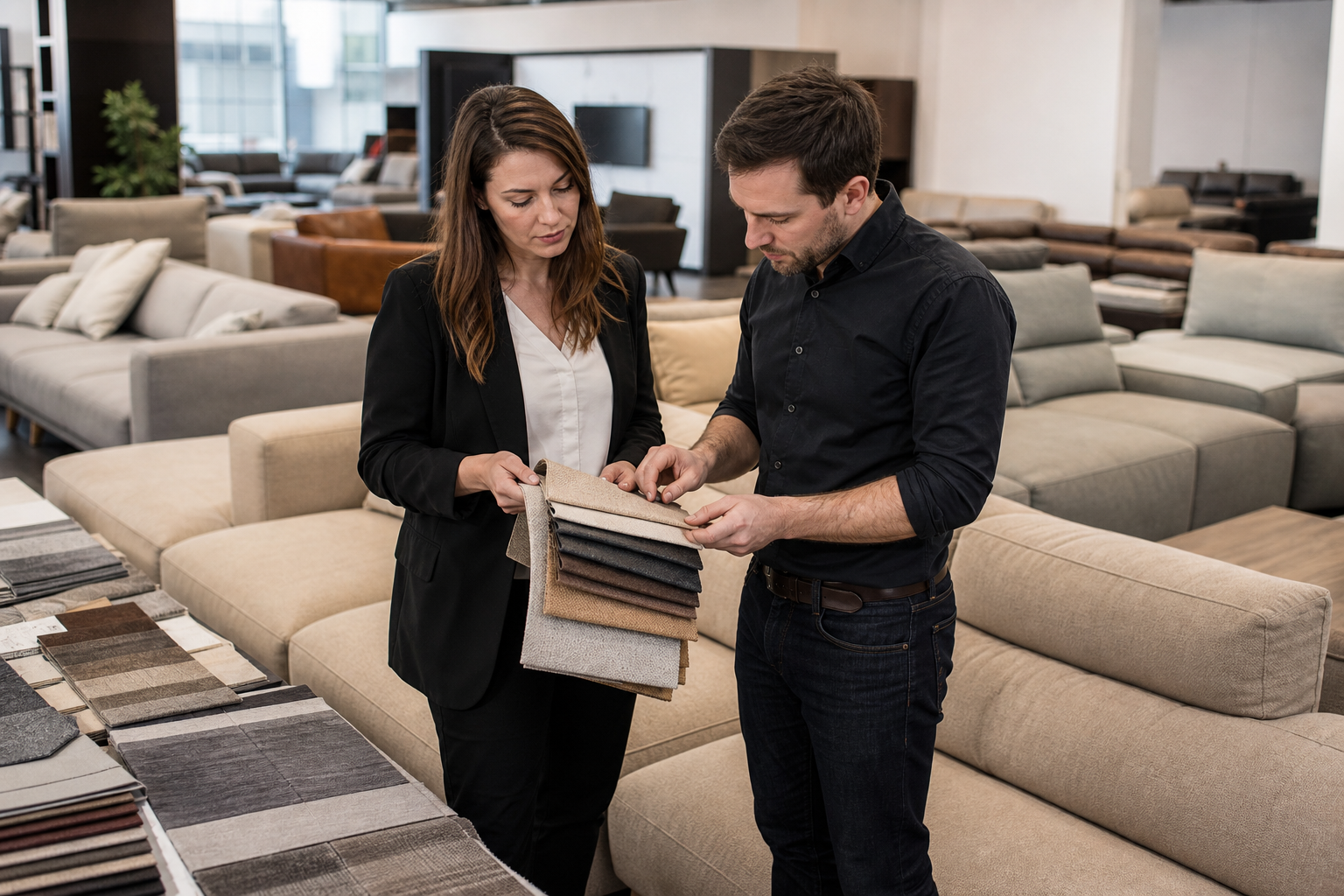
“How do I know which sofa styles will sell?”
If that’s the worry keeping cash tied up and showroom space conservative, the first point to make is this: AI has changed what data you can collect and how fast you can collect it. It lowers the cost of turning an idea into something tangible that customers and store teams can react to.
That’s great news for independent retailers — but it’s not a shortcut to instant best-sellers. You still need filters and workflows that separate visible interest from commercial viability. Below I’ll walk through the practical mechanics: how expressions proliferate, what to treat as a signal versus a prototype, how professional gatekeeping still matters, and where retailers should focus effort to convert AI-driven ideas into reliable selling assortments.
Expression democratized: more voices, earlier ideas
AI lets anyone with a point of view — a shop owner, a sales associate, or a local customer — turn a mental sketch into a visual option in minutes. That widens the source of ideas from a handful of professionals to a broad mix of local insights.
For retailers, this matters because local tastes are often under-sampled in mainstream catalogs. What plays in one neighborhood can be invisible in data aggregated at the national level. Quick visualizations let you present local variants to your store audience and measure response without committing to bench samples or full production.
But remember: visual clarity isn’t the same as sellability. An attractive render may never meet comfort, material, or logistics requirements. The business value of expression democratization lies in generating a richer, earlier set of candidate concepts — not in skipping the steps that make a sofa a product people will sit on and buy.
From expression to candidate product: expand the pool, don’t leap to production
The immediate effect of low-cost visual expression is a bigger candidate pool. That’s an advantage: you can test niche shapes, local materials, and hybrid ideas that wouldn’t pass a traditional buying committee. You can also bring store-level customers into the conversation, increasing their investment in a style before it reaches your showroom floor.
Operationally, treat AI-generated visuals as voting fodder. Use them to: collect store-level reactions, drive customer feedback sessions, and seed formal design proposals. Resist treating every visual as production-ready. The right commercial process maps these visuals into a small slate of candidates that deserve sampling, rather than ordering production from everything that looks promising.
At StarbornHub we frame AI-driven inputs as upstream content for our voting and development mechanisms. The platform’s monthly voting cycles, sample-build pathways and factory-side development are the stages that convert many visible ideas into the few that get physical validation and supply support.
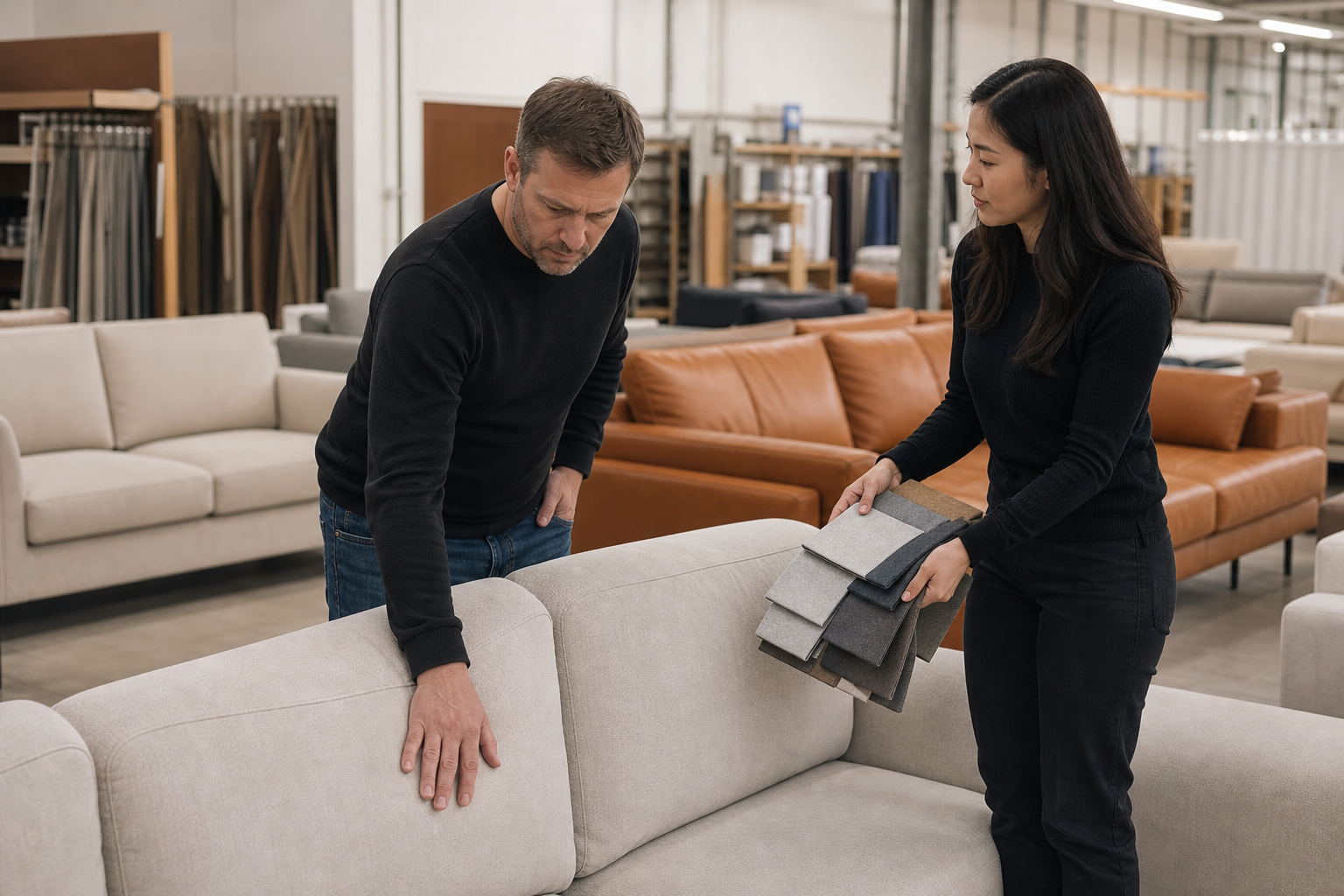
Two-layer filtering and quality assurance: audience signal vs. production feasibility
When expression gets cheap, you need disciplined, layered filtering.
- First layer — audience and market signal: Capture consensus through store-registered customer votes, engagement metrics and local customer interviews. This tells you whether a design has local traction and whether customers are willing to put social capital or time behind it.
- Second layer — professional feasibility: Pass the popular candidates to designers and factories for technical review, prototype sampling and cost/constructability checks. This assesses ergonomics, material suitability, durability and shipping constraints.
AI shortens the loop between concept and first-layer feedback, but it cannot replace the second layer. In practice, successful retailers and platforms maintain both layers: democratically sourced signals to find interesting directions, and professional gates to ensure those directions have a path to real-world product and reliable margins.
StarbornHub’s model is built around that separation: we amplify local preference signals while relying on factory-side sampling and development to determine which ideas should enter inventory and which should be refined or retired.

The designer’s role is changing — and becoming more critical
If AI democratizes the front end of design, it simultaneously elevates the importance of designers who can translate. Designers are no longer primarily the people who originate every silhouette; they become the professional engine that converts user-generated visuals into production-ready definitions.
That conversion work includes:
- Applying human factors and engineering to ensure the shape works as a sofa (seat depth, back angle, structure)
- Translating an aesthetic into viable materials and joinery that factories can repeat at scale
- Editing and curating submissions, nudging amateur contributors toward ideas that have a practical chance
- Acting as a bridge between voting signals and factory execution, so a community-favored design doesn’t fail at the sample stage
For retailers this suggests a practical shift in how you allocate trust and budget. Invest in relationships with designers or vendors who will act as translators, and prioritize workflows that let you iterate quickly from crowd-sourced visuals to a vetted sample.
Retailers and in-store users: practical steps and risk controls
Store teams are the intermediaries that turn local taste into usable signals — but only if those signals are properly channeled.
Practical controls you should use:
- Make sure in-store expressions are tied to accounts or registered customers. That avoids ephemeral social traffic skewing your local vote counts.
- Use AI visuals to seed in-store ballots, but pair votes with short qualitative notes from the salesperson about fit and customer context.
- Treat early wins as pilots, not inventory orders. Move promising items into controlled sample builds, show them in-store, and track conversion versus interest.
- Keep a hard distinction between visual appeal and physical testing. Use short-run samples to validate sit tests, fabric behavior and transportation packaging before scaling.
- Protect local assortments through city- or region-level allocation mechanisms so a successful local pilot isn’t undercut by immediate inflows from other channels.
These controls reduce the risk that democratized expression becomes noise or that you over-commit to looks that haven’t been through proper feasibility checks.

Practical checklist for retailers who want to use AI-driven expressions to pick sofas
1. Use AI visuals to expand your idea pool, but only as the start of a funnel.
2. Capture store-level votes with registered accounts and qualitative notes.
3. Prioritize promising ideas for controlled sample builds — don’t skip physical validation.
4. Work with designers who can convert popular visuals into feasible specs.
5. Keep supply-side commitments conservative until prototypes clear comfort, materials, and logistics checks.
6. Leverage platform cooperation (factory-side development and staged rollouts) to reduce capital risk and speed time-to-shelf.
These steps let you treat AI as an accelerant to local market sensing, not a replacement for the production discipline that creates long-term sellable assortments.
Conclusion
AI lowers the barrier to expression, and that’s a practical advantage for independent retailers who want to capture local taste quickly. The catch is that visibility is not the same as sellability: you need a structured funnel that converts popular visuals into production-ready designs through voting, professional review, and factory-side sampling.
StarbornHub’s approach is to keep those stages distinct but connected — amplify local voices, measure consensus, and then rely on designer-and-factory pathways to validate and scale the winners. For retailers, that means using AI to widen the research horizon while keeping operational discipline on sampling, testing and supply commitments. Do that, and AI becomes a tool that helps you put cash and showroom space behind the sofa styles most likely to sell in your market.
More articles in this content module
Module: Product Selection Risk
This is the full reading map for the current content block, so you can follow the logic inside this topic before jumping to another issue.
- Who really decides whether a sofa style will sell?
- Why is retail experience alone less reliable than before?
- How can a retailer make better buying decisions with limited space and cash?
- How should a furniture store build a stronger product range?
- What makes a furniture buying decision actually good?
- How can a furniture retailer choose products with better direction?
- Style And Fabric Choice Should Enter The Mechanism?
- Data Assets That Help You Choose Sofas That Sell
- AI Lowers The Barrier To Design Expression?
- AI Cannot Replace Design Judgement?
- More AI Design Makes Selection More Important?
- AI Makes Design Filtering More Important?
- The Design Selection Flywheel: How Retailers Reveal Which Sofas Will Sell
Other content modules you may want to explore
If your concern is not only this one issue, these modules open nearby paths in the StarbornHub theory system.
Another problem retailers often connect to this: A nearby visible problem you may also be dealing with
Does the margin calculation include freight, delivery, damage, markdowns, financing, returns, and slow stock?
First reading in this module: How much margin room does an independent furniture retailer need?
What this could improve if handled better: A possible business gain behind this issue
Supplier Trust And Quality Responsibility
What incentive does the supplier have to protect quality after the first order?
First reading in this module: Quality Consistency Needs A Visible Process?
What it may take, cost, or risk: The practical concern before trying a new path
Is the sales drop caused by fewer visitors, lower conversion, weaker product fit, local market pressure, or broader economic pressure?
First reading in this module: What changed in the furniture retail market?