
Style And Fabric Choice Should Enter The Mechanism?

Slow-moving inventory is a silent tax: it ties up cash, takes floor space, and distracts staff from selling what actually moves.
For independent furniture retailers, the answer isn’t only faster clearance; it’s smarter buying. At StarbornHub we’ve put a practical mechanism in place that brings pre-order feedback from real store visitors into the selection process—so you get stronger signals before you commit large stock to a style or fabric.
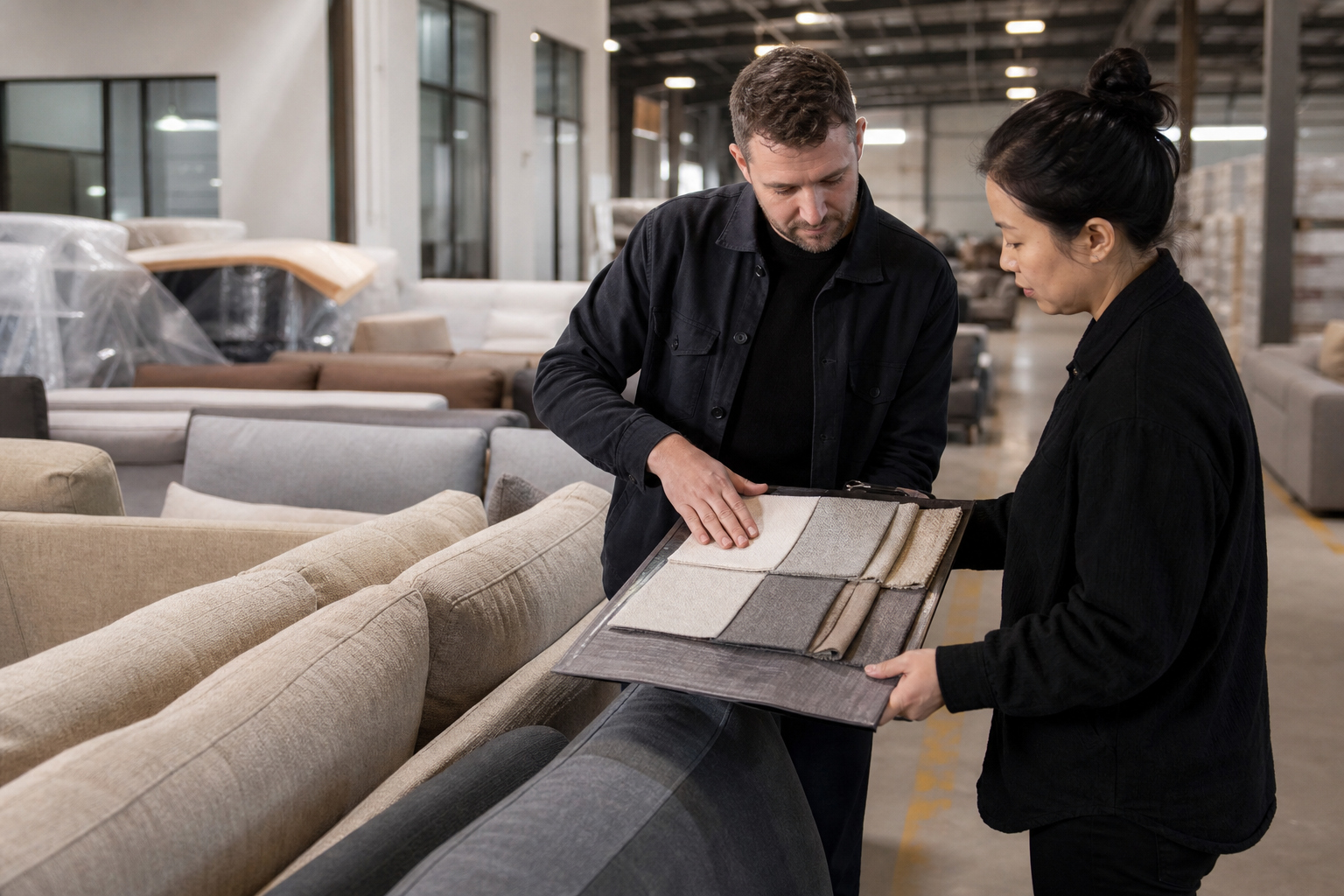
Why bring in-store feedback earlier (and how far should you let it influence buying?)
- The goal is to reduce blind reliance on experience or wholesaler suggestion by exposing your decisions to the actual customers who walk into your store. It’s not about replacing your buying authority—retailers keep final say—but about giving you data that better reflects your local demand.
- To keep signals relevant, feedback is limited to the store’s own registered visitors. Those are the people whose homes, budgets and lifestyles match your catchment area, so their preferences are meaningful for your merchandising and inventory choices.
How we separate style and fabric voting—and why that matters
Breaking votes into two independent choices—structure (style) and surface (fabric)—solves a few practical problems:
- Complexity control: If customers had to pick from every possible style+fabric combination, choices explode and participation collapses. Separating them keeps interaction simple and repeatable.
- Local flexibility: Retailers can mix-and-match the winning style and fabric in-store, tailoring final displays to their showroom and customer context.
- Cleaner signals for suppliers: Style preferences guide factory sampling priorities and design focus; fabric preferences help decide which materials should be kept in a common supply pool for quick sample and small-run needs.
That last point is critical: the platform learns two complementary things. Style heat tells developers what shapes and proportions are resonating. Fabric heat tells the supply chain which materials to keep on hand for fast, low-risk runs and in-showroom samples.
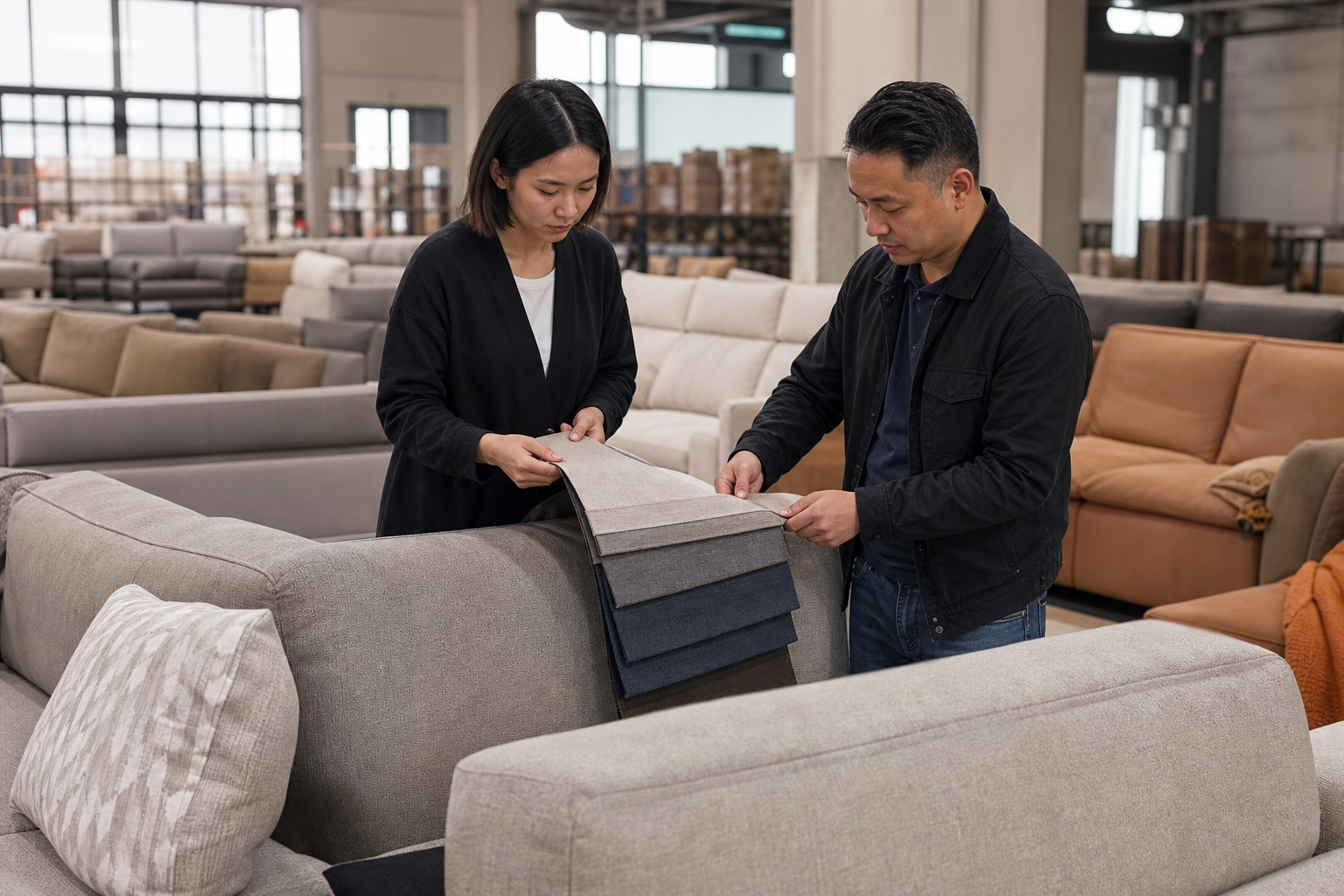
What voters are actually judging—and why structured signals matter
When a customer votes in your store, they aren’t voting abstractly. They’re comparing the item to their living room: their square footage, their light, their pets, their tolerance for cleaning, the colors they already own. To be useful, those subjective impressions need structure. That’s why votes are captured with simple context cues: small apartment vs family home, high-traffic living room vs secondary space, preference for low-maintenance materials, and so on.
Two practical benefits follow:
- You can match signals to buyer segments. A style that gets thumbs-up from small-flat voters is not the same “win” as one that appeals to large-family households. That nuance helps you allocate limited showroom space and inventory more profitably.
- Negative signals are as valuable as positives. Clear rejections or weak preferences should trigger early de-selection—better to never put that style into heavy stock than to learn slowly from a display cabinet full of SKU that won’t sell.
The role of a participation history track: identifying the reliable voices
Voting alone is a snapshot. To build a dependable input layer you need a way to identify who consistently casts useful votes. That’s where a participation history or reputation track comes in. But its purpose isn’t to gamify participation for the sake of activity—it’s to surface users whose preferences repeatedly align with actual market outcomes.
Two dimensions matter:
- Continuity: does the user participate regularly and consistently over time? Repeat voters are more valuable than one-off opinions.
- Predictive alignment: do their votes tend to match later purchase behavior in the store? Votes that correlate with purchases deserve heavier weight.
Using those signals, the platform can tune which local votes to give more influence when suggesting sample priorities or fabric pool choices. Importantly, the participation history mechanism is framed as a quality filter and an incentive—participants gain longer-term benefits for reliable engagement, which lifts the signal-to-noise ratio for everyone.
How this actually changes retailer behavior—practical outcomes
For an independent retailer, this mechanism translates into three immediate operational improvements:
1) Smarter buying leads
You get structured local preference reports before placing large orders. That doesn’t mean the platform tells you what to buy; it highlights where your customer base is clustered. If a style has steady local approval and matches your spatial customer mix, it becomes a low-risk sample to order or hold in small quantity.
2) More effective showroom use
Showroom space is finite. Use local voting to prioritize which styles and fabrics to showcase. That raises conversion per square meter: you’re showing pieces that your visitors have already signaled interest in, rather than committing prime space to speculative SKUs.
3) Lower inventory risk
By identifying low-probability styles or materials early, you can decide to exclude them from main orders or keep them only as very limited backups. When fabric preferences feed into a common material pool and the factory’s flexible supply capability, you can meet customer demands without committing to large lots of slow-moving fabrics.
There’s also a system-level benefit. When many retailers feed the same kind of store-level data into the platform, fabric pools and factory sampling priorities become more efficient. The platform’s role is to connect that intelligence to suppliers and to retail decisions—not to enforce choices, but to lower the cost of testing and the penalty of being wrong.
Practical notes for implementation in your store
- Keep feedback local: make sure voters are actual store visitors and encourage profile context so votes carry segmentation information.
- Make voting frictionless: separate style and fabric choices into quick interactions so customers are willing to participate more than once.
- Use the quality signal: don’t treat all votes equally. Over time, prioritize input from consistent, predictive voters when evaluating which samples to back with inventory.
- Treat “no” as intelligence: track and act on consistent rejections rather than glossing over them.
A few things StarbornHub provides that matter to retailers
- We bring a mechanism that links your storefront signals to factory-side flexible supply—so you can move faster from local insight to realistic sample or small-batch production.
- The system preserves your buying autonomy while giving you more representative, traceable demand data.
- Behind the scenes we keep user-quality filtering, account binding and local protection in place so signals remain reliable and tied to real foot traffic.
The public point is the long-term effect.
Conclusion
If your problem is slow-moving sofas tying up cash, the best fix is to avoid committing to the wrong SKUs in the first place. Bringing structured, in-store pre-purchase feedback into the buying decision—while separating style and fabric votes, weighting inputs by voter quality, and tying fabric signals to flexible supply—gives you a repeatable way to reduce selection risk. StarbornHub’s role is to provide that bridge: trustworthy local signals, support for targeted sampling and a connection to flexible factory capacity, while you retain final buying control. Think of it as buying with better local intelligence, not handing your buying list to a third party.
More articles in this content module
Module: Product Selection Risk
This is the full reading map for the current content block, so you can follow the logic inside this topic before jumping to another issue.
- Who really decides whether a sofa style will sell?
- Why is retail experience alone less reliable than before?
- How can a retailer make better buying decisions with limited space and cash?
- How should a furniture store build a stronger product range?
- What makes a furniture buying decision actually good?
- How can a furniture retailer choose products with better direction?
- Style And Fabric Choice Should Enter The Mechanism?
- Data Assets That Help You Choose Sofas That Sell
- AI Lowers The Barrier To Design Expression?
- AI Cannot Replace Design Judgement?
- More AI Design Makes Selection More Important?
- AI Makes Design Filtering More Important?
- The Design Selection Flywheel: How Retailers Reveal Which Sofas Will Sell
Other content modules you may want to explore
If your concern is not only this one issue, these modules open nearby paths in the StarbornHub theory system.
Another problem retailers often connect to this: A nearby visible problem you may also be dealing with
Does the margin calculation include freight, delivery, damage, markdowns, financing, returns, and slow stock?
First reading in this module: How much margin room does an independent furniture retailer need?
What this could improve if handled better: A possible business gain behind this issue
Supplier Trust And Quality Responsibility
What incentive does the supplier have to protect quality after the first order?
First reading in this module: Quality Consistency Needs A Visible Process?
What it may take, cost, or risk: The practical concern before trying a new path
Is the sales drop caused by fewer visitors, lower conversion, weaker product fit, local market pressure, or broader economic pressure?
First reading in this module: What changed in the furniture retail market?