
A Retailer Cannot Build This Mechanism Alone?
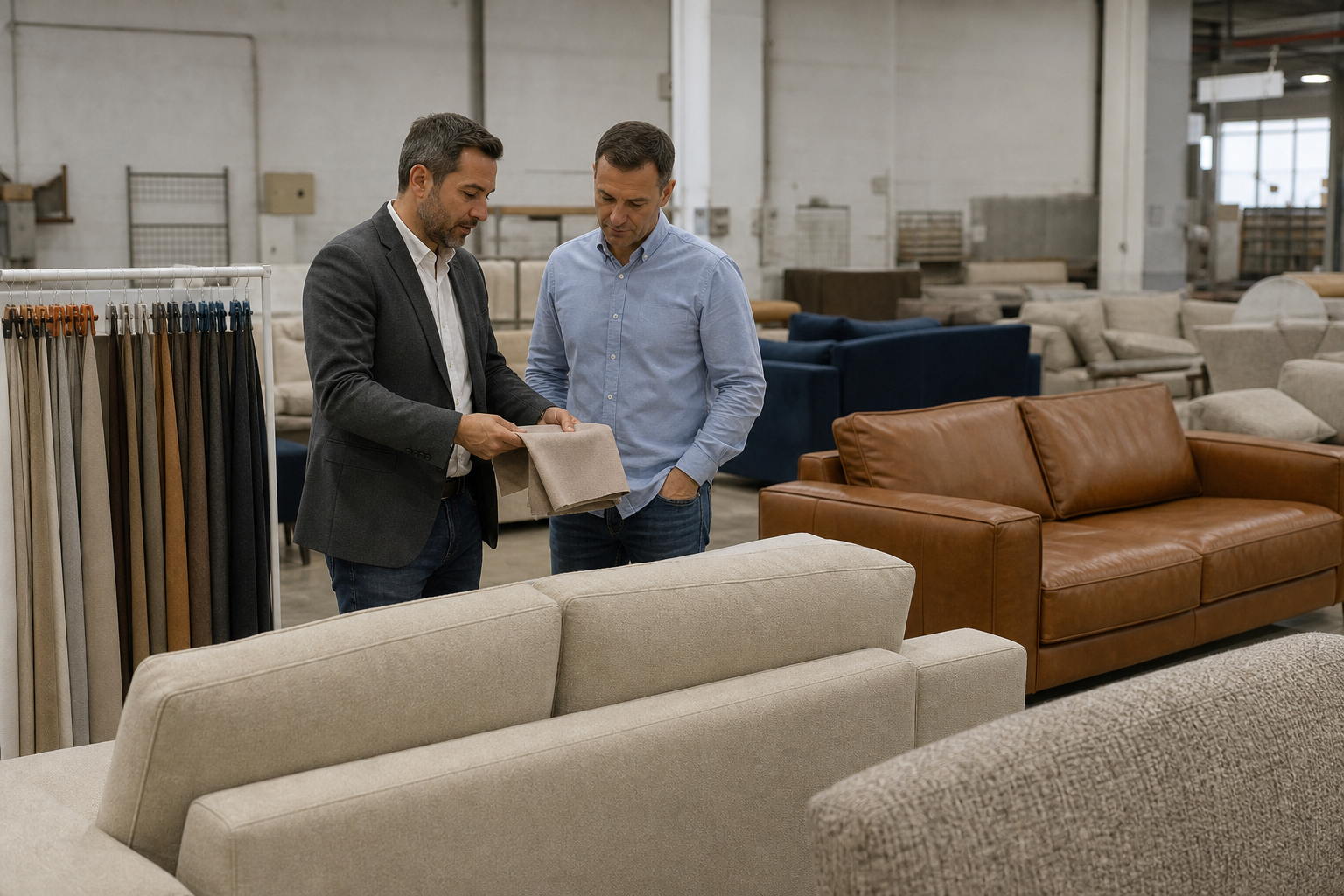
As retailers, you live in the only place where products meet real people. You see sit tests, hesitations, returns and word-of-mouth in real time. That closeness makes you the most valuable source of pre-purchase feedback for sofas and other furniture.
So when the question comes up — do I take the risk of buying bulk stock before testing customer demand, or wait until I launch content and measure interest — the intuitive answer is often "buy a little, then buy more if it sells." But the underlying problem is bigger: slow-moving inventory that ties up cash, floor space, and selling attention is rarely solved by faster clearance alone. The better fix is a repeatable validation mechanism that prevents large stock bets from being necessary in the first place.
Below I explain the business logic and the practical mechanism I use at StarbornHub to help independent retailers validate products without becoming supply-chain coordinators themselves.
You already have the most valuable resource: real buyers
Your store funnel is a goldmine: inquiries, comparisons, trial sits, objections, and purchases all convey signals. Those behaviors are scarce industry-wide because they require real customers in real buying contexts. If you capture that data — even informally — you can be dramatically better at local buying decisions than a retailer who relies only on catalogs and intuition.
This is why our programs ask retailers to develop a local user base and capture simple signals before larger procurement decisions. For practical reasons we often use a threshold like ~200 local users as the point where a retailer's market input becomes reliable enough to feed platform-level sourcing.
But having those signals is not the same as building the whole system to turn them into production-ready products.
Why a single retailer cannot and should not organize the full feedback-to-factory loop
Running the full validation stack is a different business from running a store. It includes user recruitment and retention, standardized reporting, product sampling and modification, quality control, import logistics, and sustained supplier relationships. Most independent retailers have neither the bandwidth nor the incentive structure to do that work alone. A few concrete constraints:
- Geographic limits: Your users mainly come from your store catchment area. That gives you depth, but not the cross-market breadth that a platform needs to test scale and variant performance.
- Operational bandwidth: Your team is already focused on sales, merchandising, and inventory rotation. Building a sampling and product-development pipeline would divert attention from core retail tasks.
- Supply-chain expertise: Most retailers know customers, not factories. Judging whether a design is producible, estimating cost implications of structure changes, and managing production schedules require different skills.
- Economies of scale: Product development, factory coordination, and quality systems have fixed costs. A single retailer’s expected sell-through per style rarely covers those costs.
In short, retailers are the best market-entry participation history but poor system organizers. The practical option is to contribute what you do well — local feedback — while letting a specialized organizer handle factory coordination and pooled investments.

What a practical validation mechanism looks like (and why it reduces slow-moving inventory)
A useful mechanism converts local signals into low-risk, production-ready decisions without asking retailers to take on factory-side complexity. At StarbornHub we structure that mechanism around three principles:
1. Capture standardized local signals
- Retailers collect simple, comparable data participation history: number of test sits, inquiries, pre-orders, and converted sales by configuration. Use short forms or an in-store QR to keep capture cheap and consistent.
2. Pool and aggregate across stores
- One store’s 20 pre-orders is informative; ten stores with 20 pre-orders each is decisive. Pooling across multiple retailers gives the organizer the breadth to identify winners and decide variants, materials and price points.
3. Run staged production with factory oversight
- Instead of immediate bulk import, the organizer runs a staged plan: samples, a pilot small batch for those who pre-ordered, and then scaled production only when the pilot confirms assumptions about manufacturing, packaging, shipping and returns.
This approach reduces slow-moving inventory by shifting the high-risk decision point upstream. You no longer fund a large production run because you like a design or because a supplier pushed minimums; you buy into production only when pooled, local signals and a factory-validated pilot confirm demand and manufacturability.
Practical actions for retailers today
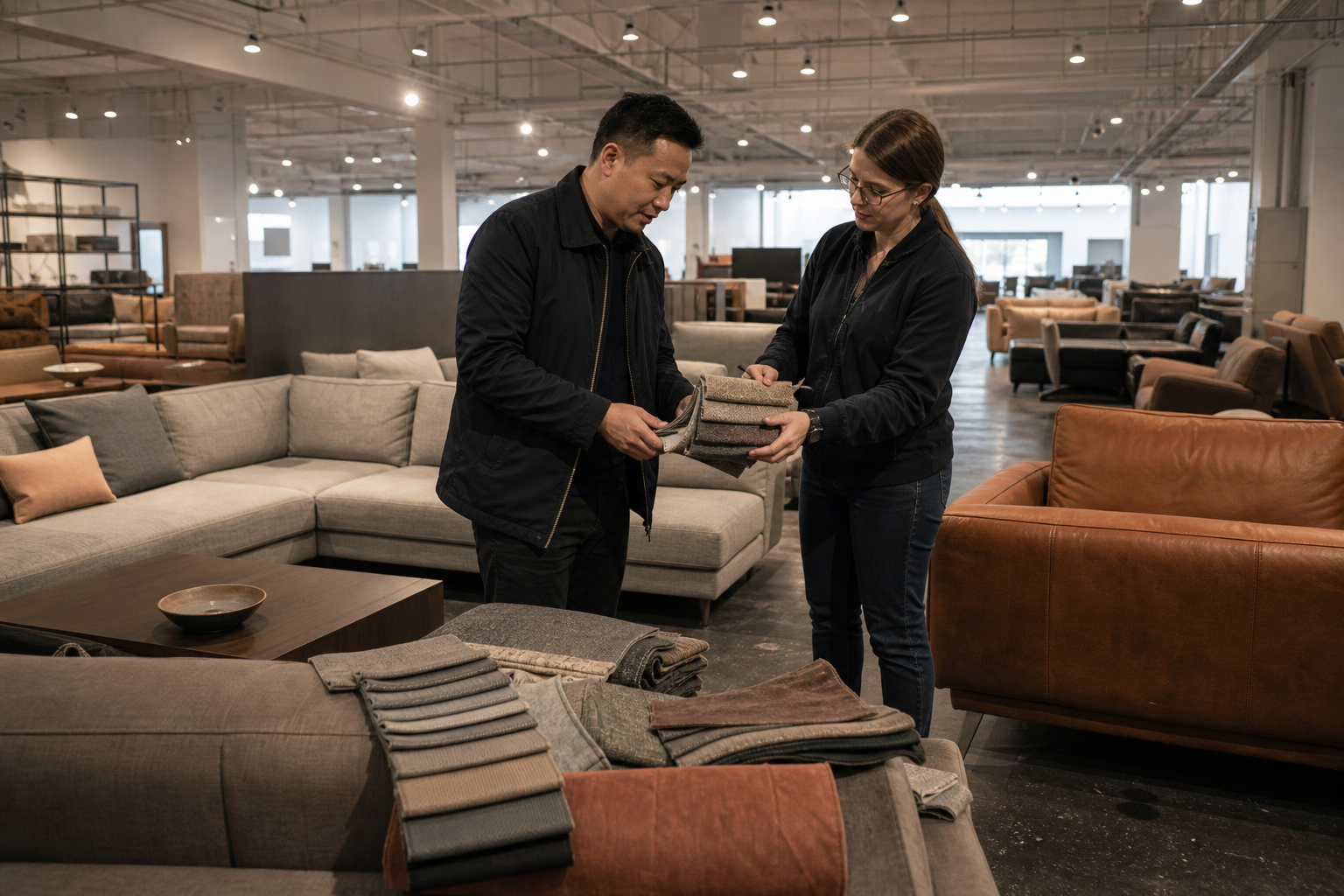
You do not need to become an importer or product developer to benefit from a system like this. Here are concrete steps you can take that fit your store operations and improve your buying decisions:
- Start capturing simple signals today: record sit trials, inquiries, pre-order signups and style hesitations with a consistent tag for each candidate product.
- Build the local user list: encourage in-store customers to join an updates list; target 100–300 engaged local users as a starting point for meaningful feedback.
- Use small, visible tests: pair a single sample or a small in-store mini-launch with online and social content to measure interest before any bulk order.
- Ask for pilot commitments, not full purchases: a refundable deposit or pre-order reservation helps measure intent without forcing customers or retailers into full payment upfront.
- Share standardized reports: keep your feedback in a format that an organizer can aggregate quickly — a template with metrics like test sits, conversion rate, preferred finishes and price sensitivity.
- Join pooled buying or pilot programs: when available, participate in multi-retailer pilots so you benefit from pooled economics and factory validation without taking on the supply-chain work.
These actions let you preserve your core retail focus while making your local data actionable within a broader validation process.
What to avoid
- Don’t assume a single-store success guarantees a producible product. A design that works in one neighborhood may fail at scale unless a factory has validated structure, materials and packaging.
- Don’t absorb the full cost of product development alone. Product development and sampling are fixed-cost activities better shared across multiple retailers.
- Avoid buying large stock purely on intuition or initial social traction. Social content can mislead if not paired with in-store signals and real purchase intent.
How StarbornHub supports retailers without asking them to become factory managers
At StarbornHub we act as the organizer that connects retail signals to factory execution. That means:
- We standardize how retailers capture and submit local feedback so it can be compared across stores.
- We coordinate sampling, modification and pilot batches with factories so designs become producible without each retailer spending heavily on development.
- We pool demand across participating retailers to reach sensible pilot and production quantities that factories can accept without forcing oversized minimums on any single store.
- We take on the paperwork, logistics, and supplier follow-through so retailers can stay focused on selling and local service.
This platform-led cooperation backed by real factory capability is not a magic shortcut; it is a practical division of labor. Retailers contribute what only they can provide — buyer access and local judgment. The organizer brings the supply-chain and product development muscle needed to turn those signals into reliable inventory decisions.

How this reduces slow-moving inventory in practice
By moving the large decision — full production and import — to a point after pooled validation and a factory-confirmed pilot, you reduce four common causes of slow-moving stock:
- Overcommitment to styles that look good but are hard to produce or perceive poorly in-market;
- Mispricing because production realities were not assessed before large runs;
- Poor packaging or transport choices discovered only after full arrival; and
- Local merchandising that doesn’t match manufacturer assumptions.
When pilots succeed, the resulting production run is a better fit for local tastes and for factory capabilities. When pilots fail, losses are small and instructive rather than crippling.
If you must buy before a program is in place
There are business realities where a retailer wants to be first to market. If you choose to buy stock before a validation program, do it strategically:
- Keep quantities small and modular so you can mix and match or liquidate without disastrous cash impact.
- Negotiate return or buy-back windows with suppliers where possible.
- Prioritize SKUs that are easiest to produce and ship.
- Use the stock as a marketing tool to drive signups and pre-orders for future batches, not as a permanent inventory commitment.
But note: these are mitigation tactics, not solutions. The systemic fix remains building or joining a pooled validation mechanism.
Conclusion
Independent retailers are uniquely positioned to provide the most valuable input for product selection: real buyer behavior. That advantage is exactly why you should focus on capturing those signals rather than trying to become a factory-side organizer. The better strategy is to contribute your local feedback into a coordinated, factory-side validation and pilot process. That division of labor lets retailers avoid large speculative stock purchases, preserve cash and floor space, and participate in product decisions that are already vetted for production and logistics. If slow-moving inventory is your pain, the solution is not just faster clearance — it is a better upstream validation process that prevents bad stock from being ordered in the first place. Consider standardizing your local signal capture and joining pooled pilots so you can keep doing what you do best: sell well to your customers.
More articles in this content module
Module: Validation And Small-Batch Testing
This is the full reading map for the current content block, so you can follow the logic inside this topic before jumping to another issue.
- Should furniture retailers buy stock before testing customer demand?
- Should furniture retailers buy stock before testing customer demand?
- Should furniture retailers buy stock before testing customer demand?
- Should furniture retailers buy stock before testing customer demand?
- Should furniture retailers buy stock before testing customer demand?
- Should furniture retailers buy stock before testing customer demand?
Other content modules you may want to explore
If your concern is not only this one issue, these modules open nearby paths in the StarbornHub theory system.
What this could improve if handled better: A positive business outcome or advantage the retailer may want.
Customer Asset And Relationship Capture
Are website visits, blog clicks, customer questions, and reviews being captured as usable signals?
First reading in this module: How do I turn online browsers into showroom visitors?
Why this path may be worth testing: A trust-building or low-commitment validation question.
Supplier Trust And Quality Responsibility
What incentive does the supplier have to protect quality after the first order?
First reading in this module: What should a furniture retailer ask before trusting a new sofa supplier?