
What kind of customer report helps a furniture retailer buy better?
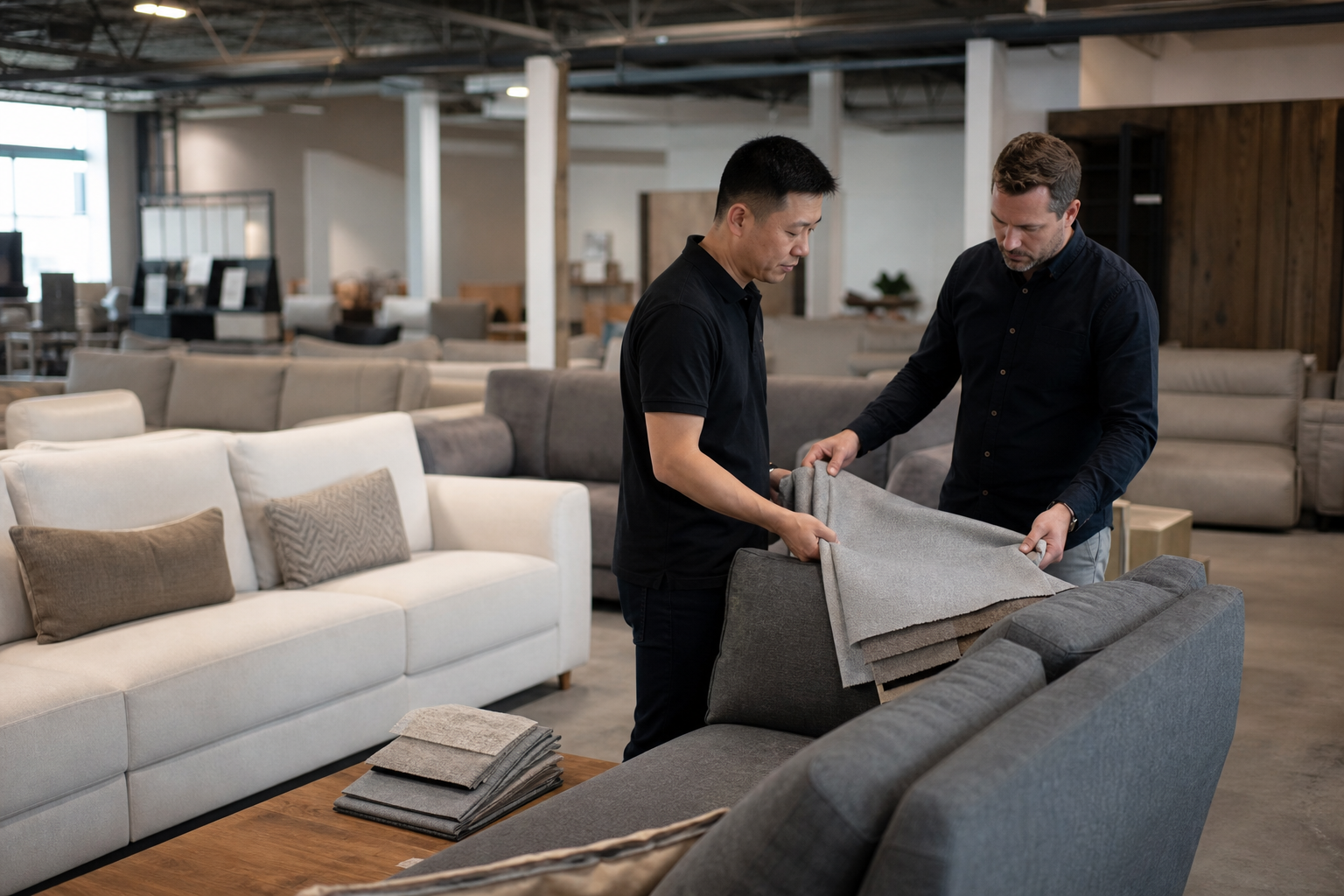
If you’ve ever put a sofa into a showroom and watched it sit untouched for months, you’re not alone.
The common complaint — “I only found out this style was wrong after it was already in my showroom” — comes down to signal timing and signal source. You need to know earlier, and you need to know whether the signal is coming from a broad trend or from your own customers.
At StarbornHub we built a three-layer report system to solve exactly that problem. The goal isn’t to reduce market complexity to a single answer; it’s to organize feedback so you can see where a product’s strength comes from, where it’s weak, and whether you should convert interest into showroom cash and order commitments.

Platform, city, store-user: what each report does
- Platform report (macro): this is the big-sample view. It tells you which design languages, sizes, colors, materials and style directions are attracting attention across the wider StarbornHub network. Use it to identify broad trends, spot rising directions, and quickly exclude styles that show no traction at all. It’s directional — helpful for curating a product mix — but not sufficient by itself to decide local purchases.
- City report (local cohort): this report narrows the platform signal to your city and to retailers with a similar sales tier and target customer. Because participating retailers in a city tend to share a similar target customer profile, the city report answers the key question: will this style sell in our city? It’s not a general population preference; it’s the preference of the kind of local customers you actually sell to.
- Store-user report (your customers): this is the closest and most actionable layer. It comes from your own user asset — a pool of customers you can reach repeatedly, not just one-time buyers. The store-user report converts that user asset into pre-purchase feedback. If you’ve built a user base large enough to qualify (StarbornHub’s procurement track requires a representative local-customer base), the store-user report shows how that customer pool chooses between styles in percent terms. That’s what you want to base a buying decision on.

Why retailers learn too late — and how the layers prevent it
The typical late-discovery pattern looks like this: a style is selected using broad trend signals or supplier persuasion, a minimum order is placed, the piece goes into the showroom, and only then does real local customer behavior reveal the mismatch. The cost is cash, floor space, markdowns, and the time it takes to recover.
The three-layer report changes that flow. Instead of a single yes-or-no moment, you get staged confirmation:
- Stage 1: Platform says the design language is getting interest. You flag the product as worth testing, not as a direct buy.
- Stage 2: City report shows whether similar local customers are actually engaging. If the city signal is strong, move to local testing.
- Stage 3: Store-user report shows whether your own customer pool chooses the product when given the option. This is the signal that should carry the most weight for ordering inventory.
That ordering — platform for context, city for local viability, store-user for buy/no-buy — is central. The reports are not equal-weight averages; they’re a hierarchy. The closer the feedback is to your actual buyers, the more decisive it should be in your purchasing.
Concrete metrics to watch in each layer
- Platform: impressions, saves/wishlist rates, share of attention among similar SKUs, early reservation interest. Use it to filter out designs that show almost no traction across the network.
- City: local wishlist/reservation rates, local click-to-reserve ratios, early conversion from local showrooms on comparable styles. Ask: among other retailers in my city and tier, is this style being reserved or converting?
- Store-user: percentage selection in local choice tests, pre-orders from your customer base, showroom try-to-reserve conversion, explicit feedback comments. This is the signal you can trust to commit cash.
If a product is mediocre at platform level but strong at city and store-user levels, it’s often a localized opportunity rather than a macro trend — and that’s precisely the kind of SKU an independent retailer should stock.
How StarbornHub’s mechanism lets you test before you buy heavy
Because StarbornHub is a platform cooperation mechanism backed by real factory capability, it enables lower-risk local experiments. You can:
- Run curated local tests where items are shown virtually or as samples before bulk ordering.
- Use pre-orders or refundable reservations from your store-user pool to validate demand before placing larger factory orders.
- Access lower MOQs or phased shipments when city and store-user signals justify a limited initial run.
These options remove the all-or-nothing inventory decision. When the store-user report confirms local interest, you can scale with phased orders or co-funded samples rather than committing full showroom cash upfront.
A practical decision framework for your next buy
1) Screen with platform: eliminate designs with near-zero platform attention. Keep a short list of candidates with decent platform traction.
2) Check city viability: if the city report shows low local interest, deprioritize unless you have a specific niche customer angle.
3) Activate store-user tests: show the short list to your 200+ user pool. Use simple, measurable tests — a shortlist vote, reservation with small refundable deposit, or a showroom try-and-reserve event.
4) Make the buy when your store-user report confirms demand: if a clear majority of your engaged users (decide your threshold — 20–30% selection or a fixed number of pre-orders) prefer the style, place a phased order. If only the city report is positive but your store-user pool is lukewarm, consider a limited sample order or co-funded display rather than full stock.
Example scenarios
- Platform high, city high, store-user high: Good candidate for immediate phased ordering and showroom display. Scale fast.
- Platform high, city low, store-user high: Localized opportunity. Order limited stock; market heavily to your store users and nearby neighborhoods.
- Platform low, city low, store-user high: Hyper-local niche. Ask whether the product fits a very specific neighborhood demographic; consider small, targeted batches.
- Platform high, city high, store-user low: Don’t assume the product will sell for you. Re-examine merchandising, pricing, or whether your user pool skews different from the local cohort.
Operational checklist — minimal actions a retailer can take this month
- Build your user asset: aim for 200 engaged users as procurement qualification and to get meaningful store-user reports.
- Run a shortlist test: collect wishlist/reservation data and one-line reasons for preferences.
- Set thresholds: decide what store-user selection percentage will trigger a phased order for you (e.g., 25% of engaged testers or X number of preorders).
- Use StarbornHub’s sampling and MOQ flexibility when city and store signals are positive but not yet overwhelming.
- Track and tag outcomes: record which signals (platform/city and store) predicted success so you refine the thresholds for future buys.
Why this builds trust with suppliers and reduces markdowns
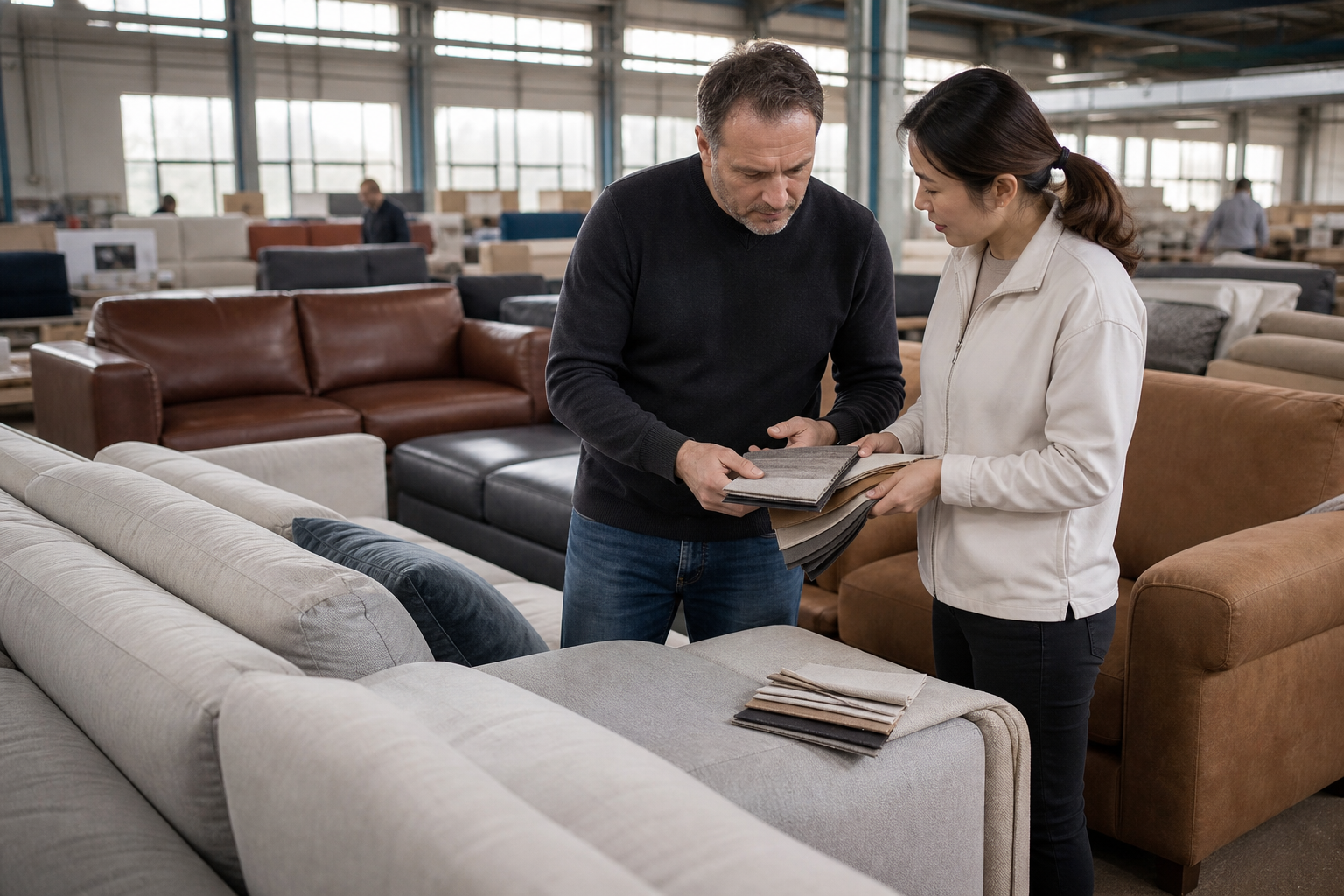
Suppliers want predictable orders; retailers want low risk. The three-layer reporting process gives both parties clearer demand signals before large orders are placed. When you bring platform and city context plus store-user confirmation to negotiations, you can ask for better terms (phased delivery, lower MOQ, co-funded samples) because you’re bringing verifiable local demand to the table.
Conclusion
Independent sofa retailers stop learning too late when they stop treating buyer decisions as single, high-stakes bets. Use platform reports for direction, city reports for local viability, and store-user reports for buy/no-buy decisions. StarbornHub’s platform-led cooperation backed by real factory capability then lets you translate those signals into staged orders, samples, and pre-orders — avoiding full showroom surprises and preserving cash and floor space. Build your user asset, run local tests, and let the closest signals carry the most weight. That’s how you buy better, faster, and with less risk.
More articles in this content module
Module: Customer Feedback Timing
This is the full reading map for the current content block, so you can follow the logic inside this topic before jumping to another issue.
- Why do furniture retailers learn what customers want too late?
- Why do furniture retailers learn what customers want too late?
- Why do furniture retailers learn what customers want too late?
- Why do furniture retailers learn what customers want too late?
Other content modules you may want to explore
If your concern is not only this one issue, these modules open nearby paths in the StarbornHub theory system.
What this could improve if handled better: A positive business outcome or advantage the retailer may want.
Customer Asset And Relationship Capture
Are website visits, blog clicks, customer questions, and reviews being captured as usable signals?
First reading in this module: How do I turn online browsers into showroom visitors?
What it may take, cost, or risk: A decision concern about work, cost, risk, staff burden, or what the retailer might lose.
Validation And Small-Batch Testing
What should be validated before a larger stock commitment?
First reading in this module: Should furniture retailers buy stock before testing customer demand?
Why this path may be worth testing: A trust-building or low-commitment validation question.
Supplier Trust And Quality Responsibility
What incentive does the supplier have to protect quality after the first order?
First reading in this module: What should a furniture retailer ask before trusting a new sofa supplier?