
Why does useful furniture customer feedback arrive too late?

You know the scene: a new sofa arrives, takes up prime showroom space, and weeks later you realize customers aren’t biting. It’s costing floor space, cashflow, and sales energy — and by then the product is already baked. Why does the market only tell us something is wrong after we've committed?
The short answer: feedback isn’t missing — it’s arriving after the critical decision participation history. Design, sampling, production and buying decisions are usually made before the customer ever has a chance to say yes or no in a structured, measurable way.
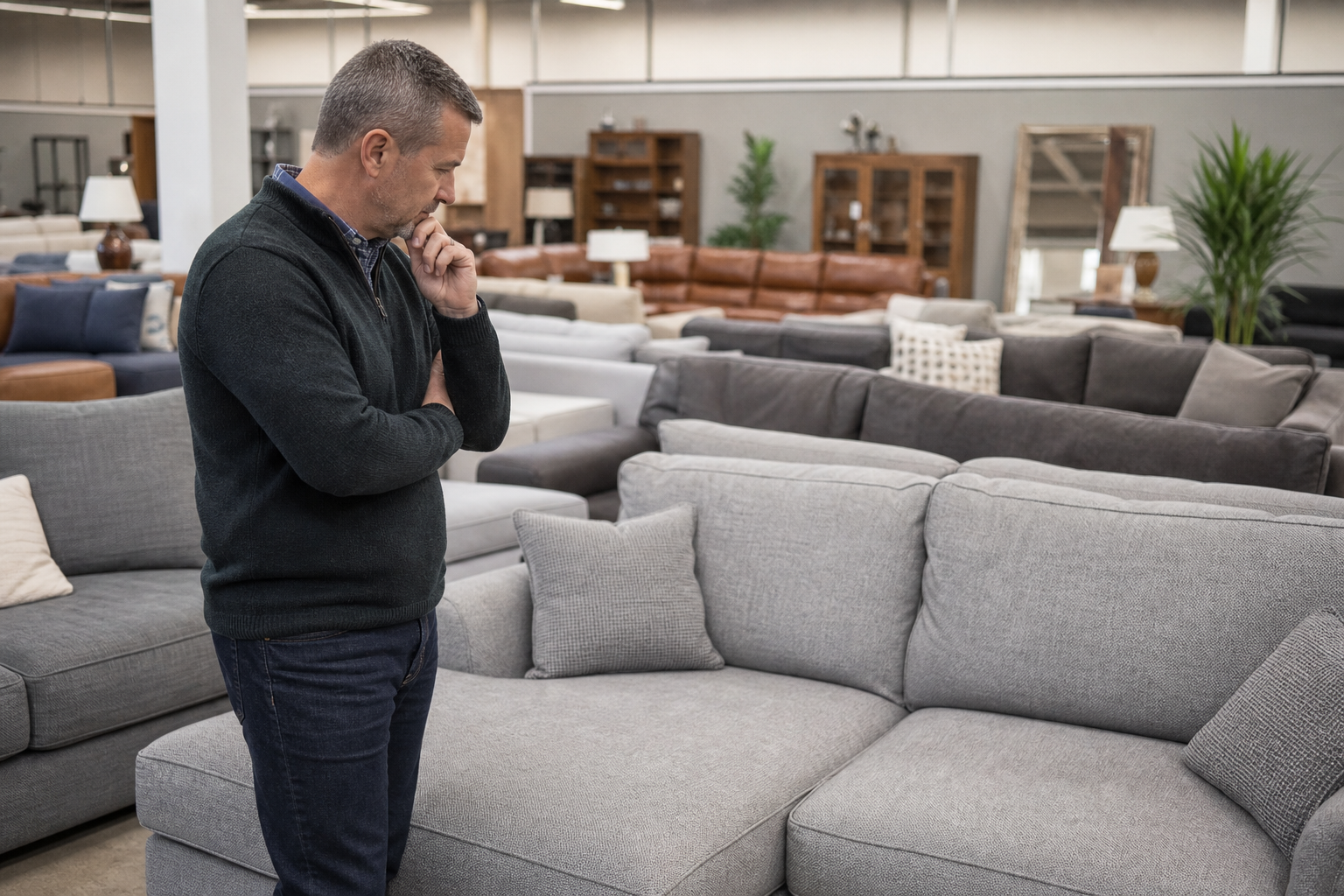
What’s driving this delay? Let’s walk through the four common decision layers and the structural reasons they push real signals downstream.
Design: aesthetics-led decisions
Designers are invaluable — they create new expressions, proportions and details. But design often starts from an aesthetic premise, trend reading, or a brief from a buyer, not from systematically tested local demand. Freelance designers especially sell to wholesalers or brands, not to end customers, so their primary metric is "will the buyer accept this design?" rather than "will the local customer choose this?"
That single-minded creative perspective is great for innovation, but it’s not a market guarantee. Design judgments are hypotheses: strong, necessary, but unvalidated until customers actually shop and buy.
Factory: structural blind following
OEM factories are experts at turning a sample into production — they handle engineering, materials and cost targets. They are rarely the source of market judgement. The factory’s work is triggered by someone else’s decision to develop a sample.
That creates a structural blind spot: factories see feasibility and cost but not whether a sofa will fit a specific neighborhood, household layout or local aesthetic. When the development decision is wrong, factories still eat the upfront sample work and face order volatility downstream.
Wholesaler: backward-looking aggregation
Wholesalers sit closer to the market, but their frame is often historical sales, trade shows and broad-channel feedback. History is useful, but it looks backward. A style that sold in one city or last season isn’t guaranteed to work in your specific storefront today.
Wholesalers also need styles that scale across regions to justify inventory and logistics. That aggregation favors fewer SKUs and broad appeal, which risks leaving local niches unserved — or pushing products that won’t resonate in particular stores.
Retailer: thin and biased store experience
Retailers are the closest to customers, and your intuition matters. But store experience is inherently partial. You mainly observe people who enter your door and interact with the items you already bought and displayed. You rarely see those who left quickly or never found what they wanted.
That creates sampling bias: you learn from transactions and memorable conversations, not from the unmet demand that never translated into a conversation. Over time purchase-based memory leans toward what already fits your current assortment, narrowing future buying decisions.
The result: decisions cascade before real market validation
Put these together and you have a predictable pattern: design-led product development → factory sample investment → wholesaler aggregation → retail purchase → customer reaction. The customer’s voice arrives last, after heavy commitments.
That’s why a slow-selling sofa becomes a visible pain: it ties up display space, reduces the weekly turnover of attention, and requires sales time to explain, discount or justify — all before we know whether the underlying styling or scale truly fits the local shopper.
How StarbornHub reframes the flow
StarbornHub treats local customer response as a practical buying signal, not decoration after the decision is already made. We don’t eliminate designers or factories — we connect them into a loop where early local response actively guides buying and production decisions.

Here’s what that looks like in practice:
- Early micro-validation: instead of a large, irreversible sample and inventory commitment, StarbornHub uses small runs, rotating displays and co-funded samples to test customer response in real store conditions.
- Signal capture, not anecdotes: rather than relying on memory or impressions, retailers collect structured signals — traffic conversion, repeat visits, non-buyer feedback, QR-led micro-surveys and pre-orders — to measure fit.
- Factory-capability-backed agility: because factories are integrated into the StarbornHub mechanism, they accept smaller, faster iterations and feed technical learnings back into design earlier, reducing wasted sample costs.
- Cross-store comparison: validated signals from several localities help separate a one-off miss from a real local mismatch, giving wholesalers and factories clearer evidence for batch orders.
The outcome is faster learning: design hypotheses are tested with customer behaviour before the full production commitment. That reduces the time a misfiring sofa spends occupying showroom space and drain on cash.
Practical steps independent retailers can take now
You don’t need to wait for a full platform rollout to use this logic. Here are concrete actions you can start with — and how StarbornHub supports them.
1) Treat displays as short experiments
Run an 8–21 day display test for any new style. Track visits, conversations, leads and conversion. Replace the sofa if metrics fall below a simple threshold rather than letting it linger.
How StarbornHub helps: we coordinate micro-runs and help fund rotating samples so you’re not left carrying the full cost.
2) Capture non-buyer signals
Set up a simple way for shoppers who don’t buy to leave micro-feedback: a QR with a one-question survey or a quick staff prompt that’s recorded. Knowing why people walked away is as valuable as knowing why others bought.
How StarbornHub helps: standardized short-form surveys and a dashboard that aggregates responses across stores.
3) Use co-funded sampling and short orders
Negotiate shorter initial orders and sample-sharing across stores. Smaller commitments let you validate without tying up too much capital.
How StarbornHub helps: we broker factory agreements to accept short first runs and coordinate pooled orders when tests validate a style.
4) Rotate and cross-validate
Test the same SKU in two or three demographically different stores. If one store likes it and another doesn’t, the split tells you about local fit rather than an inherent product failure.
How StarbornHub helps: we organize multi-store pilots and return consolidated analysis so wholesalers and factories can see where the product works.
5) Turn showroom data into buying signals
Feed test results back as structured buying signals: a product that converts above threshold X in test stores becomes a candidate for a larger run; below Y it’s shelved or modified. Avoid letting impressions or lone anecdotes override the numbers.
How StarbornHub helps: we translate local metrics into action recommendations for designers, factories and wholesalers.
What to expect: timelines and returns
A practical test cycle can be short: 2–4 weeks of in-store exposure, a week of analysis, and a plan for either a second iteration or scale order. When done at scale across multiple retailers, this reduces the chance of a costly misbuy and shortens the time misfiring styles occupy showroom space.
Instead of one expensive sample that may sit for months, you get a sequence of low-cost experiments that either validate demand or reveal what needs changing — and you reclaim space and working capital faster.
Closing: stop treating customer response as an afterthought
The furniture supply chain has historically pushed market validation to the end. That’s why we keep discovering a style is wrong when it’s already in the showroom. The remedy is practical: treat local customer response as an early, measurable buying signal and use factories and designers in an iterative loop rather than a one-way line.
StarbornHub exists to operationalize that loop. For independent retailers, adopting short tests, structured capture and coordinated micro-orders turns the late-arriving customer voice into the earliest and most useful input for buying decisions. It’s how you stop watching a slow-selling sofa hold space and start using the showroom to quickly learn what your customers will actually buy.
Conclusion
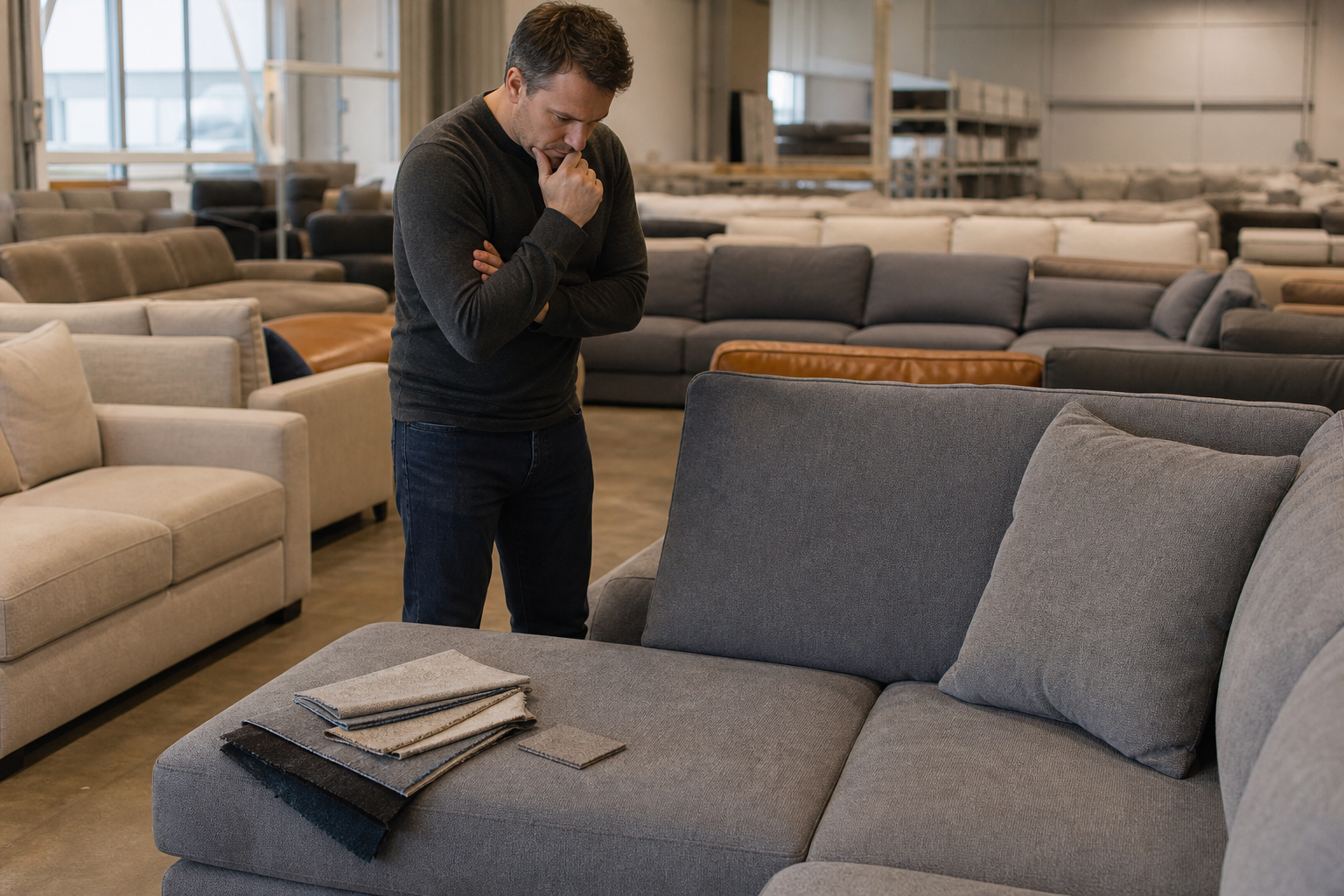
StarbornHub treats local customer response as a practical buying signal, not as decoration after the buying decision is already made. For an independent furniture retailer, the point is not to accept a new supplier claim blindly. The point is to make the next product decision clearer before cash, showroom space, and customer trust are already committed.
More articles in this content module
Module: Customer Feedback Timing
This is the full reading map for the current content block, so you can follow the logic inside this topic before jumping to another issue.
- Why do furniture retailers learn what customers want too late?
- Why do furniture retailers learn what customers want too late?
- Why do furniture retailers learn what customers want too late?
- Why do furniture retailers learn what customers want too late?
Other content modules you may want to explore
If your concern is not only this one issue, these modules open nearby paths in the StarbornHub theory system.
What this could improve if handled better: A positive business outcome or advantage the retailer may want.
Customer Asset And Relationship Capture
Are website visits, blog clicks, customer questions, and reviews being captured as usable signals?
First reading in this module: How do I turn online browsers into showroom visitors?
What it may take, cost, or risk: A decision concern about work, cost, risk, staff burden, or what the retailer might lose.
Validation And Small-Batch Testing
What should be validated before a larger stock commitment?
First reading in this module: Should furniture retailers buy stock before testing customer demand?
Why this path may be worth testing: A trust-building or low-commitment validation question.
Supplier Trust And Quality Responsibility
What incentive does the supplier have to protect quality after the first order?
First reading in this module: What should a furniture retailer ask before trusting a new sofa supplier?